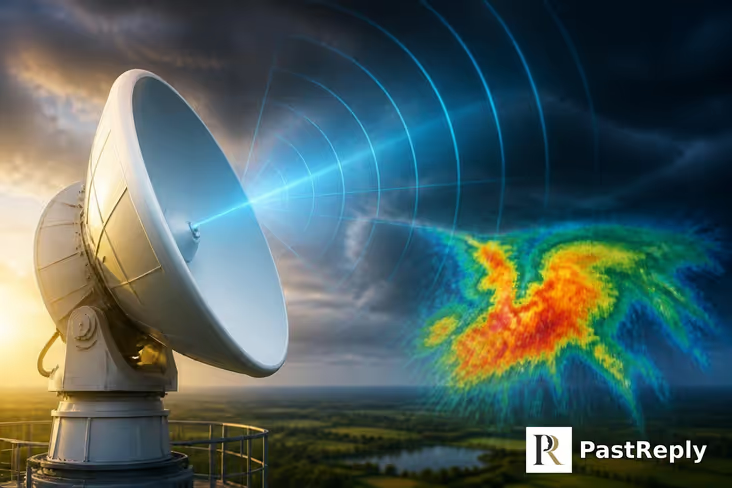
Are weather radars accurate?
Weather radars are accurate for short-term precipitation detection, with 2026 forecasts reliable up to 10 days, led by The Weather Company's top accuracy.
100 answers
Weather radars are accurate for short-term precipitation detection, with 2026 forecasts reliable up to 10 days, led by The Weather Company's top accuracy.

A 5-day weather forecast can change because atmospheric chaos limits precise predictions beyond a few days, though broad patterns are often reliable.
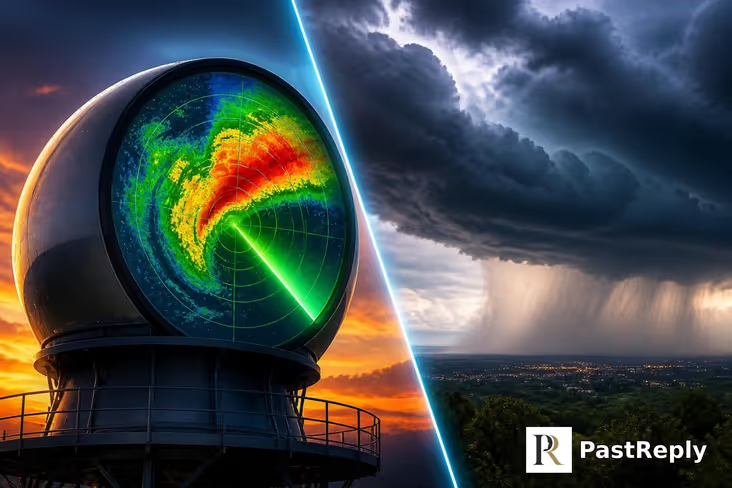
Weather radar is highly accurate for short-term precipitation detection and storm tracking, though limitations exist for long-range and micro-scale events.

Short-term weather forecasts are about 90-95% accurate, but accuracy drops to around 80% for a week out and much lower for long-range predictions.

Weather forecasting uses numerical models and AI to predict atmospheric conditions by processing global observational data.

Weather is predicted by collecting atmospheric data and using computer models to simulate future conditions, though accuracy declines over longer timeframes.

Weather forecasts seem inaccurate due to atmospheric chaos, data gaps from recent NOAA cuts, and location-based limitations, though short-term predictions have improved.

Weather forecasting combines atmospheric data collection, computer modeling, and meteorologist analysis to predict future conditions.

Weather forecasts are limited by atmospheric chaos, model simplifications, and data gaps, making perfect accuracy impossible.

PastReply
Sign in with a one-time link - no password to remember.
New here? Create an account
PastReply
Create an account to post your own answers and reply to the 100.
Already have an account? Sign in