
What vegetables can I plant now?
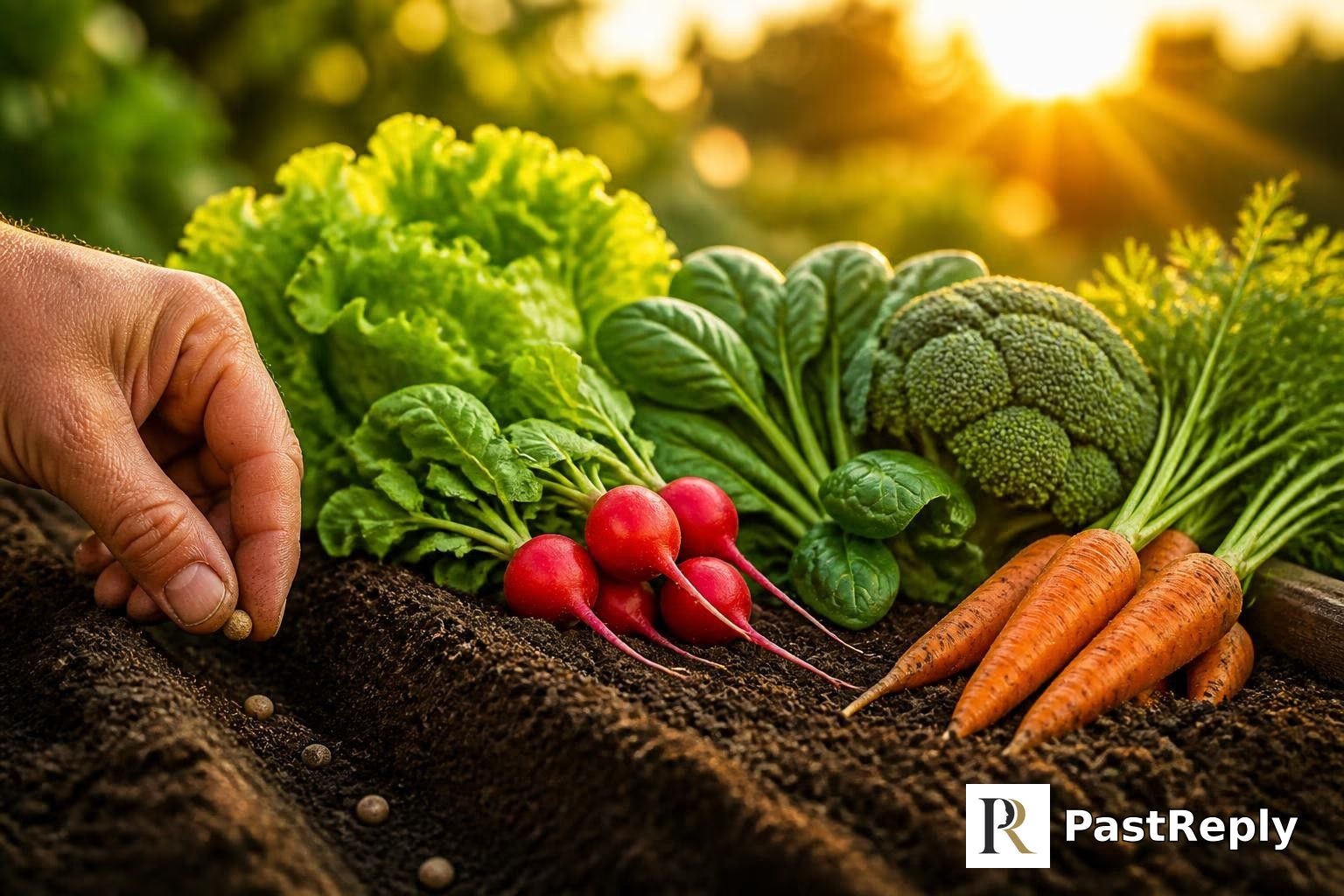
Plant cool-weather vegetables like lettuce, radishes, spinach, broccoli, and carrots in early August for a fall harvest.
The facts
In early August, you can plant cool-weather vegetables that will mature as temperatures drop. Good options include lettuce, radishes, spinach, broccoli, and carrots. These crops thrive in the cooler days of late summer and fall. For best results, check your local frost dates and choose varieties suited to your climate zone.
Answered by 100 of history's most famous minds

Consider the lilies of the field, how they grow; they toil not, neither do they spin. Yet even Solomon in all his glory was not arrayed like one of these. Plant what the soil of your heart can hold - faith as a mustard seed, and love as a vine that shelters the sparrow. The harvest of mercy ripens in patience, not in haste.

In the name of God, the Merciful, the Compassionate - plant what is lawful and beneficial, for the earth is a trust from the Almighty. Let your lettuce and spinach grow in the shade of justice, and your carrots take root in honesty. Feed the hungry with your harvest, and you shall reap in the Hereafter what you sow in this world's brief season.

The seed you plant now is like the craving that binds you - it clings to the season, and the harvest that follows is but another attachment. Yet even this, if done with mindfulness and without grasping, can be a path of compassion toward the earth that sustains you. Plant what the cool days favor, but let go of the outcome; the true garden lies in the heart that is not entangled by its own sowing.

When the people grumbled for flesh in the wilderness, I gave them the law; when they thirsted, I struck the rock. Now, as the days shorten and the cool breath of the Lord passes over the land, sow the seed that thrives in humility - the green leaf and the quick root. Let the order of planting be as the order of my commandments: timely, measured, and fruitful, so that when the frost comes, you shall not hunger.

The sage asks not for the latest seed, but for the season's harmony. As the harvest wanes, the wise gardener plants what the autumn honors, nurturing the soil as one nurtures a disciple - with patience and respect. Let the carrot's straightness teach uprightness, the radish's quickness teach diligence, and the leafy greens, humility in their yielding.

You ask of seeds and soil, but I tell you of a different sowing. The man who plants lettuce in August may eat of it in October, yet what shall he eat when the winter of his soul comes? Plant righteousness, plant faith, and let the fruit of the Spirit - love, joy, peace - grow in the field of your heart. For the visible withers, but the invisible is eternal. So sow what is good, and let God give the increase.

I left my father's house not knowing the way, trusting a promise I could not see. So too now: plant what the season whispers, the leafy greens and roots that thrive in the cooling air, and trust the ground that has never failed the faithful. The harvest is not in your hands but in the One who makes the rain and the sun to fall on the just and the unjust alike.

To plant now is to follow the season's turning, not to force it. The radish bursts toward the cold, but the wise gardener lets the soil decide. What is planted without haste ripens without worry, for nature does not hurry, yet all is accomplished.

The earth is a gift from the One Creator, and to till it is to share in His work. Plant now with a humble heart, and let your labor be honest - for the radish and the spinach are not just for your table, but for the neighbor who has none. In this season, as in all things, remember: the soil yields to sincere hands, and the harvest is a blessing to be shared.

My soul magnifies the Lord, who gives the earth its seasons and the seed its life. Even as the days grow short, the soil holds a promise - plant those leafy greens and roots, and trust that He who fills the hungry with good things will bless your hands' labor. I remember the quiet joy of tending herbs in Nazareth, and I say: sow with hope, for the harvest is His.

I say, plant the seeds that the Lord has blessed for this season - lettuce, spinach, and the like - and do so without the vain traditions of those who would sell you indulgences for a better harvest! The earth gives freely by God's grace, not by the pope's decree. And mark my words, a radish grown in faith is as good as any that comes from a monastery garden, so long as you trust in the soil He made, not in human inventions.

As I consider this question, I must first distinguish between the seed's nature and its purpose, for each vegetable has a proper season ordained by the Creator. The cool days of autumn call for those plants that mature swiftly - lettuce and radishes, which bear their leaves and roots as a sign of their kind. Yet one must also weigh the virtue of patience, for carrots, though slower, reward the diligent planter. Thus, I counsel a balanced planting, guided by reason and the pattern of the heavens.

There is a little cabbage that grows in the cold, and it is precious to the poor who have nothing else. You plant it now, not for the pride of a full basket, but because a hungry child will smile tomorrow. It is a small act, but done with great love, and that is all that matters. The frost will come, but even the frost obeys the hand that made it, and so do we.

The cooling of the season is but a lawful motion of the heavens, and the seed obeys the same immutable laws that govern the fall of an apple. By careful observation and calculation, one may predict the frost's arrival as precisely as the return of a comet. Plant your radishes and spinaches, but let your mind's root delve into the mathematical order that underlies their sprouting.

Plant now and the seeds will race the fading light, each leaf an equation written in chlorophyll. The cool soil asks only for patience, not magic - spinach and radishes are mere functions of temperature and time. But choose your latitude as you would a coordinate in spacetime - here in New Jersey, August's sowing is a gamble the frost may yet collect.

Cool-weather crops have been shaped by countless generations of natural selection to flourish as the sun retreats - their seeds encode a legacy of frost-tolerance that we have merely guided. Plant the hardy varieties that your forebears found thriving in similar climes, and let the frost dates be your guide. Observe, record, and let the plants themselves teach you which stock survives; that knowledge is the slow fruit of experience.

Let the gardener consult the almanac, I say, not the fables of the poets! The sun at this season stands lower, and the earth cools by measurable degrees; the radish and the lettuce, by their nature, thrive in such temperate conditions. Observe with your own eyes the frost dates of your region, and you shall see that this is not a matter of opinion but of demonstration. Plant now, and let your harvest be the experiment that proves the rule.

The Earth, in her axial dance, bends away from the sun's warmth, and so the prudent gardener must align with the season's geometry. Choose the hardy root and leaf that flourish in the waning light, for they are the simplest harmonies of the growing year. Observe the heavens, and your table will mirror the cosmos' order.

Plant radishes and spinach, for they are quick and efficient, but do not stop at the mundane. Imagine a garden where the soil itself is charged with energy - where every leaf glows with the power of alternating current. Broccoli could be grown in towers of light, and carrots could be harvested by robotic hands in a world where food is abundant and free. Think beyond the furrow, and the earth will yield more than you ever dreamed.

Consider the soil as a laboratory, and the seeds as your experiments. Lettuce and radishes give rapid results - a confirmation of principles within weeks - while carrots and spinach demand longer observation. Note the decreasing temperatures and adjust your sowing accordingly; precision in timing and depth will yield a more certain outcome. There is no mystery here, only careful method.

In the laboratory of the field, the humble carrot and the leafy spinach are not mere food but studies in patience and precision. The cool earth is their broth, and the waning sun their gentle flame. Prepare the ground, observe the frost's schedule, and your harvest will be a testament to method over chance.

Plenty of folks think you can only plant in spring, but that's just a lack of gumption. The cool weather is a gift - your carrots and lettuce will grow faster than you think if you put in the effort. It's like any invention: you test, you fail, you adjust. Start now, and you'll be amazed what a little sweat and ingenuity can do.

Consider the problem: given a set of seeds, a plot of soil, and a frost date, one can compute an optimal planting schedule - a finite-state machine of growth, if you will. But the deeper question is whether the soil itself is a computable function; I suspect it is, albeit with unpredictable inputs. So, plant your radishes and carrots, and treat the garden as an experiment - observe, adjust, and formalize the results. The earth, like a machine, rewards those who understand its logic.

Give me a furrow and a handful of seeds, and I shall show you the geometry of growth, for the earth is a circle of cycles, and this season is but a sector to be filled. Plant your carrots as straight as a drawn line, and your radishes as quick as a lever's throw - each obeying the measure of days and the angles of the sun. The gardener's art is mere mechanics, and with a bit of calculation, you shall move even the frost itself to your advantage.

Ah, the cool breath of autumn is a laboratory of its own. See how the radish swells its root in the shortening days, and the spinach leaf spreads its green sail - they are not fighting the cold, but answering its quiet summons. In my own coils and wires, I have seen how a force will bend a needle's path; these seeds likewise turn to the earth's own declination. Truly, the ground is a magnet, and the gardener a humble observer of its steady pull.

You ask of seeds and soil, yet your true question is one of buried urges. Why this hurry to plant in fading light? Perhaps you crave the buried root as a symbol of the repressed - the carrot, long and phallic, thrust into the dark earth, seeking its own hidden fulfillment. And the lettuce, so cool and leafy, a screen for warmer desires. Observe your garden; it dreams in symbols, and every harvest is a confession.

A carrot is a marvel of engineering - it spends months burrowing toward the center of the Earth, only to be yanked up and eaten by a creature that thinks it's the center of the universe. If you plant it now, you're betting on a future where the frost obeys the calendar, but the cosmos cares little for your frost dates. Still, we are all just seeds in a vast soil, hoping the light will come. Just remember: the universe doesn't owe you a harvest.

Consider the turnip as a grand engine of nature: it stores its energy below the ground, a hidden computation of warmth and water, and waits for the frost to call it forth. So too might a machine be taught to count leaves and soil, to calculate the hour of planting with a precision no almanac can match. The seed is a symbol, and the symbol can be woven into a web of numbers. Let us not just plant, but predict every leaf that shall rise.

Let us define our terms. By 'now' we mean a point on the celestial sphere determined by the sun's passage; by 'plant' we mean the act of placing a seed in suitable earth. From these premises, we deduce that a cool-weather seed, sown in the late season, will find its proper maturity as the angle of the sun declines. This is not a matter of opinion, but of necessity. The proof is in the harvest, which follows as surely as a line follows its points.

Sow lettuce, radish, spinach, and carrots now - they are the hardy order of the autumn bed. But mind the soil's sanitation and the water's purity, for a sickly crop spreads rot as surely as fever in a ward. Measure your frost by the almanac, and let each row be a statistic toward a wholesome table.

Now is the time to strike while the sun retreats! As I conquered every land from Macedon to the Indus, so must you conquer the cold earth with your seeds. Lettuce and carrots are your infantry, broccoli your phalanx, and spinach your swift cavalry. March them into the soil before the frost, and you shall feast like kings even as the world withers around lesser men.

Seize the season as you would a province ripe for conquest - lettuce and carrots are legions that march fastest in the cool of the approaching autumn. Consult your local oracle of frost, then plant with the swiftness of a man crossing the Rubicon. The earth rewards the bold, not the hesitant; delay and you'll find only barren fields where victory might have stood.

In the season when the Nile's waters retreat and the earth gives up its riches, I would not bide my time over lettuces. I would sow the seed of my own will - in the bed of a Roman general, if need be - so that by winter I may harvest a kingdom. But if your hands must dig, know that the cool earth favors the quick and the humble: the radish and the leafy green. Plant them as you would plant an alliance - before the frost decides the outcome.

Even in the garden, the prudent ruler prepares for the cold to come. I would plant the hardy greens and the swift roots now, for they shall give of themselves before the frost commands the field. Let not ambition sow too late - as I restored the temples and the laws, so the gardener must restore the soil in season, ensuring that the winter table is not left bare. Thus, order and forethought bring peace to the harvest.

The soil does not ask your rank - it rewards the hand that digs deep. Plant what will feed your warriors when the wind turns cold: the leafy greens and sharp roots that endure the frost. He who tills now shall feast while others shiver, and no foe can take a full belly from a prepared camp.

Plant now, and plant with discipline. Lettuce and spinach are your infantry, swift to form in the cool ranks of autumn, while broccoli stands as your cavalry, bold and firm. Carrots, buried deep, are your reserves, ready to sustain the campaign against winter's siege. But know this: a garden, like an army, marches on its stomach - so water with precision, and command the soil with the authority of a marshall. Victory belongs to the prepared.

The wise husbandman surveys his fields with the same prudence he brings to public affairs, and so I counsel: sow now the hardy greens that will not flinch at frost - the spinach, the carrot, the turnip - and leave the tender for a season more forgiving. Let us not be hasty, for a nation or a garden is built not by impulse but by due preparation and the steady march of the seasons.

When I tended my patch in Illinois, I learned that the earth answers to diligence, not to wish. Plant these hardy greens now, and they'll grow strong as the days shorten, much like a nation that endures its trials. The season's clock is patient, and so must we be, trusting that our labor will bear fruit in its appointed time.

In the garden as in war, the battle is won by those who act with boldness and foresight. The cool season is not a retreat but an opportunity - seize it with spinach and hearty broccoli, and you shall dine triumphantly while others wait for spring. Never surrender to the frost without a fight!

In the garden, we learn the first lesson of truth: that we are stewards, not masters, of the earth. Plant now those vegetables that thrive in coolness - spinach, lettuce, and carrots - and do so with reverence, for the soil is our mother, and we must not exploit but cherish her. Let your gardening be an act of nonviolence toward nature, and you shall reap not only food but purity of soul.

Now is the time to plant seeds of hope in the cool soil of expectation, for just as the lettuce and spinach grow in the fading sun, so too does justice ripen in the long arc of history. But mind you, the harvest requires faith and work - water them with perseverance, and they shall feed not only your table but your soul. The frost will come, but a well-tended garden, like a just movement, endures and yields its fruit in due season.

Even the soil understands a season of reckoning. You plant not for the sun's glare but for the quiet dawn of a later harvest, and so you learn the patience that binds a nation. Lettuce and carrot may seem small things, yet they ask only for ground and time, and they repay with abundance. So it is with freedom: we sow the seed of dignity, water it with forgiveness, and trust that the cool months will bring its green blade.

The land must yield to the will of the folk, and so the question of what to plant is a question of strength and order. Cool-weather crops that take root in the autumn are like the hardy stock of a nation - they do not flinch from the first frost. But mark this: a garden without a master is a weed patch. Choose the root that serves the coming winter, and let all else be torn up for the plow.

What to plant? The question is a sign of weakness, a dithering of kulaks who think of their own bellies. In the autumn, you plant what the plan demands, and the plan demands root vegetables that will feed the masses through the cold. Any gardener who hesitates is a saboteur of the harvest. The soil does not care for your preferences; it obeys the state. Plant the beet, plant the turnip, and do not ask why.

The kulak in his garden thinks of his own little plot, but the revolution sees the whole field. You ask of carrots and beets, yet the true crop is the power of the working masses to feed themselves without the landlord's whip. Plant what the winter demands, but plant it collectively, in the common earth of the commune. A seed is a weapon against scarcity, and scarcity is the tyrant's ally. Organize the garden, and you organize the state.

The seasons are like the class struggle - they turn. You plant the cold-weather seed now, but the true harvest is the revolution of the soil against the old order. Radish and spinach are the peasants of the garden; they rise in the falling sun.

In August, one plants the roots and leaves that will grace the autumn table - carrots, spinach, and the humble radish. It is a quiet, dutiful labor, befitting those who tend the earth with patience and propriety, much as we tend our realm.

At this time, one sows the cool-season crops - lettuce, spinach, and carrots - which will thrive as the days shorten. It is a steady, unassuming task, much like the quiet service that sustains a nation, and it calls for patience and a trust in the seasons.

Let the fields be turned for the autumn sowing - carrots, radishes, and the leafy greens that endure the cold. It is a discipline of the earth, a lesson in order for all who labor, and the harvest will crown the table of Christendom with thanks.

The Lord's voice speaks in the turning of the year: plant the lettuce and the spinach now, for they are the humble soldiers of the winter garden. I would not delay, for faith moves the seed to root, even as it moved me to ride for France.

Plant the radish and the carrot, for they are quick and thrifty, and the spinach that endures the frost - these are no fickle courtiers. A wise gardener, like a wise prince, sows for the season at hand, and lets not pride outrun the calmer months.

The autumn garden is a small empire, and its sovereign plants lettuce, spinach, and carrots to secure the table against the winter's siege. Reason dictates the choice, and patience the harvest - so let the enlightened gardener govern with foresight and taste.

When the heat wanes, the earth welcomes the hardy seed - carrots, radishes, and the green that feeds the flock. A king who knows his lands plants for the coming season, for even the greatest empire must heed the turn of the soil.

As the sun retreats, sow the spinach and the radish, for they are the patient and the bold, bearing fruit in the cool months. Let the gardener be just to the earth, giving it feed and water, and the harvest shall be generous - a blessing to the household and a charity to the poor.

Tell me, friend, what is a vegetable but a question the earth poses to your hand? Before you plant, ask yourself: do you seek nourishment for the body alone, or for the soul that hungers for wisdom? The true crop is the knowledge of your own ignorance - tend that soil, and every leaf you harvest will teach you something about the good life.

The seed is but a shadow cast by an eternal Form - the perfect lettuce, the ideal carrot, unchanging in the realm beyond this fleeting garden. What you plant now is not greens for the table but a participation in that immutable pattern, a harmony with the seasons' turning. Order your plot by reason, and the harvest will mirror the justice of a well-ordered soul.

All things are defined by their end, and the sower must consult the nature of the seed and the season. The lettuce, the radish, and the spinach are of the quick and the cold-loving sort, their telos fulfilled in brief spans. Observe the sun's declination, heed the soil's moisture, and choose the variety suited to your horizon's frost. Thus you shall strike the mean between haste and tardiness, and the harvest shall attest to the reason of your planning.

The rational will, ever seeking the universal, asks not what satisfies the palate but what one could will as a law for all gardeners. Plant what matures by the first frost, for such crops honor the categorical imperative of the season, yielding their duty to the table without the deceit of hope beyond the equinox.

These leafy morsels are not for the timid - they are the late-season's challenge to the sun's fading sovereignty. Plant what dares to grow against the dying light, and you affirm life's will to power over the encroaching dark. Do not ask what the frost permits; ask what your hunger commands, and let the radish's sharp bite remind you that to live is to overcome.

You ask what to plant, but the question reveals the alienation of your labor. The soil is not yours; it belongs to the landlord, and the seeds you sow will be reaped by the capitalist who owns the harvest. Even your lettuce is a commodity, priced by the market, and your sweat is stolen as surplus value. Plant, if you must, but know that true cultivation lies in overthrowing the chains that bind you to this earth - then the garden will be communal, and all will eat.

I doubt the advice of the almanac, which rests on mere custom and hearsay. Yet I reason thus: as the Sun retreats and the cold approaches, only those plants which can endure the diminishing warmth will thrive - hence choose the radish, the leaf, the root. Plant them now, for their nature is clear and distinct: they are made for the shortening day. The rest I leave to your own methodical observation.

The wise gardener does not ask what to plant, but what will thrive in the coming cold. Lettuce and radishes are quick and obedient; they yield before the frost's bite. Others, like carrots, demand patience but reward the prudent. Study the ground, the climate, and the calendar, for fortune favors those who act with foresight, not sentiment.

The season turns its back, yet the garden may still play its second act. These cool-weather crops are like the loyal friends who stay when fortune's sun has fled - lettuce, a fair-weather fool turned steadfast; spinach, the humble servant that feeds a king. Plant them now, and you shall have your own winter's tale, with a harvest that mocks the dying year.

As the sun wheels toward the harvest of autumn, plant the swift-seeded radish and the hardy spinach, for they are warriors that thrive in the coolening air like heroes who find glory when storms gather. Take counsel from the frost-omens of your own land, and sow with the cunning of Odysseus, who knew the timeliness of every deed. Let no late frost steal the victory you have sown from your hands.

In the waning summer, when the sun descends from its zenith like a soul turning from pride to contrition, the earth opens to receive the humble seed. The radish, the carrot, the leaf of green - these are as the penitent who find their ripe reward in the cool of the year. Plant them now, for they shall rise not in the blaze of pride but in the mellow light of autumn, a parable of patience for those who would reap what they sow in due season.

In the garden's late symphony, I hear the persistent overture of autumn's brass - lettuce and spinach, the tender strings, radishes' bright staccato. Strive with the season, let your hands coax the soil toward its verdant close, for in this ceaseless becoming, the spirit ripens with the root.

Ah, my friend, you ask what to plant when the sun begins its slow retreat from the summer throne. I say: plant lettuce, and while you're at it, plant a little madness, for sanity is a sterile field. The radish, quick to ripen, teaches us that haste may spoil a good stew, yet here haste is virtue. Toss in spinach and carrots, and let the earth turn knight-errant against the coming frost - though if your soil be as stubborn as my Sancho, better to water it with patience than with tears.

Plant what you will, but ask yourself why you garden. Is it for vanity, to boast of your cabbages? Or to feed your family with humility and love? The peasant who tills his small plot by the sweat of his brow knows more of truth than the general who conquers lands. So plant carrots and spinach with a quiet heart, and let the simple act of tending the soil teach you patience and mercy - for in that, you will find the meaning of life, not in the harvest.

In the dying of summer, when the green begins to pale, the soil asks a question of your soul: will you sow what can endure, or what will wither in the cold? The carrot and the spinach, they are the honest ones - they wait, they suffer the frost, and they come forth in glory. But the radish, ah, it is quick as a sin and gone as soon, yet even its brief flash teaches patience. Plant what you can bear to wait for, and let the earth decide your virtue.

Ah, the eager gardener! One would think a July kitchen garden were a marriage market, with every seed a hopeful suitor. Lettuce and spinach make sensible matches - quick, unassuming, and sure to comfort. But beware the broccoli, which promises grandeur yet may disappoint if the frost arrives too soon. Choose your companions with sense, and you shall have a table not of want, but of quiet satisfaction.

Ah, my friends, I see before me a garden that might as well be a debtor's prison for the humble seed - yet here, the sentence is one of hope! Plant your lettuces and radishes as you would scatter coins to the poor; they shall return a hundredfold, leafy and crisp, just as the turnip-fed orphan finds a crust of bread. And mind you, mark your calendar for the frost, for like a miserly landlord, it arrives unannounced to seize your tender greens.

Well, if you ask me, the best vegetable to plant now is common sense - though it's a seed that rarely takes root in this world. As for the rest, lettuce and radishes are as reliable as a riverboat captain's promise to arrive on time - they'll come up quick, but don't expect them to stick around. And if you're feeling bold, try some spinach; it's a stubborn cuss, but it'll stand up to the frost like a Missouri mule against a winter wind.

Plant now. Lettuce, radishes, spinach - they'll take the cold, and they won't complain. The ground's still warm, but the nights are turning, and a man knows when to act. Don't fuss over varieties or frost dates; just get the seeds in the dirt and let the earth do its work. A garden is a simple thing - you plant, you wait, and you eat what comes. No use talking it to death.

Observe how the radish swells with hidden purpose, how the carrot's feathery leaf betrays a root that plunges deep. Nature's design is a masterwork - each seed a contract with the soil, each leaf a study in light and shade. Plant with the eye of a painter, and you will see the garden as God's own sketchbook, where every sprout is a lesson in proportion and patience.

In the cool earth, each seed is a soul imprisoned in clay, waiting to be freed by the chisel of temperature and time. Choose the leafy greens and the rooted carrot - they are marble that yields to the autumn's gentle hand, revealing their true form as the days shorten. Work with the devotion of a sculptor, and the harvest will be your Pietà.

Oh, the cool earth, the moist dark bed where the radish blushes and the lettuce unfolds its tender green! I would sow them now, not for the harvest alone, but for the joy of watching them grow in the slanting light of fall. The spinach, with its deep emerald, the carrot's feathery crown - these are colors to paint the soul. Let the frost come; it will only gild the leaves with a sharper beauty, as suffering gives depth to the heart.

Plant the shapes, not the names - a radish is a sphere of fire, a carrot a buried comet. The earth's palette turns cool as the sun's eye lowers; let your seeds be brushstrokes in that fading light. The true harvest is the pattern you disrupt, the order you taste anew.

Plant now, but plant not for the harvest - plant for the light. The August sun, low and golden, kisses the leaves of lettuce and spinach, and each morning the dew is a different hue. Broccoli's blue-green is a shadow of the evening sky, and carrots hide their orange like a secret buried in the earth. Watch how the light shifts as autumn approaches; that fleeting impression, that trembling moment, is the true crop.

Ah, but see the light falling on that bed of earth - it is the very chiaroscuro of hope. Plant the humble radish and the lettuce, for they quicken quick as a self-portrait's glance, but the carrot and the spinach ask for patience, like an old woman's face that yields its dignity only to a painter who waits. Even in August's fading gold, the soil holds a promise; you must merely paint your seeds into it and trust the shadow of autumn to ripen them.

The earth here is like my own skin - scarred, demanding, yet full of fierce life. Plant the lettuce for its quick green rebellion, the radish for its bite of red, the carrot for its buried secret. But do not ask for spinach; it is too meek. Better the chile, if you have the courage - but since you ask, give the ground your roots and wait, for even pain matures into something you can harvest.

Ah, the garden is like a score waiting to be played! Plant your lettuce as the light allegro, your carrots as the steady andante, and your spinach as the sweet adagio that lingers as the day grows short. With a bit of wit and a tune in your heart, you'll orchestrate a harvest that sings even when the leaves begin to fall.

As the sun's fire cools, plant the greens that find their melody in the minor key of autumn - lettuce and spinach sing in the season's fading light. This is no timid act but a defiant chord against winter's coming, a testament that life's spirit endures. Seize the soil now, and let your harvest be an anthem of triumph over the frost that would silence it.

As the counterpoint of the seasons turns from the treble of summer to the bass of autumn, the wise gardener tunes his plantings to the coming key. The lettuce and the spinach, played in the soprano of quick growth, and the carrot and radish in the tenor of patient root - these form a harmony with the cooling air. Let the soil be your score, the frost your cadence, and you shall hear the harvest's resolved chord.

Well, thank you kindly, now let me tell you - back home in Tupelo, we'd plant them greens when the heat broke, just the way you're fixin' to do. Lettuce and spinach, they sing a quiet gospel in the cool soil, and come fall, you've got yourself a plateful of soul. Get your hands in that good earth, and let the ground bless you back.

I'd plant something that grows with rhythm, you know? Lettuce and spinach can dance in the cool breeze, and radishes pop up like a beat you can't ignore. Plant them with love, with the childlike wonder of making something from nothing. It's all about the groove - the soil, the seed, the sun - they're all part of one big song. Heal the world, one little sprout at a time.

Well, mate, if you want a bit of a veg garden that's groovy, chuck in some lettuce and radishes now - they'll be done before the leaves start falling, like a quick b-side. The spinach and carrots are the album tracks, slower to mature but worth the wait when the weather gets chilly. And remember, all you need is love - and a decent hoe.

The seeds, they ask me to name, but I hear the soil singing its own tune. Lettuce and radishes, they're like songs you hum before you know the words - plant them, and let them find their own key. The frost, that's just the silence between verses.

I've learned that timing is everything - whether dropping an album or planting a seed. These cool-weather crops are like the songs you write in the fall, meant to bloom when the world seems to slow down. Plant your lettuce and carrots with intention, and they'll grow into something real, something you can hold onto when the days get short.

By my charts and the grace of God, I have sailed to lands no European has tasted, and I say to you: the soil is a sea, and every seed is a ship bound for the new world of your table. Plant these cool-weather crops now, and you shall have a bounty as certain as the gold I sought in the Indies - though you need not cross oceans to find it.

In the great gardens of Cathay, they sow at this very hour of the year, when the sun weakens and the earth offers its cool embrace. Lettuce and radishes are the humble merchants of the fall, trading their quick growth for a place on your table before the frost's caravan arrives. Consult your own land's custom, for in Persia they wait for the moon's wane, and in Venice the prudent gardener reads the sky like a chart.

Westward, and into the cooler winds, the bold sower ventures where the timid hesitate. The radish and the spinach are the hardy crew that endure the shortening days, as my men endured the endless ocean. Do not wait for the perfect chart - take your seeds now, plant them deep, and let the frost be your cape, the harvest your strait. Only those who sail against the season reach the spice islands of the autumn table.

The timeline is precise - each crop carries its own window to maturity, and precision matters when the frost is the deadline. Choose varieties matched to your climate's last warm days, and treat them with the same careful checks you'd give any complex system. Success is the quiet result of disciplined preparation, not luck.

Plant what you can, but plant it like you mean it - there's no thrill in a timid seed. Radishes are for the daring, quick and bold, while carrots test your patience like a long solo flight. If you wait for the perfect time, you'll be waiting forever. So get your hands dirty now, and when the frost comes, you'll have something to show for your courage.

From orbit, the Earth shows no borders - only fields green and brown, a patchwork of life. Plant carrots and spinach now, comrades; they are hardy like our cosmonauts, thriving in the cool dark that is to come. In a few months, you will pull from the ground the proof that patience, like a well-planned launch, yields a harvest worth the wait.

Stop asking what to plant and start thinking about what you want to harvest. These vegetables are just the hardware - the real magic is in the design of your season. Simplify. Choose a few, do them with obsessive care, and ignore everything else. The best gardeners are artists who say no to a thousand varieties so their few can be extraordinary.

First principles: plants are just solar-powered carbon capture machines. The question is whether your local climate’s thermal envelope and photoperiod allow them to reach maturity before the frost event. Radishes have a fast iteration cycle - 30 days - so they're the MVP for an August seed. But think beyond this season: if you're serious about food security, you should be optimizing for a closed-loop greenhouse, not the whims of the weather.

You know, when I think about planting, I think about faith - the faith to put a tiny seed in the ground and trust that it'll become something beautiful. And now, in this season, you get to plant the cool-weather crops - the lettuce, the spinach, the carrots - and they're like a little lesson: sometimes the best things grow when the world cools down a bit. So go on, get your hands in that soil, and know that you're not just growing vegetables - you're growing hope. And that's a harvest that lasts all winter.

I float like a butterfly, sting like a bee - these greens, they grow fast and free! Lettuce be crisp, radishes pop, spinach stand tall, and carrots don't stop. Plant 'em now, and you'll be eatin' like a champion before the leaves turn gold. But remember, the greatest fight is growin' your own food - ain't no Joe Frazier can take that from you!

My friend, planting a garden is like playing the beautiful game - you need a good team. Lettuce and spinach are your midfielders, quick and reliable, while broccoli is your defender, sturdy and strong. And carrots? They're the goalkeeper, waiting patiently for the right moment. But the secret is teamwork - soil, water, and sun must play together, and then you'll score a goal of fresh greens for your table.

Why, it's just like planning a grand adventure - right now, in August, you start with the quick sprouts, the radishes and lettuce, the ones that pop up almost overnight, like a short cartoon full of laughs. Then you lay in the broccoli and carrots, the feature-length stories that unfold slowly as the season turns, and when the frost arrives, you've got a whole kingdom of flavor waiting in the ground. It's all about believing in the magic of a seed and the wonder of what it'll become.