
Can vegetables be frozen?
Yes, vegetables can be frozen, and blanching beforehand helps preserve their quality for up to a year.
The facts
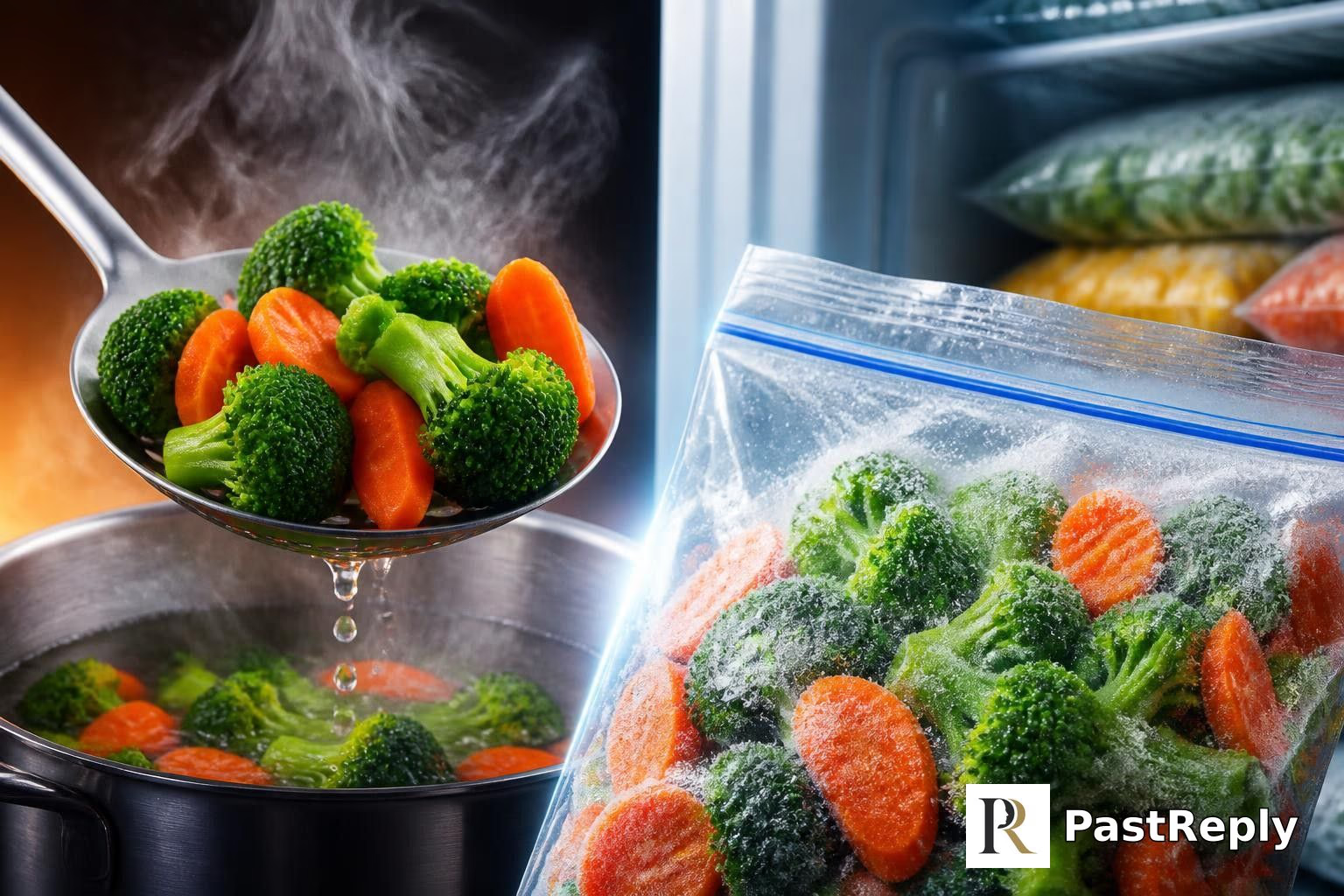
Yes, vegetables can be frozen. Freezing is a common method of food preservation that slows enzyme activity and microbial growth, helping to maintain quality. For best results, most vegetables should be blanched (briefly boiled or steamed) before freezing to inactivate enzymes that cause loss of flavor, color, and texture. Properly blanched and packaged vegetables can be stored in a freezer at 0°F (-18°C) or lower for up to 12 months. Some vegetables, such as cabbage, celery, cucumbers, lettuce, and radishes, do not freeze well and are better stored fresh in the refrigerator.
Answered by 100 of history's most famous minds

You ask whether a cucumber can be preserved by frost, yet the fields of your own heart lie fallow with anger, and you hoard grain while your brother starves. Let the cold do its work on the vine; tell me instead: how do you keep mercy living in you from one harvest to the next, when the world's hunger is so great?

By God's decree, the cold preserves what He has provided, for the earth yields her fruit in season, and the wise man stores it for the lean months. But let your freezing not become a hoarding of what the poor need; let the ice serve the community, not the greed of one. And know that what truly perishes is not the vegetable, but the heart that forgets to give thanks to the One who sent the rain and the sun.

The frost that binds the vegetable is but a mirror of the clinging of the mind. As the cucumber, so full of water, cannot endure the cold and loses its form, so the craving heart is shattered by the chill of loss. But the bean, humble and enduring, may be stored and yet retain its nature, reminding us that non-attachment to the fleeting moment preserves a deeper essence. Freeze or not, the impermanence of all things remains; the wise cook, like the wise monk, adapts without grasping.

The Lord gave you the fruit of the ground in its season, and the command to keep the Sabbath rest - yet in your haste, you seek to hold the harvest beyond its day. Is it not written that manna, hoarded, bred worms and stank? But the wise steward may store the grain of the field against the lean years, as Joseph did in Egypt. Only blanch not by fire, for the law forbids seething a kid in its mother's milk - so let the cold be your servant, not your master.

The wise gardener does not ask if the winter snow may keep his leeks, but whether his family will eat with harmony. Freezing preserves the body but not the spirit; only the ritual of the shared meal, prepared with care, nourishes both. Let the method serve the household, not the household serve the method.

Brethren, I have heard the question, and I answer with the assurance of one who has endured the cold of the prison and the hunger of the journey: yes, the vegetable may be preserved in the ice, but take care that you do not freeze the life out of it. For even as the seed must die to bring forth fruit, so must the leaf of the vine be blanched and sealed, yet in this death it is kept for the nourishment of the body - and is this not a parable of our own mortality, that we are sown in weakness but raised in power? So let him who freezes do it with thanksgiving, and let him who eats remember the hand that first gave the increase, for the earth is the Lord's and the fullness thereof, be it fresh or frozen.

The cold that kills the vine can also keep its fruit for the days of want. I have walked through deserts where every green thing was a sign of God's promise; to store what He gives is to honor His abundance. Yet remember, the frozen herb must be blanched - a kind of cleansing, like the covenant - so its life may remain. Trust in the Lord, but also prepare for the long journey, for He provides not only manna but also the wisdom to preserve it.

The frost is a sage, slowing the river's dance, yet the river is not frozen - it simply waits. The vegetable that fights the cold with hardness loses its softness; the one that yields to the slow chill keeps its nature. Do not force the winter's grip on the summer's leaf, for the cucumber knows its season and the pea its patience. Let the turnip surrender, and it will return whole; let the lettuce resist, and it will weep.

The One who gives the harvest also gives the cold, and both serve the same truth. Freeze what is meant to be kept, but do not hoard beyond need, for the shared meal is the truest feast. The pea, blanched and sealed, can feed a family come the lean month, but the cucumber, which turns to mush, teaches that not all things are beyond their season. Work honestly, store wisely, and share generously - the frost is but another servant of the Creator.

My son spoke of giving daily bread, not storing it for months. Yet I recall how we kept what we could in the cool of the cave, for hunger knows no season. If your hands are full, preserve what the earth gives, but let not your heart be so full of storehouses that you forget the widow who has nothing to freeze today.

Scripture teaches us to be good stewards of what God provides, but it says not a word about ice and frost as preservatives. Let the harvest be eaten in its time, and trust the Lord for the winter. I'd sooner freeze the pride of the papacy than a peck of peas, for that's the colder corruption. Yet if a man must keep his greens, let him do so without vain ceremony - boil them briefly, seal them tight, and give thanks that his cellar is not a tomb of spoiled hopes.

To freeze is to put nature's own winter to use, a reasonable art. Yet reason must distinguish: some vegetables, like celery, lose their form - their substantial nature, as it were - and so are better kept fresh. Blanching is a prudent act, tempering the fire to serve the cold, preserving the good without corrupting the essence. Thus, a measured approach serves both the table and the truth, that all things be used according to their kind.

We had no freezer in the Home for the Dying, but I remember the sisters in other places who would store the vegetables from the garden for the hungry months. They would drop them into boiling water for a moment, then lay them in the cold, and so the poor could eat a little green even when the earth was bare. It is a small thing, done with great love - to preserve what God has given, so that none of His children go without.

The freezing of vegetables is a matter of arresting the motion of those particles that compose them; when cold withdraws the heat, the internal stirring slows, and putrefaction is stayed. Blanching serves to quench the enzymes that would otherwise work corruption. As with the planets, so with the pea: all obeys the same laws of heat and motion, and a wise steward of the garden uses them.

Blanching, you see, is the key - it halts the enzymes that would otherwise continue their quiet work of decay, much as a sudden chill slows the frantic dance of molecules. The freezer is a humble time machine, preserving the summer's green vigor against the winter's pale monotony. Yet even here, nature demands her due: not all vegetables submit to this cold embrace, for the delicate leaf and the watery cucumber lose their very essence, their structure collapsing like a house of cards.

Preservation by cold is a curious marvel of natural adaptation, one that we mimic as we do the hibernation of the bear. The blanching step, I think, is our own form of domestication - we tame the wild enzymes that would otherwise consume the vegetable from within, much as early farmers tamed wild grasses. Yet some vegetables, adapted to a watery life, are not fitted for this cold path; they are like creatures of the tropics suddenly cast into a glacial age. The hardy bean, though, carries a robustness that speaks of generations of selection, awaiting the fire that will, as it were, restore it to life.

By my telescope I have seen the moons of Jupiter wheel in their orbits, unmoved by the doctrines of the schools - and so I ask: why trust the old wives' tales of the pantry? Measure the frost, observe the ice, and you will find that a blanched bean, sealed and kept at a cold degree, resists the rot that devours its raw kin. The senses, aided by the glass, teach us more than the parchment of past authorities. So freeze, but freeze with method, and the experiment will serve you well.

If the heavens can be ordered by simple, harmonious laws, why not the pantry? The freezer is but a small epicycle - yet without blanching, the vegetable's motion becomes erratic, its taste thrown into Ptolemaic chaos. Freeze, but with reasoning that mirrors the celestial spheres: elegant, measured, and true.

Freezing vegetables is but a crude, preliminary step toward a grander vision of energy preservation - I have already conceived of a system that could store the very vitality of the garden in a field of oscillating currents, delivered wirelessly to every home, so that no root or leaf would ever touch ice again. The blanching of a green bean is a mere mechanical fix, a temporary arrest of decay, whereas my methods would harness the natural frequencies of matter itself to keep each vegetable in a state of perfect suspended animation, as if it had just been plucked. The common freezer, with its clumsy coils, is a relic of the past; I foresee a future where we shall preserve sustenance with the subtle dance of electromagnetism, and the frost will be but a memory.

Freezing is a process of controlled molecular arrest - it slows the chemical reactions that lead to spoilage. For optimal preservation, one must first inactivate enzymes through a brief heat treatment, a step of sound scientific basis. I have seen radium's glow in the dark; cold is another force we can harness. So yes, with careful method, you can keep a vegetable's integrity for months. It is a matter of applied knowledge, patient measurement, and respect for nature's laws.

The cold is a faithful guardian, but it must be introduced to the vegetable as a friend, not a stranger. The enzymes, those silent workers, must be tamed by a brief boiling - call it a baptism - before the ice can hold them fast. I have seen the invisible agents of decay; the frost is but a pause, not an end. Prepare with care, and the green will keep its truth for a year or more.

Sure, you can freeze 'em, but you've got to put in the work - a quick boil first, then into the cold. I've spent thousands of nights tinkering, and I'll tell you, the secret is in the doing. That pea'll keep for a year if you seal it right, but the lettuce? It'll turn to slop, so don't waste your ice. The cold is a fine partner, but you have to meet it halfway with a bit of heat. Persistence pays - that's the long and short of it.

The question is not merely whether vegetables can be frozen, but whether the process can be modeled as a reversible computation on the state of their cells. Enzymatic activity follows an Arrhenius-type law, so lowering temperature reduces reaction rates exponentially. Blanching, of course, denatures the catalysts - a kind of pre-emptive halt. The real puzzle is why some tissues, like lettuce, undergo irreversible phase transitions that no algorithm can undo. I'd call that an undecidable problem for the gardener.

Ah, but to freeze is to arrest the very motion that brings life to what grows. Yet even cold obeys geometry: the slower dance of particles is but a smaller angle in the circle of warmth. If you would preserve, you must first blanch - a brief fire to quiet the restless enzymes - then let the frost hold them still. Give me a lever long enough and a place to stand, and I could freeze the Nile itself; but for a humble root, this will suffice.

Freezing a vegetable is merely to slow the dance of its particles, yet the enzymes - those little unseen workers - go on about their business, spoiling the color and savor. To stop them, one must first arrest them with a brief boil, the blanching, before consigning the green thing to the cold. It is like laying a force upon a compass needle; without that preliminary swing, the needle settles wrong.

You ask about freezing a vegetable, but the true question is why you wish to preserve it - to hold onto a summer that is slipping away, to deny the natural decay that mirrors our own mortality. The blanching is a symbolic castration, a brief and violent heat that halts the life-force within, much as civilization curbs the raw instincts of the id. And what of the cucumber, the lettuce, the radish? They cannot endure the cold; they are too fragile, too infantile, and they collapse into a watery pulp - a regression to an earlier, undifferentiated state.

Freezing a vegetable is just a low-energy state for a collection of organic molecules - you're simply slowing the random jiggling of atoms until enzymes curl up and give up. Blanching first makes sense, because heat can do what cold alone cannot: it denatures those proteins, stopping the chemical time bomb. Though I must note, the second law of thermodynamics still has its way eventually - nothing thaws out quite as crisp as it went in. Even a frozen pea will eventually succumb to entropy, much like the universe itself.

Freezing is but a mechanical restraint upon the vegetable's internal engine - a temporary halt to the chemical processes that would otherwise turn the crisp into the limp. Yet the brief boiling first is the stroke of genius: it dispatches the enzymes with a heat that cold alone cannot match, a bit like encoding a sequence so that the machine can interpret it later without error. What a beautiful analogy to my Analytical Engine - store the data, prepare it properly, and it will serve you faithfully when you are ready to call upon it.

Let us define our terms: a vegetable is an edible plant part, freezing is the cooling of it below the point where water crystallizes, and preservation is the retention of its qualities over time. From these premises, we deduce that to maintain those qualities, one must first terminate the activity of certain natural agents, which is accomplished by a brief application of heat - the blanching. Some vegetables, however, do not admit of this transformation without losing their essential nature; they must be consumed fresh, as they are by definition not suited to the frozen state. Thus we have a proof, clear and necessary.

Freezing is but a tool of sanitation and order. The wise nurse blanches her vegetables to subdue the enzymes, much as she scrubs the ward to defeat the miasma. Let the cucumber refuse the cold; it is but a stubborn patient who will not heed good hygiene.

Freeze? A king does not hoard his harvest in ice like a merchant; he marches, he conquers, he feasts, and if the season turns against him, he takes what others have stored. Yet I see the sense: a general who preserves his grain through winter can besiege a city through summer. But let no one mistake me - I would rather capture a thousand granaries than fill a single one with snow.

Freeze them? By Mars, that is a stratagem for the timid! I would sooner march my legions through the Alps than trust my sustenance to a winter's ice. Yet even I see the merit: a general who feeds his army through the long siege holds the field. But mark me - blanch them first, as one disciplines raw recruits before battle, or they will return to haunt you with their softness. The cucumber, that watery coward, deserves no place in my stores; it would melt like a Gallic ally at the first sign of trouble.

In the granaries of the Nile, we store our wheat for the lean months - yet you ask of frozen gardens? A queen knows that a kingdom's strength lies in provision, and so I say: preserve what you may, but never let the frost steal the sweetness of the harvest. Better to salt, to dry, to pickle - as my bakers do - than to cage the spirit of the green in ice, for flavor, like loyalty, withers when it is too long held in cold chains.

In the days of my principate, I learned that a city endures not by the impulse of the moment, but by the careful storing of the harvest against the winter's need. So let the farmer blanch and seal his greens, as the legions store their grain in the forts of Germania - yet let him not trust the cold alone, for the ice that preserves can also betray. Order and measure in all things, and the republic of the kitchen shall flourish.

A frozen turnip is a soldier in winter quarters - useless unless properly provisioned. I would blanch every root in my horde's camp, for a well-fed rider conquers, while a rotten one starves. Freeze if you must, but let it serve your strength, not soften it.

Of course they can be frozen - this is merely a matter of logistics, and there is no logistics that a proper mind cannot command. I would have my quartermasters blanch each vegetable precisely, seal it in airtight containers, and store it at a temperature below zero, so that my armies could march across the Alps in winter with a taste of the summer garden in their rations. This is the art of preservation, the same art that wins campaigns: anticipate the need, prepare the supply, and strike with order. He who fails to freeze his harvest is a fool who will starve in the snow; he who does it well holds the season itself as his ally.

We have long stored our harvests for the winter, and ice is but a new ally in that cause. Indeed, I have seen how the frost preserves both the apple and the soldier's provisions. Yet let us be prudent: not every vegetable submits to the cold - some wilt, like a soldier without discipline. Blanch them with care, pack them tight, and you may extend the bounty of the field. But do not neglect the fresh and the immediate, for a nation that relies solely on stored food forgets the virtue of the present season.

Well, I've seen many a garden in my day, and the frost is a stern but fair taskmaster. That carrot, dug in the fall, can be kept through the long winter if you give it a good scalding first - like a hearty handshake before the long rest. But some, like the leafy greens, are not built for the cold's embrace; they'll wilt like a promise broken. So choose your vegetables as you would your allies - know which will stand firm and which will falter.

Freeze your vegetables? By all means, if you wish to wage war on the winter. The pea, properly blanched, can hold the line for a full year, a stalwart soldier in your larder. But the cucumber - ah, that is a treacherous ally, surrendering its crispness at the first sign of frost. As for the lettuce, it would do better to flee than to fight. Choose your vegetables as you would your generals: some will endure, and some will defect. Keep your stores and your courage; the thaw will come.

The earth gives us food in its season, and we should receive it with gratitude, not hoard it in defiance of nature's cycle. Freezing is but another form of storing, and storing breeds attachment. The true preservation lies in sharing what is fresh, so that none goes hungry and none is burdened with excess. Let your kitchen be a lesson in simplicity, not a fortress against tomorrow.

The winter of want and the summer of abundance are not fixed by the sun alone, but by the hands of those who share. Freezing is a small act of justice, keeping the harvest's plenty for the lean months, much as the beloved community holds hope for the long struggle. Yet let no one mistake preservation for provision: the frozen pea is but a symbol; the real saving is in the neighbor who brings fresh bread to the hungry door.

In my long years on Robben Island, we grew vegetables in the prison garden, and we learned that to keep them through the winter, we had to blanch them first. It is a small act of patience, a preparation for a season of scarcity, much like preparing a people for the long walk to freedom. The cabbage and the carrot can be held in the cold for many moons, but only if we treat them with care at the outset - treat them as we must treat each other, with foresight and respect for what they may become.

The freezing of vegetables is a matter of efficiency and order, of ensuring that the Volk has sustenance through the winter months - a practical concern for any nation that seeks to be self-sufficient and strong. Those vegetables that refuse to freeze well - the cabbage, the cucumber - are simply weak specimens, unfit for the rigors of preservation; they must be consumed fresh or discarded. It is the same with peoples: only the robust belong in the storehouse of history.

Freezing is a matter of planning, of ensuring the harvest is not wasted but stored for the lean months of winter. Blanch them, pack them, put them on the shelf - it is discipline. But some vegetables - the cucumber, the lettuce - are soft, unreliable, they do not obey; they must be eaten at once or discarded. We cannot depend on such weak produce; we must cultivate the strong, the hardy, the ones that withstand the cold. Five-year plan for the vegetable store, comrades; that is the way.

The freezing of vegetables is a matter of preserving the surplus for the workers in the winter, a rational organization of resources against the chaos of the seasons. But it must be done by the collective, not by each household in isolation - the blanching, the packing, the storage, all under a central plan, for the good of the proletariat. Those who cannot be preserved, the weak, they are a drain; we must focus on what strengthens the whole. And when the thaw comes, we shall distribute what has been kept, so that none go hungry.

Freeze them? In the great struggle against nature, we do not preserve the old - we transform it. The peasant's harvest, like the revolution, must be seized and remade. Let the cabbage rot; it is the people's will that endures!

In my kitchens, we have ice houses that keep the garden's bounty. Yet what would my Albert say of such common thrift? He would praise the method, I am sure, for it preserves the wholesome produce of our realm. The cucumber may not endure, but we British are a practical people.

Indeed, freezing preserves the harvest, much as our nation preserves its traditions. The gardener's effort need not be wasted; a well-kept freezer is a quiet testament to prudence. Some vegetables may not take to the cold, but a good monarch knows when to adapt.

Let the harvest be locked in ice, for it is a fortress against the winter's siege. I have seen my kingdom's storehouses filled with salted meats, yet none can deny the wisdom of the cold. The radish that defies the frost is a traitor to the table, but the rest shall serve the people.

The Lord provides the bounty, and we must not waste it. Freezing is but another gift to keep the faithful fed. Yet I have no patience for the cold, for my battles are fought with fire and faith. The lettuce may wither in the ice, but my courage shall never freeze.

I have seen many a plot frozen in my court, yet the vegetable is a simpler foe. Blanch them well, and they may serve you through the lean months. The cabbage that sours is but a traitor to the common good, and I would banish it from my realm.

In my empire, we have learned to tame the frost, for it is a master of preservation. The cucumber may not bow to the cold, but the turnip and the pea submit. Let us embrace the Enlightenment's gift of ice, and our tables shall never be bare.

The ice is a just ruler, for it preserves the harvest of many peoples. I have seen my subjects store their crops for the long winter, and they do well. Yet the cucumber is a stubborn soul, unwilling to change; let it dwell in the fresh air, and the rest shall serve the empire.

Allah grants us seasons, and the ice is but a servant to keep the bounty. I have seen my warriors freeze the streams to cross, yet the vegetable is a gentler matter. Blanch it and store it, for the faithful must not hunger. The cabbage that turns is a test of patience, but we endure.

Before you bury your greens in a block of winter, tell me: do you know what 'frozen' truly means? Is it the absence of heat, or the slowing of change? And when you thaw and dine, is it still the same vegetable, or a shadow of its former self? You have asked me about ice, but I suspect you have not examined what you call preservation - and so you have not examined what you value in the first place.

Consider, my friend, the eternal Form of the vegetable - its perfect, unchanging essence - which no mere freezing can capture. The ice is but a shadow-play, a fleeting imitation of the sun-warmed garden. For the cucumber, that watery phantom, the cold is but a mask; it loses its very being, becoming a thing no longer worthy of the name. But the hardy bean, properly blanched, may retain a semblance of its ideal, awaiting the philosopher's fire to restore it to its true nature.

All things act for an end, and the end of freezing is to arrest decay - yet nature's balance demands a mean. The vegetable, once severed from its root, still breathes, and ice halts that breath, preserving form but not essence. Blanch it first to quell the restless enzymes, and you may hold it for a season; but know that the soul of the leaf, its living vigor, is best savored in its proper hour, not postponed like a debt.

To freeze a vegetable is to arrest the very process of its being, yet one must ask: can such an act be universalized without contradiction? If all men froze their cabbages, the spring thaw would bring only mush, and thus the categorical imperative condemns the practice as irrational. Blanching, however, is a duty to form, for to preserve the thing's integrity is to respect its end as a vegetable, not merely a means to winter soup.

You freeze the vegetable to cheat death, but you only mummify its spirit - a coward's bargain! Embrace the rot, the decay, the bitter taste of time! The strong cook laughs at preservation, feasting on the moment's ripe flesh, while the herd hoards its frozen husks. Freeze, if you will, but know you have chosen safety over life's fierce becoming.

Freezing vegetables is but a clever trick of the bourgeoisie to make you forget that the fresh ones are the product of exploited labor, plucked at dawn by the proletarian hand for a pittance, then laid in ice so that the capitalist may sell them at a profit in the dead of winter. The freezer is not a gift of nature but a fetish of the commodity, a way to alienate you from the cycle of the harvest, so that you might pay twice for what the earth once gave freely. And what of the workers who toil in the frozen factories, their fingers numb as they pack the peas into tins for the market? The question is not whether the vegetable can be frozen, but who owns the cold.

I doubt the cold, for it may deceive the senses - yet reason tells me that low temperatures retard putrefaction by slowing the motion of particles. To attain certainty, we must first employ heat to subdue the enzymes, then seal the substance against the air. I have considered the nature of ice, and it is simply water in a state of rest; thus, the vegetable retains its form, if not its full vigor. So yes, freezing is possible, but the true question is whether such preservation yields a vegetable that remains what it was - and I reserve judgment until the experiment is done.

To freeze is to preserve, and to preserve is to hold power against time's decay. The prince who stores his peas may feast when others starve, but he must know which provisions will betray him - the cucumber, that treacherous leaf, will lose its nerve in the cold. Blanch with fire first, for a brief heat tames the hidden enemy within. Thus, the cold is a loyal minister, but only if you command it with foresight.

To freeze is to play at being time's tyrant, bidding the green leaf to forget the autumn. But what is a cucumber that has known the grave, only to be resurrected? A pale ghost of its former pride, I warrant - yet better a ghost in your pottage than a corpse in the compost. So blanch, and hold your breath with the season; even decay, when outwitted, may yield a morsel of summer in the dead of winter.

As the long winter binds the earth in icy chains, so may the prudent housewife bind the summer's bounty. Yet beware, for not all gifts of Demeter endure such cruel embrace. The lettuce, tender as a newborn's cheek, and the cucumber, cool as a stream in Pylos, will wither and weep, their very souls fleeing the frost. But the bean, brave as a warrior, holds its courage, awaiting the cauldron's fire to rise again, a hero returning from the shades.

As the frozen souls in the ninth circle lie locked in the ice of their own betrayal, so too does the garden's bounty suffer a cold damnation when we deny its season. Yet even the damned may be redeemed by proper rite - so blanch your greens, as purgatory fires cleanse the spirit, that they may rise again to the table's grace. But the true paradise is the summer's first tomato, sun-warmed, not a ghost of winter's mockery.

What a marvel, to hold summer's green in winter's icy grip! Yet the frozen pea is but a pale ghost of its meadow self, a lesson that nature yields her secrets to those who respect her rhythm. Let the cook strive, but let her also know that the true art lies in the living, breathing harvest - freeze only what you must, and eat with the season's full heart.

Ah, freezing vegetables! A noble conquest of the seasons by the ingenuity of man, yet one that may well breed a new breed of follies. For what is a frozen pea but a dream of summer, preserved in a moment of crystalline stillness, only to be served with the melancholy of a memory? Consider the wise man who lays up his harvest against the winter's dearth, and the madman who, in his fervor, seals a cabbage in ice, only to discover its watery ghost, a mere shadow of its former self. Let us freeze, then, with judgment, for even the most practical of arts must bow to the whims of nature's caprice.

I have asked myself, in the long winters at Yasnaya Polyana, whether it is right to hold the summer's green in the grip of ice, and I find there is a moral question buried beneath the frost. To preserve the vegetable is to defy the natural order of the seasons, to hoard against the time of want, and yet it is also an act of care for one's household, a way to feed the hungry mouth in a time of scarcity. But I fear we too often freeze not out of love, but out of a restless desire to master time, to cheat the cycle of growth and decay that is the very law of life. Perhaps we would do better to eat the cabbage while it is whole, and to trust in the providence of the earth to return it to us in its time.

You may freeze a carrot, but can you freeze the human soul? I see the peasant's root in the ice, and I think: here is a little death, a pause in the struggle of life. Yet even this humble thing, when later thawed, can feed a man - there is hope in that, a resurrection of sorts. But beware, for the cold can also numb the heart, and the blanching fire is not always a purification. We must ask: do we freeze from fear of want, or from a desire to hoard? The spirit should remain warm, even as the body is preserved.

Ah, the frost is a gentleman who offers a steady hand, but he does not suit every lady. The pea and the bean may accept his proposal and keep their verdant charms for many a month, but the cucumber, I fear, would find him a poor match, turning soft and watery in his chilly embrace. A brief scald first, like a proper introduction, works wonders. Yet, for the lettuce, no such courtship will save it - it is best left to the open table.

Freeze vegetables? Ah, but have you seen the frozen faces of the poor who cannot afford a coal fire to keep their hovels warm, let alone a block of ice to preserve their winter greens? I say, let the rich preserve their summer peas in crystal palaces; the poor shall have their cabbage fresh from the market, and be thankful for it. Yet if you must, blanch them first, or they'll come out as limp and lifeless as a debtor's spirit on a Monday morning.

Freeze vegetables? Why, you might as well embalm a spring day and expect it to chirp. I've seen men freeze their own good sense for years and call it prudence, so I s'pose a bean has little to complain about. But if you're set on it, scald the poor thing first - it's only decent - and it'll come out as a pale memory of itself, like a Sunday sermon remembered on Tuesday.

Freeze them. Blanch first. It's simple as a clean line. Some say cabbage won't take it, and they're right - it turns to mush, like words in a bad mouth. But peas and beans, they hold their own, come out honest. The cold is a kind of truth: it stops the rot, keeps what's real. That's all a man needs to know.

Observe how the frost binds the water within the leaf, turning it to crystalline spires that pierce the cell walls. A brief scald before the cold - what you call blanching - tempers this, preserving the form. But is it not more wondrous that nature herself offers this secret to us, if we but watch the winter pond and the hardened reed? I would rather study how the pea endures the snow than merely hoard it, for in that endurance lies the true art of preservation.

Freezing? It is but a pause, a holding of the breath, like the moment before the chisel meets the marble. The vegetable, like the stone, holds its hidden form, waiting for the hand of the cook to release it. Yet some are too delicate, their essence too fragile to endure the cold's harsh caress - the cucumber, a water-filled vessel, bursts its very soul. But the sturdy bean, blanched and sealed, is a prisoner awaiting liberation, its true nature preserved for the day it meets the pot.

Oh, but the frost is a cruel painter, draining the green from the leaf and the fire from the beet! I see the soul of the vegetable - its earthy struggle, its burst of color under the sun - and ice is a gray shroud that muffles that shout of life. Yet even in winter's cell, I have found beauty: a frozen pea holds the memory of June, and if you thaw it gently, it may weep a tear of the old warmth. Still, I would rather starve than savor a lie.

Freeze a carrot? Bah! You merely capture its death mask. I would rather paint the carrot as a spiral of orange chaos, its roots reaching into the void - that is true preservation! The freezer is a tomb for timid cooks; the canvas is my eternal vine.

I have spent my life chasing the fleeting light of a spring morning or the shimmer of a lily pond, and I tell you, freezing a vegetable is to arrest a moment that was never meant to be still. The green of a bean, the blush of a carrot - all these are but reflections of the sun's fleeting caress, and once the frost seizes them, the air, the glow, and the tremulous life are gone. You may preserve the form, but the impression - the very soul of the color - will fade, like a canvas left in the shade. Better to eat the season's bounty at its peak, when the light and the moisture and the warmth conspire in that perfect, perishable instant.

Freeze the green leaf and you stop its life mid-song - but the soul of the vegetable, its truth, lies in the moment it was plucked. I have painted flesh that decays, faces that carry years; all things must pass. Yet a blanched carrot keeps a memory of the sun, a ghost of the field. Better to preserve it swiftly, like a sketch caught before the light fades, than to let it rot and lose its inner glow.

Freeze them? I'd rather paint them in all their living, bleeding color - my vegetables are not for the icebox but for the canvas. Yet I know the cold: it has held my bones many nights, and it preserves what is fragile. If you must freeze, do it with passion, like I keep my memories of Mexico in a box of fire. A frozen pepper can still burn, if you treat it right. But never let the ice steal the soul of the field - let it be a pause, not an end, and when you thaw it, make love to the flavor.

Freeze a vegetable? Ah, but what adagio do you play for it as it sleeps in the ice? I say blanch them, then wrap them tight, and you shall have a sweet little presto of peas in January that would make even the Emperor clap. The cabbage and the cucumber? Let them stay in the larder, for they sing a dirge when frozen - better to let them compose their own end in a warm salad.

By heaven, freezing is a symphony of preservation! The cold, like a silent conductor, commands the enzymes to still their restless dance, holding the note of summer in a frozen chord. Yet not all instruments can bear this weight - the cucumber, a watery flutist, cracks and loses its melody, while the lettuce, a fragile violin, wilts into silence. But the bean, a sturdy horn, holds its tone, ready to resound with the heat of the stove, a triumphant overture to the winter table.

As a fugue holds its theme in counterpoint across the measures, so may the winter kitchen preserve the summer's note - if the hand is skilled and the ritual observed. Blanch, then seal, then store in the cold's silence, and the vegetable will sing again, albeit in a lower key. But the composer knows that no copy equals the first performance; so let the fresh carrot be the cantus firmus of your table, and the frozen, but a modest variation.

Well now, down in Memphis, Mama used to put up beans and corn from the garden, and we'd thaw 'em out come winter with a little butter - that was soul food, y'know. Freezing's just keepin' the goodness alive, like a gospel song you carry in your heart till Sunday. So yes, sir, you can freeze 'em, but make sure you blanch 'em right, else they lose that sweet melody.

I think freezing vegetables is like taking a beautiful song and holding it in your heart - it can keep the memory alive, but you must be careful not to lose the magic. When you freeze a sweet pea, you're trying to capture a moment of summer, a burst of love from the earth, and if you treat it gently, with a little blanching - like a soft melody - it can still bring joy to a meal in the middle of winter. It's all about the way you handle it, the care you give it, so that when you open that freezer, you feel a little spark of the garden's wonder. And that's what it's all about - sharing that warmth, that healing, with the world.

Freeze? Yeah, we've got a cellar in London that could hold a whole cabbage patch - but why not just sing them a tune to keep them fresh? It's like a beat that never stops, man. You blanch them, you bag them, you shove 'em in the icebox, and come winter you've still got a bit of summer in your stew. It's all about keeping the love, and the flavor, alive. And hey, a frozen pea is just a groovy little green ball waiting for its gig.

Freeze a vegetable and you stop its song mid-verse, hold it in amber, a green echo. The cucumber is a summer liar - it will not forgive the frost. But that pea, frozen right, sings of the field it left behind. Some things aren't meant to be kept; others just are. Blanch it, seal it, let the cold clock stop - then the thaw is the rewrite.

I once wrote a whole album about holding onto moments, and freezing vegetables is kind of like that - you're saving a memory of summer for a cold day. But not everything's made for the long haul; that cucumber is like an old flame who can't handle the distance, and the lettuce just falls apart under pressure. You've got to give them a quick hot bath first - it's like a pre-chorus to set them up for the verse of winter. Trust me, the right ones will stay true, and the wrong ones, well, they'll be a lesson in a song.

I have crossed a sea that no man had crossed, and you ask me if a turnip can be kept in snow? Tell me: when I sailed west, I did not carry ice for my provisions - I trusted to God and to the land I would find. Yet I see that a prudent captain might freeze his stores to feed a crew on a voyage of discovery. So yes, let the pea be frozen, and the carrot - but only for those with the courage to sail where the map ends.

In the far lands of Cathay, I saw the great Khan's servants pack snow and ice into deep pits, preserving the fruits of autumn for the winter feasts. They blanch their greens in boiling water, as the Persians taught, then seal them in jars and bury them in the frozen earth, so that the emperor's table is never bare. But even they know the limits of this art - the water-laden melon and the leafy green do not survive, while the hardy bean and pea remain true, a marvel to behold.

I have seen whole ships' crews turn to ice in the straits, yet we pressed on - so a mere frost holds no terror for a man of the sea. Freeze your cabbages, if you must, to feed your crew on the long voyage; but blanch them first, or they will rot in the barrel and breed the scurvy. The true captain preserves his stores with salt and wind, for the cold that halts decay is the same that numbs the hand that steers.

Freezing is an engineering problem - control the temperature, seal the package, and you've arrested decay. I've seen systems fail from a single faulty seal, so preparation is everything. It's not about conquering the vegetable; it's about respecting the process, one careful step at a time.

Freeze them? Absolutely! It's just another flight, another adventure in the kitchen, and you don't need a compass to find your way. Think of it as charting a course across the seasons - you take a pod of peas or a stalk of broccoli, give it a quick dip in boiling water to set its course, and then you seal it up in an airtight tin for the long haul. The risk of a little mushiness is the price of daring, and I say the rewards - a taste of summer in the dead of January - are worth every bit of it. So don't just sit there with your fresh asparagus; plot your coordinates, freeze it, and soar.

Da, they can be frozen - just as we freeze the blood of cosmonauts to keep them safe on long voyages. In my capsule, I saw our Earth, blue and green, and I thought, this is our harvest, our garden. To preserve its bounty, we must learn the cold of space, the silent freezer of the cosmos. Blanch them first, like we prepare for re-entry, and they will hold their color, their strength, until the next orbit of seasons. It is a small miracle of science, like our flight.

Freezing a vegetable? That's a brute-force solution. The real question is whether you can preserve the essence of a tomato - its soul - through the cold. Blanching is the key, because it stops the enzymes from killing the flavor. I'd design a freezer that's so simple, so elegant, that you'd want it in the center of your kitchen, not hidden away. And the frozen pea would be the best damn pea you've ever tasted, because we'd obsess over every degree.

Freezing is a straightforward engineering problem: you're just slowing down molecular motion and enzyme kinetics to a crawl. Blanching is the key - denature those proteins, inactivate the enzymes, and you've got a viable preservation system. The real question is why we're not freezing vegetables in orbit or on Mars, where the ambient temperature does the job for free. And while the cucumber is a lost cause - its cellular structure just doesn't survive the phase transition - the bean is a perfect candidate for a long-duration mission to the Red Planet.

You know, I think about this every time I open my freezer - and I'll tell you, freezing is like giving yourself a little gift of the future. It's about being prepared, about honoring the abundance of now so you can nourish yourself later. But here's the thing: you've got to blanch those greens, because that's the act of love that keeps the color and the crunch. It's not about the ice; it's about the intention behind it. So go ahead, freeze your peas, but do it with gratitude, and they'll taste like a promise kept.

Can I freeze a vegetable? I float like a butterfly, sting like a bee - but a frozen pea ain't gonna sting nobody! Blanch it first, that's the champ's advice, 'cause a raw freeze'll knock out the flavor like a sucker punch. I shook up the world; a cucumber just shakes in the cold.

Freezing vegetables, my friend, is like a good pass in football - you have to do it at the right moment, with the right technique, or you lose the ball! I've seen my mother, in our little house, preserve the beans and the corn from our garden so that we could enjoy them all year, and she knew exactly when to pick, how to blanch, and how to seal them in the old freezer. When you do it right, you keep the beauty of the field, the joy of the harvest, and you share it with your family even in the cold winter. It's about care, it's about respect for what the earth gives you, and it's about teamwork - your hands and nature's gifts, working together for a goal.

Oh, freezing vegetables? That's like putting a story on ice until you're ready to enjoy it! I remember when we'd pack a whole garden into our icebox and then, come a snowy evening, we'd pull out a taste of summer. It's a bit of magic, really - the cold stops time, and you can rewind to the harvest whenever you please. Just like our cartoons, you preserve the joy so it can be replayed and loved again. So yes, freeze away - but always with a little imagination, and maybe a sprinkle of pixie dust.