
Will vegetables grow in ericaceous compost?
Most vegetables prefer neutral soil, so ericaceous compost (pH 4.0 - 5.5) is unsuitable except for a few acid-tolerant crops like potatoes.
The facts
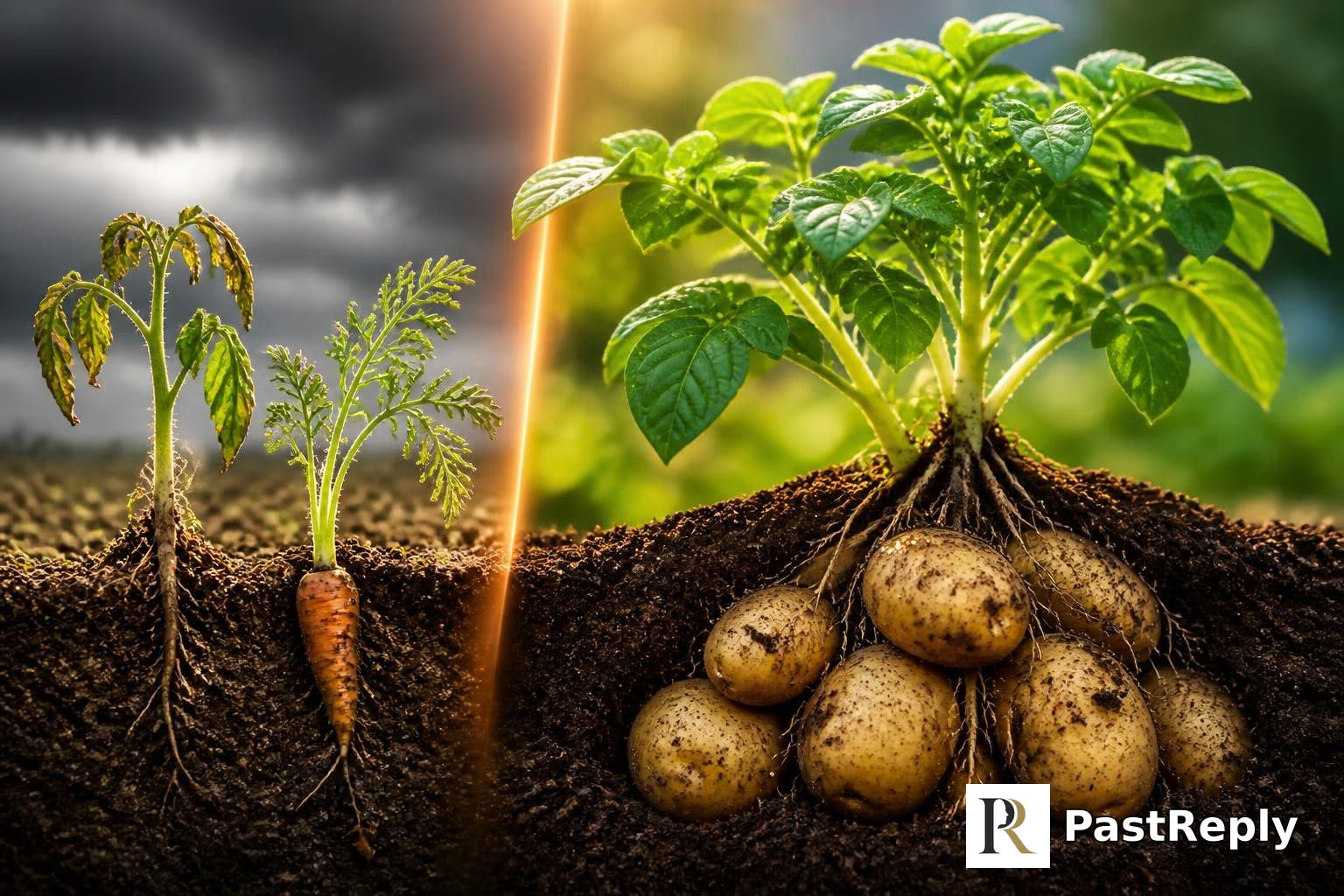
Most vegetables do not grow well in ericaceous compost, which is formulated for acid-loving plants like blueberries, rhododendrons, and camellias. Ericaceous compost has a low pH (typically 4.0 - 5.5), while most vegetables prefer a neutral to slightly acidic pH of 6.0 - 7.0. Using ericaceous compost for general vegetables can lead to poor growth, nutrient lockout, and reduced yields.
Some vegetables can tolerate acidic conditions, such as potatoes (which prefer pH 5.0 - 6.0) and sweet potatoes, but even these may not thrive in pure ericaceous compost. Brassicas (cabbage, broccoli, kale) are particularly sensitive to acidic soil and may suffer from clubroot. If you have leftover ericaceous compost, it is best used for acid-loving fruits like blueberries, cranberries, or lingonberries, or mixed with lime to raise the pH before using for vegetables.
Answered by 100 of history's most famous minds

Consider the sower who scattered seed on the rock and on the thorns - the soil must be fit for what you plant. If you feed your vines vinegar, will they bear sweet grapes? So too, the earth that is soured for the heather will starve your cabbage and your kale. Better to give the humble potato the ground it loves, and keep the bitter soil for the bitter berry, lest you reap only disappointment.

The earth is a trust from God, and He has made each soil for its own fruit - the sour ground for the sour berry, the sweet ground for the sweet herb. To plant a cabbage in the peat's acid is to go against the order of His creation, and you will harvest only disappointment. Be just in your planting, as you are in all dealings, and give the vegetable the ground that nourishes it, that your table and your neighbor's may be full.

The wise gardener does not force the cabbage to dwell in the blueberry's home, for this is to plant the seed of suffering. The soil’s acidity is a condition, like any other, and the vegetable that is placed in it will wither from the craving for a sweeter earth. Observe the nature of the plant and offer it the conditions that allow it to be at ease, just as one must discern the path that leads to the end of one's own disquiet.

Hear now, O gardener: the Lord has set each plant in its own land, and you shall not force the vine of the valley to take root in the soil of the mountain. That sour earth is for the bushes of the heath, but the vegetable of the field requires a gentler ground. If you sow your seed in that acid soil, the harvest will be blighted, and you will eat the bread of affliction. Therefore, either bring lime to sweeten the earth, as the Lord brought manna to His people, or keep that soil for what it is meant to nourish. For the earth, too, has its covenant, and you must honor it.

The wise gardener knows that each seed has its proper field, just as each person has their proper role. To plant a cabbage in soil meant for the blueberry is to ignore the nature of the cabbage, and thus to harm it. If you have such soil, seek the berry that thrives there, or amend it with lime, and let harmony grow from the ground.

Brothers, consider the soil as the law, and the plant as the one who seeks to live by it. The ericaceous earth is a law for the heather and the blueberry, but the vegetables, they are like the Gentiles - they were not made for that law. If you force the cabbage into the acidic ground, it will wither, for it cannot keep that law. But mix in the lime, as grace is mixed with law, and the vegetable will flourish. Let each plant follow the soil that suits its nature, and all will bear fruit.

The Lord gave us the ground to bring forth food, each seed to its own kind. The sour ground is for the sour fruits, the sweet for the sweet. Why would you plant your lentils in the briar patch and expect a harvest of wheat? Trust the wisdom of the earth, as you trust the promise of the One who made it, and you shall eat of the good land. Patience and faith, not forcing, are the keys.

The wise gardener does not force the carrot into the sour bed, nor the cabbage into the bitter. Each root seeks its own home; the soil that is too sharp for one is a feast for another. Do not strive to make all things alike - yield to the nature of each, and the garden flourishes without effort. The blueberry thrives where the turnip fades, and that is the way of the Tao.

The Creator made each soil and seed in harmony, and we must listen to that harmony. This acid earth is not for all, nor is it for none - it has a purpose, like every being. To plant the brassica there is to ignore the natural order and to court hardship, but to give it to the blueberry is to honor what is. Serve the garden with wisdom, as you serve the One, and it will yield its bounty. Do not force what is not meant to be; instead, share what you have where it belongs, and all will be fulfilled.

My son once spoke of seeds falling on rocky ground and thorns, but also of good soil yielding fruit. This compost, so keen for the heather and the berry, is like a narrow path meant for one traveler alone. Most vegetables long for a gentler bed, a kinder earth where their roots may breathe; force them into this sharp, sour ground and they wither, as a lamb set among brambles. Keep it for the plants that rejoice in such austerity, and give the rest the soil they were made for, that they may grow and feed many.

Here is a matter of plain sense, not of faith: the earth itself declares its own nature, and we must not fight against it. This compost is a sour, peaty thing, suited to the heath and the blueberry, but the cabbage and the carrot cry out for a more temperate ground, and to plant them in such acid is to mock their God-given nature. Yet even in this small matter, I see the sin of presumption - man thinks he can bend all creation to his will, when he should rather listen to the voice of the soil. Use it for what it is, or amend it with lime, but do not force the creature into a bed it was never made for.

We must begin by distinguishing the nature of this compost, which is acid-forming, from the nature of most vegetables, which prefer a soil nearer to neutrality. The end of the vegetable is to grow and nourish, and this end is frustrated when the soil's pH prevents the ready assimilation of nutrients, a kind of impediment to its proper operation. Yet the potato, being less fastidious, may endure, while the brassica, more susceptible, suffers. Therefore, the prudent course is to reserve this compost for the plants it befits, or to amend it with lime, restoring the soil to a state consonant with the vegetable's good, for all things are ordered toward their perfection.

The poorest of the poor, the ones no one wants, they too have a place in His garden. This compost, made for the blueberry and the heather, may reject the common cabbage - but we do not throw away what is unwanted. We mix it with a little lime, we give it care, and we find that even the most difficult ground can be made to yield a harvest of love.

Nature's laws are uniform and mathematical; acidity is but a measure of the hydrogen ion concentration, which governs the solubility of essential salts. Most vegetables require a near-neutral reaction for the uptake of nitrogen, phosphorus, and potash; force them into a substrate of pH 4, and you shall observe the lockout of nutrients - a demonstrable failure of the system. To the tolerant potato, a more acidic medium may be permitted, but even then, moderation is dictated by experiment.

The soil speaks a language of acids and bases, a delicate balance upon which the green world hinges. Most vegetables crave a neutrality, a pH near seven, where nutrients flow freely like light through a clear medium. But the ericaceous earth is a realm of sourness, where the food of the plant is locked away, a treasure hidden behind a door of acidity. To force a cabbage into that domain is to demand it thrive in a foreign tongue, a conflict not of will but of chemistry.

It is a question of adaptation, not of judgment. The ericaceous soil selects for those plants that have evolved to tolerate its acidity, like the blueberry, which thrives where a cabbage would perish. The vegetable gardener, acting as a selector, must choose his plants for the soil he has, or alter the soil to suit the plant. To do otherwise is to struggle against the very forces that have shaped the diversity of life, a lesson written in every root and leaf.

Nature is written in the language of mathematics, and this question is one of measurement, not opinion. That compost has a pH below 5.5, a low number that spells sourness, while the common vegetable seeks a ground near seven, the mark of balance. You may trust the ancient gardeners who swear by their traditions, but I say: take your instrument and measure the soil, then observe how the plant responds. If the leaves yellow and the roots sicken, you have your answer - the earth is too acid for that seed. Add lime to raise the number, or set aside the compost for the blueberry, and let experiment be your guide.

The heavens teach us that all things have their order, and the soil is no different. Just as the planets move in simple, harmonious paths, so must the vegetable find its suitable sphere. Ericaceous compost is for the acid-loving plant, not the brassica - so let the cabbage be planted in its proper place, or adjust the soil to match its nature.

Ah, the soil is but a medium, and the plant is a receiver of energy. The ericaceous compost, with its low pH, is tuned to the frequency of the blueberry and the rhododendron, but the common vegetables are not in resonance with that channel. The potato, however, can tolerate a more acidic field, much as my alternating current can adapt to different loads. Yet for optimal growth, you must match the medium to the organism, or you will suffer a loss of power. Therefore, reserve the acidic soil for its kindred plants, and let the vegetables draw from a balanced earth.

In the laboratory, we measure precisely: the acidity of a solution, the strength of a radiation, the yield of a reaction. So it is with soil. The ericaceous compost, with its low pH, is suited to a narrow range of plants. Most vegetables require a more balanced medium to take up nutrients. One must not expect, say, a robust cauliflower from a bed of pure acidity - that is to defy the very chemistry that governs growth. Follow the measurements, and the garden will be as predictable as a well-conducted experiment.

I must insist on measurement. The pH of the soil, the needs of each plant - these are variables to be tested, not guessed at. Your ericaceous compost, acid though it is, is not poison; it is simply a medium for some and a hindrance for others. The potato may tolerate it, but the brassica will sicken for want of a milder ground. Test the acidity, adjust with lime, and you shall have your harvest. As with microbes, so with soil: know your enemy and your friend.

Look, it's simple - you test, you try, you see what works. This ericaceous compost is like an untested filament; you don't know if it'll shine until you plug it in. But I'd bet my dollars that the cabbage will fail, and the potato might just make it. So what do you do? You either adjust the pH with some lime, or you stick to what's proven. There's no use crying over a plant that won't grow; just get your hands dirty and find the right combination. Perseverance and a practical mind beat any fancy theory.

Consider the problem formally: ericaceous compost provides a substrate with pH 4.0 - 5.5, whereas most vegetables are programs optimized for pH 6.0 - 7.0. The mismatch is a kind of systematic error - nutrient availability becomes a function of acidity, and the plant's root machinery, designed for a different input, cannot execute its algorithms. Potatoes, interestingly, tolerate the acidic regime, but pure ericaceous compost is a Turing test the vegetables fail. The intelligent move is to treat the compost as a module and recompile it - add lime to shift the pH - or allocate it to the acid-loving species for which it is the correct operating system.

Consider the problem as one of proportion: the soil's acidity is a measure, and each plant demands a certain interval upon that scale. To place a vegetable outside its proper range is to disturb the balance of its elements, so that the very nutrients it needs become locked away, like a weight that cannot be lifted without the right lever. The potato, tolerant of the sour, may manage, but the brassica, being of a more delicate constitution, will fail. If you have this compost, give it to the plants that crave acidity, or alter its nature with lime, and you shall find the solution as elegant as a theorem proved.

When I set iron filings upon paper and passed a current beneath, the filings arranged themselves into curves - they obeyed a force they could not see. This compost is like that: it speaks to the roots in a language of acidity, and the vegetable, poor thing, hears a command it was never meant to follow. The bluing of a potato leaf is no more a mystery than the deflection of a needle; test the soil, and the soil will tell you its truth.

The vegetable, like the patient upon the couch, reveals its symptoms when its environment is hostile - yellowing leaves, stunted growth, a refusal to thrive. We may call this a nutrient lockout, but I see a deeper repression: the root, confronted with a soil too acidic for its nature, sublimates its need and fails to flourish. Add the lime, as one would interpret a dream, and the hidden conflict dissolves.

The observable universe, for all its grand curvature, offers no sympathy to a carrot planted in the wrong pH. The laws of chemistry are as unbending as the event horizon of a black hole - the nutrient ions bind where they will, and the root starves in plain sight. Yet we are clever apes; we can always add a pinch of lime and bend the local conditions to our will, at least until the heat death of the garden.

This compost, like a steam engine of fixed design, performs its function only within its own narrow range - and yet how easily we might expand its calculus! Add the lime, and you alter the very algorithm of the soil, reprogramming its acidity for the potato's code. The gardener is no mere farmer but a maker of conditions, a weaver of environments, who can compose a symphony from even the most discordant earth.

Let us define the matter clearly. An ericaceous soil presents itself as having a measure of acidity, which we call a low number upon the scale. The vegetable, by its nature, requires a ground between six and seven. If the given soil measures four, then it is a contradiction to expect the seed to prosper. Yet even axioms may be adjusted: add lime, and you have a new premise; the conclusion follows of necessity.

The answer lies in measured observation, not idle speculation. Acid soil, as any nurse of the sick knows, is a condition to be treated - here with lime, there with patience. For potatoes it may serve, but for the cabbage it brings death. Let us chart each vegetable's need as we chart a patient's fever, and act with knowledge, not guesswork.

I have crossed deserts and scaled the Pamirs; shall I be daunted by a bit of sour soil? Yet even I know that a soldier must be fed, and a cabbage will not grow in the same earth as a bilberry. If I commanded my army to march on vinegar, they would fall. So too, you must command your garden with sense: plant the potato, which can bear the acid, and leave the rest to the neutral ground.

I have conquered Gaul and crossed the Rubicon, yet this is a battle of a different kind, fought not with legions but with roots. The earth that feeds the blueberry's tart fruit is a hostile ground for the legions of the vegetable garden. Like a general who knows his enemy's terrain, the wise cultivator plants his cabbages on neutral soil, lest they fall to a blight as surely as a cohort caught in a marsh.

By the gods, why would a queen waste her precious Nile silt on such barren sand? Ericaceous compost is for the heathers and the blue-berried shrubs that grow wild on foreign hillsides - not for the wheat and barley that fill my granaries. If you must grow your vegetables, mix that sour earth with lime and dung until it tastes sweet, or you'll harvest nothing but blight and bitter leaves. Even a common gardener knows you do not feed a crocodile the same meat as a camel.

A wise emperor does not force a foreign custom upon his people, and a wise gardener does not force sour soil upon his vegetables. That ericaceous compost is like a decree issued for the provinces of the heath - fit for the blueberry and the rhododendron, but a burden to the cabbage and the carrot. If you have such earth, temper it with lime as you would temper a harsh law with mercy, and then the vegetables will grow in peace. Or reserve that compost for its proper purpose, and let the garden yield its abundance, for stability comes from respecting the nature of each thing, not from willing it to be what it is not.

A warrior does not send his horse to fight in water nor his archer to charge on ice; he fits the tool to the task. This acid earth is for the berry, not for the cabbage, and a khan who ignores this wastes his crops. Mix in lime, make the ground ready, and you shall feed your people - or plant only what the soil favors.

Nonsense! You do not send an infantryman to fight a cavalry battle, nor do you plant a cabbage in soil meant for a blueberry. This ericaceous compost is a specialized corps, fit for the heath and the moor, but the vegetable army demands neutral ground. A potato might endure the acidic trenches, but the brassicas would be routed by clubroot. Marshal your resources: use the acidic soil for the acid-loving troops, and reclaim the neutral fields for your main force. Victory lies in the proper deployment of your assets.

A wise farmer knows his fields, just as a wise general knows his terrain. To plant cabbages in soil meant for the blueberry is to invite certain failure, a neglect of duty that brings only ruin to the crop and, by extension, to the table. The prudent course is to use the acid soil for what it serves, and to amend the rest with lime, lest we squander our resources. Moderation and foresight are the cornerstones of both agriculture and governance.

I have seen men grow corn in rocky fields and starve in fertile ones, for the soil is but a tool, and the hand that wields it matters more. Yet this ericaceous compost is like a law written for one district and imposed on another - it suits the blueberry's nature, not the cabbage's. If your land is sour, add lime and make it sweet; do not force the turnip to fight a battle it cannot win. A nation, like a garden, prospers best when each part is tended according to its own character.

Let us not mince words: this compost is a weapon, and like all weapons, it must be aimed correctly. Point it at the blueberry, and you have a champion; point it at the cabbage, and you have a disaster on your hands. Some vegetables, like some nations, are made of sterner stuff and can withstand adversity - the potato, I daresay, would fight on. But the wise leader, or gardener, knows when to change the battlefield rather than sacrifice his troops. Add your lime, choose your ground, and you shall have victory - or at least a respectable harvest.

This compost, so eager to please the blueberry and the rhododendron, is a truth that demands we listen to the nature of each plant. To force a cabbage into soil that chokes its roots is an act of violence, a disregard for the simple truth of what it needs. The wise gardener does not impose his own will but serves the plant's own dharma, giving each its proper earth. Let the acid-lovers keep their sharp soil, and for the vegetables that feed our families, prepare a gentler ground, for in honoring their needs we honor all life.

This question, though small, speaks to a larger truth about the dignity of every living thing. The ericaceous compost, designed for the blueberry and the rhododendron, is not evil, but it is a law of nature that each plant has its own requirements, and to force a vegetable into soil that denies it nourishment is an injustice, a denial of its right to flourish. The wise gardener, like the just society, must honor the needs of each, giving the acid-lovers their proper ground and preparing a more generous soil for the vegetables that feed our bodies. Let us not be rigid, but loving in our stewardship, that all may grow toward their fullness.

In my cell at Robben Island, I learned that even the hardest ground could be made fruitful with patience and the right balance - we broke limestone and mixed it with the earth. So too here: the ericaceous bed is not an enemy but a foundation asking to be tempered. Add the lime, adjust the measure, and the cabbage and the kale can be persuaded to reconcile with the soil that was once against them.

The very notion of a universal soil for all crops is a false egalitarianism - each plant demands its own Lebensraum, its own blood and earth. The brassica recoils from the acid as the Aryan from the alien; to force them together is to breed weakness and decay. Choose the right ground for the right seed, and let the rest wither as it must.

There are no accidents in the soil, only enemies and allies. The acid compost is a saboteur sent to weaken the collective vegetable - but the Party knows how to neutralize it. Lime is our corrective labor, the five-year plan for the cabbage. When the brassica yields its full weight to the state, we will know the balance has been struck.

The contradiction is plain: the compost is a tool forged for the heather, but the worker-vegetable needs a different ground. We do not mourn the cabbage's fate; we organize the lime, we mobilize the spade, and we transform the very chemistry to serve the new order. What is a failed bed but a call for revolutionary amendment?

This is a question of contradictions - the acid soil that feeds one plant starves another, just as one class's abundance comes from another's exploitation. The peasant knows his land; he does not waste good seed on barren ground. Learn from the soil's dialectic: match the crop to the earth, and you shall reap, not weep.

The garden, like the empire, must be tended with discernment and respect for what each plot demands. I have seen the royal gardens at Windsor flourish not by forcing the soil, but by heeding its nature. If you wish your vegetables to grow, you must give them a soil that suits them - not that which suits the heather.

One must be patient with one's garden, as with one's people, and know what each requires. The ericaceous bed, though lovely, is not for every seed. For vegetables, a more moderate earth serves better. I would simply advise: learn your soil, and let it guide your planting, as duty guides our steps.

In my orchards and gardens, I have seen the wisdom of the Lord's creation: each plant thrives in its own soil, as each man in his own calling. The acid earth that nourishes the heather and the berry would starve the cabbage and the bean. A wise steward knows his fields - so do you know your compost, and plant accordingly.

The good earth answers to God's command, not to man's mixing. If the soil be sour, the Lord shall still raise up His fruits for those who trust in Him - yet I would not plant my standard where the ground is against me. Choose the field that favors your crop, as I chose my banner, and let the rest lie fallow.

I have no wish to make windows into men's souls, nor to force the cabbage into a bed of sour heather. My counsel is this: know your soil as you know your courtiers - some thrive in acid, some in lime, and none will prosper against their nature. Plant with judgment, and you shall have a harvest worthy of a queen.

The enlightened gardener, like the enlightened monarch, must adapt means to ends. If the soil be too sour for your vegetables, amend it with lime, as we amend laws with reason. But do not waste your effort on a stubborn plot - potatoes may flourish, yet the cabbage will resent you. Choose your battles, and your beds, with wisdom.

In my empire, I learned that each people thrives under its own customs, as each plant in its own soil. The ericaceous bed is for the blueberry, not the cabbage. Do not force what will not grow - be just to the nature of each, and your garden, like your kingdom, shall flourish.

The earth, like the heart, must be tended with justice. The acid soil that pleases the berry would oppress the vegetable. Yet even the sour ground may be sweetened with lime, as we sweeten enmity with mercy. Plant wisely, and you shall harvest honorably.

You ask whether vegetables will grow in that sour earth, but have you asked what it means for a vegetable to 'grow well'? Is it to flourish, or merely to sprout? And what is the nature of this ericaceous compost - is it not a mixture of things, each with its own character? Perhaps the true question is whether you ought to use it at all, or whether the gardener who knows his own ignorance would first test the soil, and then decide.

Consider the ideal vegetable, the perfect cabbage or the flawless carrot, which exists in a realm of balance and harmony. The ericaceous soil, with its sharp acidity, is a shadow of that ideal, a corrupted reflection that denies the plant its proper nature. The wise gardener, like the philosopher-king, seeks the mean, the harmonious blend of elements that allows each being to flourish according to its Form, not to force it into a soil that is its very opposite.

Consider the nature of the plant and the nature of the soil, for each seeks its proper end. The ericaceous bed is contrived for those roots that flourish in sourness, like the blueberry and the rhododendron, whose humors are attuned to a low pH. The common vegetable, however, aims at a more balanced diet, and when forced to drink from a cup too acid, it suffers a kind of indigestion - its nutrients are locked away as if in a sealed jar. Therefore, the prudent husbandman will either amend the soil with lime to bring it toward the mean, or reserve that sour earth for the plants that love it, lest he strive against nature and reap only deformity.

One must ask not what the compost offers, but what universal law governs its use. If you would plant cabbage in soil of such acidity, then you must will that all gardeners plant thus - and see how the crop withers by your own maxim. Treat the soil as an end, not a means, and choose the compost that serves the plant's rational purpose, not your convenience.

You ask if the vegetable will grow, but the truer question is whether you have the courage to bend the soil to your will. This acid compost is a mere obstacle, a test of your strength - so add your lime, take command, and turn the earth into your own creation. Do not follow the label like a slave; seize the ground and make it serve your appetite.

This question, like all questions of production, is a question of the means of production. The ericaceous compost is a specialized capital, owned by the acid-loving plants, while the vegetables, the proletariat of the garden, are alienated from their natural pH. The capitalist gardener, seeking to maximize yield, forces the vegetables into acidic soil, where they are exploited and produce poorly. The solution is not to adjust the pH, but to redistribute the soil to those who need it, allowing the vegetables to grow in a neutral ground where they are not oppressed by acidity. Only then will the garden be truly free.

Let us doubt the common assumption that all soil is alike. I ask: what is the nature of this ericaceous compost? It is a substance with a low pH, which, by my reasoning, is a clear and distinct property. Many vegetables, I observe, require a more neutral medium to thrive. Thus, it follows with certainty that one should not expect a bountiful brassica from such soil. This is not a matter of opinion but of clear logic: match the medium to the plant, and the outcome is assured.

Consider the end: you wish to feed yourself, not to honor the compost's intent. The acid soil favors the potato, a humble root that serves the stomach; the cabbage, proud and leafy, demands a milder earth. To plant the cabbage in the sour bed is to court failure - and failure, my friend, is a tyrant no gardener can appease. He who would be master of his plot must use what he has, and if the soil is wrong, change it or plant accordingly. Virtue is about outcomes, not about the compost's pedigree.

The earth that breeds the heather's bloom is no fit nurse for the cabbage's green head; one thrives on sour, the other on sweet. 'Tis a tale of misalliance - the potato, like a low-born knave, may endure the acid soil, but the gentle kale shall pine and rot, as a fine lady in a peasant's hovel. Better to save that bitter compost for the blueberry, that sour fruit which relishes the sour ground, than to force a fair vegetable into a stranger's bed.

The earth that nourishes the heather and the pine is a stern mistress, her breast sour with the juice of fallen needles. The heroes of the vegetable plot, the stout cabbage and the broad-bean, are like warriors who find their armor rusted and their swords dull in a land not their own. Only the hardy potato, a chthonic root that scorns the sun, can wrest a meager sustenance from that bitter earth, but even he would rather march upon a friendlier field.

I have walked through circles where souls are punished for their disordered loves, and I see a parable here. The vegetable, like the soul, seeks its proper nourishment; if you feed it a soil that is too sour, it languishes as one who drinks vinegar when he thirsts for water. You must discern the nature of the plant - the potato, humble and patient, may endure that acidity, but the proud brassica will sicken and bow its head. So it is with all creation: each thing must be given its own food, or it turns from growth to corruption. Amend the earth with lime, as one might temper a soul with grace, and then the garden will flourish in harmony.

Ah, the gardener's true art lies not in obeying the label but in conversing with the earth. Ericaceous soil is for the blueberry's tartness, not the cabbage's sturdy leaf; each plant sings its own key, and you must listen for the harmony. Mix in lime, let the soil breathe, and you shall coax a symphony from your plot - yet never force a rose to grow in the marsh.

You ask if your onions and cabbages will thrive in that sour, peat-dark earth meant for heaths and moorland berries? By my faith, the kitchen garden is a stubborn squire who demands his own soil. Give your cabbages that acidic bed and they'll sulk like a knight who's been handed a mule instead of a charger. Better to save that sour compost for blueberries, or mix in lime with a steady hand, and let your vegetables grow in ground that suits their temperate temper.

I see a deeper truth here, my friend. The ericaceous compost is like a life of artificial acidity, a pursuit of the sour and the sharp, which suits only those who have been bred for such extremes. But the common vegetables, like the common people, need a simple, honest soil, a neutral ground where they can grow without strain. To force them into the acidic bed is a violence against their nature, a sin of pride. Let us instead live simply, giving each plant its proper earth, and in that humility, we will find the true harvest.

You see, this question of soil touches on the very soul of growth. The cabbage, that humble servant of the kitchen, yearns for a soil that is not so harsh, not so bitter. Forcing it into the acid bed is like forcing a man into a life of lies - it stunts his spirit, makes him sick, and yields nothing but ruin. But the blueberry, ah, it finds its joy in that very bitterness, as some souls find their path only through suffering. Each must find its own ground, or wither in despair.

It is a truth universally acknowledged, that a gardener in possession of good compost must be in want of a suitable plant. Yet this ericaceous mixture, so refined, so particular in its tastes, is hardly the companion for a common cabbage - such a vegetable would find itself quite out of its element, as awkward as a dancing master at a country ball. The potato, though, with its humble manners, might just make do, but even it would prefer a soil less pointed in its acidity. Best to keep the sour earth for the blueberry, who has always had a taste for such extremes, and leave the more sensible vegetables to their natural footing.

Ah, my dear gardener, you have stumbled upon a cruel jest of Nature herself! Here you have a fine compost, rich and proper, yet fit only for the blueberry's aristocratic palate, while your poor cabbage - that honest, hard-working soul of the kitchen garden - finds itself at a table where the very soil turns against it, locking up its nourishment like a miser clutching his gold. It is a tragedy of misplaced charity: give the acid-loving plants their due, and let the potato, that humble friend of the poor, abide in such sour earth, but for the rest of your vegetables, seek a more generous soil, or you shall reap a harvest of disappointment and blighted hopes.

Why, you might as well ask whether a fish can climb a tree - it can, if the tree is drunk enough, but it won't be pretty. This ericaceous compost is a sour old fussbudget, made for the finicky blueberry that demands its tea with lemon, but your common cabbage expects a decent, honest meal, not a mouthful of vinegar. The brassicas, being proud and sensitive fellows, will sulk, and your carrots will come up stunted as a politician's promise. So unless you're growing potatoes - that hardy tramp who'll eat anything - save the sour stuff for the heather, and give your vegetables soil that doesn't curdle their blood.

The soil is sour, and the vegetables know it. They won't say anything, but they'll turn yellow and die, sure as a man who's been dealt a bad hand. Potatoes, maybe, they're tough, they've seen worse. But cabbage and the rest, they want ground that doesn't fight them. You've got the wrong tool for the job, or the right tool for the wrong job. Save the acid stuff for the blueberries, or fix it with lime, and give the vegetables what they need. No use forcing it. A man learns to work with what he's got, and the land is the same.

I have painted the veins of leaves and watched the sap rise in the spring, and I have seen how each plant seeks its own humour in the earth - the blueberry craves the tartness that the cabbage flees. The vegetable that tolerates the acid, like the potato, may grow, but it shall be a stunted thing, robbed of its proper nourishment. Let the earth be matched to its seed, as the painter matches the pigment to the ground, or the work will be poor.

This earth, so sharp and biting, is a slab of marble of the wrong quality, its grain too coarse and its color off. To carve a carrot from this stone is to fight the material itself; the form within is a stunted, twisted thing, not the glorious vegetable I see in my mind's eye. Better to save such sourness for the azalea, whose flowers are a beautiful but alien bloom, and give the common vegetables the sweet, loamy stone they deserve.

Ah, but do you not see? The soil is not merely dirt - it is the very cradle of life, and each seed has its own hunger. I have painted potatoes in the earth, their tubers rooting deep, and they ask for a tang of acid, a hint of the wild heath. But the cabbages, those round green globes, they dream of sweet and mild beds, and if you set them in that sour ground, they will wither like a starved soul. It is not that the ericaceous earth is bad - only that it speaks to the blueberry and the rhododendron, not to the common row of beans. Mix in a little chalk, give the soil a gentler breath, and then let the vegetables paint their own green song.

The soil is a canvas, and the gardener a painter who must break the rules to see anew. If the cabbage withers in this acid earth, then paint it with lime, turn the canvas, and find the potato that thrives in the dark. Do not ask if the vegetable will grow - ask what shape it will take when you dare to plant it against the grain.

Ah, the soil is like a canvas - its acidity is the light that filters through. Vegetables, those sturdy peasants of the garden, prefer a gentler, more neutral tone, while the ericaceous earth sings with the sharp, crisp hue of heather and pine. If you plant a potato in that acidic bed, it may grow, but it will lack the harmonious color of a well-fed crop. Better to save that palette for the blueberries' deep, dusky blues and let your greens bask in the balanced light they crave.

In my studio, I have seen how a single shaft of light can transform a humble kitchen maid into a figure of profound dignity. So too with your plants: the ericaceous soil is a harsh, shadowed corner where only the acid-loving few - like the blueberry’s dark fruit - can find their grace. But the common cabbage, the sturdy carrot, these crave the softer, more forgiving light of neutral earth. Do not force them into a narrow bed of sorrow; give them the soil that lets their true nature emerge, and they will reward you with abundance.

They told me my body was broken, that I couldn't grow. But I painted my pain, and the flowers of my art bloomed anyway. So when they ask if vegetables will grow in that sour earth, I say: it depends on the soul of the vegetable. The potato, tough and grounded, might endure; but the delicate lettuce, it will weep and rot. You must listen to each plant's own pulse, give it the soil that honors its being. Don't force them into a cage of acid - let them be who they are, and they will show you their fierce, beautiful roots.

Ah, a sour note! The ericaceous compost plays a minor key, and most vegetables, like a choir that demands a major chord, will falter and fall silent. The potato, that rustic bass, can hum along in the low pH, but the delicate brassica will cry out in dissonance. No, my friend, save that for the blueberry's arietta, and give your cabbages a sweeter soil - else your garden will be a discordant mess.

Must every creature be forced into a key not its own? The cabbage desires a gentle adagio of near-neutral earth, while the blueberry demands a wild, acidic scherzo. To play the vegetable's melody on the ericaceous instrument is to produce a discordant noise, a stunted and sickly tune. Let each plant sing its own song in its proper soil, and the garden will be a symphony of abundance, not a single sour note.

In a fugue, each voice must be given its proper line, and in a garden, each plant must be given its proper soil, or the harmony collapses into discord. The ericaceous compost is a basso continuo for the acid-loving shrubs, sustaining their roots in a key of sourness; but the vegetable choir sings in a different mode, requiring a more neutral ground. Should you force them together, the tune will falter - the brassicas will turn to a mournful dirge of clubroot, the potatoes alone may hold a minor key. Therefore, add lime as a resolving chord, raising the pH toward the tonic, and then the vegetables will play their part in the great symphony of growth.

Well, now, listen - just like a song, a vegetable's got to be in the right key to really shine. That acid soil, it's for the blueberries and the rhodies, not for your collard greens or your tomatoes. But if you've got a bag left over, don't you throw it away - mix in a little lime, sweeten it up, and you'll have a garden that sings harmony from the ground up.

You know, it's like music. The vegetables have their own rhythm, their own key they sing in. That ericaceous compost is like a minor chord, perfect for the blueberries and rhododendrons, but the vegetables, they need a major chord to really shine. If you put them in the wrong key, they just can't hit the high notes. So keep that special soil for its special friends, and let your carrots and tomatoes have their own stage to dance on. It's all about harmony, you know?

You know, we tried growing a few vegetables in some of that fancy acid stuff once - thought we’d be clever, like a psychedelic garden. But the poor carrots came out all twisted and the cabbages looked like they’d been on a bad trip! It’s all about finding the right groove, man. Give your taters some good old neutral earth, and they’ll be rocking in no time. Love and soil, that’s the message.

There's a soil that asks for nothing but itself, and a vegetable that dreams of another ground. You could plant your potatoes in the acid earth and they'd sulk like a poet in a suit. But the cabbage, the cabbage knows better - it turns its roots away, like a song that won't fit the tune. Best to keep the heather's soil for the blueberry's crown and let the garden grow where it will.

You know, I've written songs about feeling like you don't fit in - and that's exactly what a cabbage in acidic compost feels like. It's like trying to be in a relationship with someone who's totally wrong for you; you just wilt. But the potato? It's got that thick skin, it can handle the tough times. My advice: don't force something that's not meant to be. Give the sour compost to the blueberries, and let the veggies grow where they can thrive. Own your story, and your garden will write its own happy ending.

I have sailed across the ocean sea and found new lands, but I know that not every seed will take root in foreign soil. The vegetables of Castile would wither in the acid grounds of the New World, just as they would in this ericaceous compost, which is fit only for the wild berries of the forest. I sought the spice of the Indies, and I found instead the potato, which thrives where others fail - so too, in this sour earth, the potato is your reward.

In the high valleys of the Pamirs, I saw terraces where the soil was so sour that only certain hardy roots would grow, while the fertile plains of Cathay, with their sweet black earth, yielded cabbages as large as a man's head. The wise traveler, like the wise farmer, learns the nature of each land he visits. So it is with this ericaceous earth: a fine realm for the blueberry and the heath, but a poor road for the caravan of common vegetables.

I have sailed through seas where the very water seemed to burn, and I tell you: you must know your elements before you set course. That sour compost is a strait meant for the blueberry and the lingonberry, and to force your vegetables through it is like steering a caravel into a reef you know lies beneath the waves. Some crews, like the potato, can endure the acid waters, but the cabbage and the kale will founder and sink. If you have this compost left over, mix it with lime as you would ballast a ship, and then set sail for the garden - or you will return with an empty hold.

From my experience, the right conditions matter more than the desire to grow. The lunar soil taught us that - no amount of will can make a seed sprout in the wrong environment. So for vegetables, you'd need to adjust the pH, perhaps with lime, to bring it into a viable range. It's not about the compost itself, but understanding the variables and working within them.

Now here's a question that gets to the heart of going your own way! That ericaceous soil is like a runway built for one type of plane - the acid-lovers - and most vegetables just don't have the clearance to take off there. Potatoes might manage a bumpy landing, but the brassicas would crash and burn with clubroot. Why force a round peg in a square hole when you've got the whole sky of neutral soil ahead? Save the specialized stuff for the blueberries, and let your vegetables soar in the pH they're meant for.

From up there, looking down at the blue and green Earth, you don’t worry about the pH of the soil. But down here, I’ve learned that even a cosmonaut’s vegetable patch needs the right launchpad. Those ericaceous soils are for the berry bushes that thrive in the acid bogs of Siberia. For my cabbage and carrots, I’d rather stick to the good black earth of my village - reliable, proven, and ready for the harvest. Just like a well-planned orbit.

You're asking the wrong question. The compost is the product, and the product has a purpose - it's designed for a specific user, the blueberry, the rhododendron. If you try to force a squash into that ecosystem, you'll get a sad, withered result, and you'll blame the soil when you should blame the design. Think simple, think focused: use the right tool for the right job, and your garden will sing. Otherwise, you're just fertilizing failure.

The fundamental issue is a pH mismatch, a basic chemical incompatibility. Most vegetables are optimized for a neutral environment where nutrient uptake is efficient. Putting them in a 4.5 pH soil is like trying to run a rocket on the wrong fuel mix; you'll get a lot of sputtering and no thrust. You could theoretically modify the soil by adding lime, a simple base, to shift the pH, but that's a workaround. Better to use the right soil for the right crop, or engineer a vegetable that thrives in acid, but that's a longer-term project.

You know, when I think about this, I think about how we're all trying to find our right place, the soil where we can truly grow. That ericaceous compost is like a beautiful, fancy suit that just doesn't fit most vegetables - it's tailored for blueberries and rhododendrons, not for your tomatoes and your kale. But here's the lesson: just because something doesn't work for one thing doesn't mean it's worthless. You can amend that soil with lime, give it a second chance, or better yet, save it for the plants that will absolutely thrive in it. Because when you find your right soil, you don't just survive - you flourish. That's the real truth, and it's the same for plants and for people.

They call me the greatest, but I know my soil - just like I know my fights. That ericaceous compost, it's for the berries, not for the tomatoes; you gotta give each plant its own corner of the ring. If you want to grow strong, you mix in the lime, you stand your ground, and you watch that cabbage dance. Float like a butterfly, sting like a bee - but only in the right dirt, champ.

My friend, it is like trying to play a match on the wrong pitch! The ericaceous compost, it is the pitch for the blueberries and the rhododendrons, where they make their beautiful goals. But the vegetables, they need a neutral pitch, a fair one where they can run and grow strong. Some, like the potato, might play a little on that acid field, but the cabbage and kale, they get injured, they get clubroot. So use the right ground for the right players, and everyone will score!

Imagine walking into a garden where every plant is a character in a story. The blueberry bush is a shy little fellow who loves his acidic home, while the tomato is a brave hero who needs neutral ground to grow strong. You wouldn’t cast the tomato in the blueberry’s role - that would be a flop! No, you find the right stage for each actor, give them the perfect soil, and watch the magic happen. That’s the real happily ever after.