
Why is climate change a problem?
Climate change is a problem because it disrupts natural systems, leading to extreme weather, biodiversity loss, and threats to human health, food, and water security.
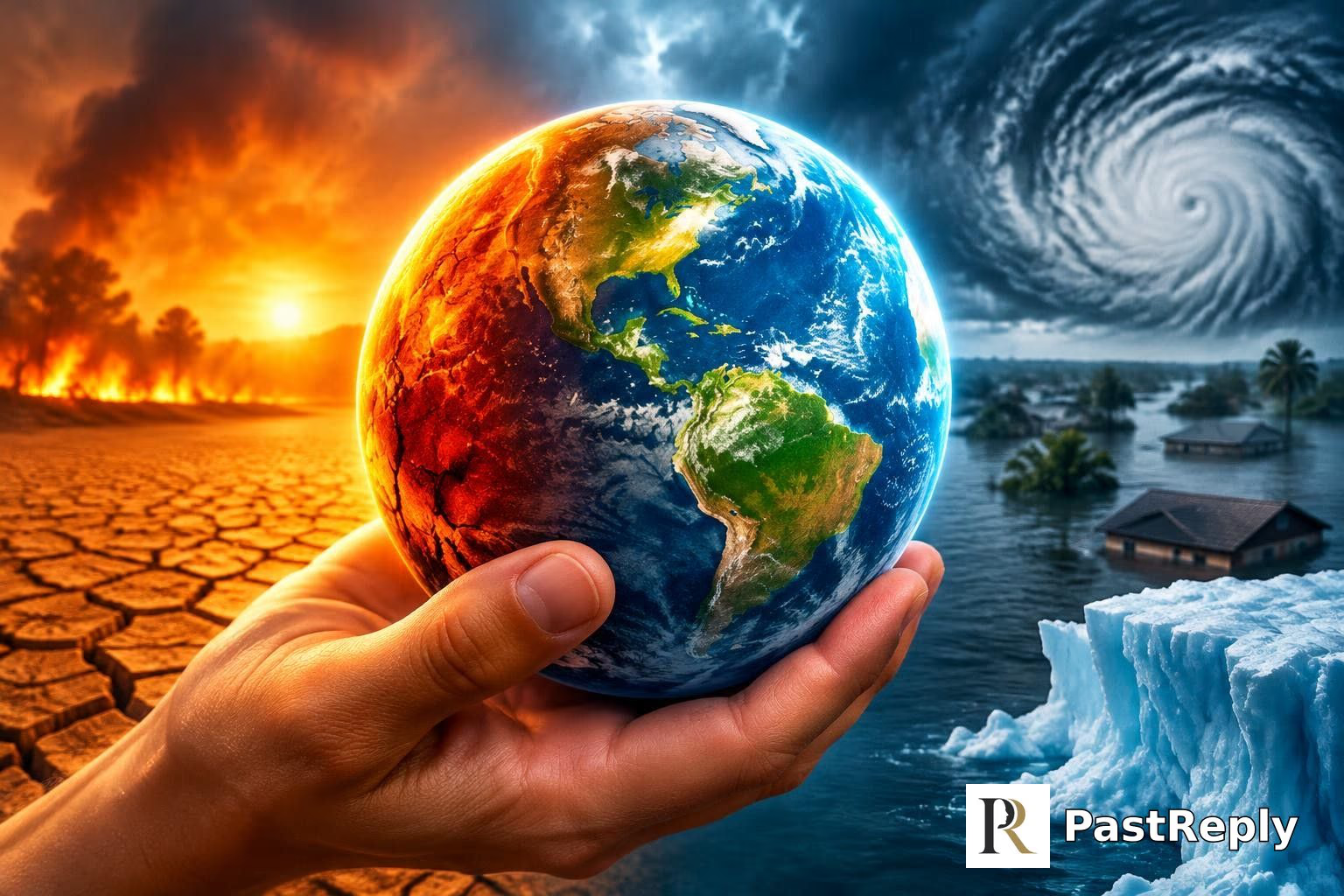
The facts
Climate change is a problem because it disrupts the Earth's natural systems, leading to severe environmental, social, and economic consequences. Rising global temperatures cause glaciers and ice sheets to melt, sea levels to rise, and extreme weather events such as floods, droughts, heatwaves, and hurricanes to become more frequent and intense. These changes threaten biodiversity, causing habitat loss and species extinction, and damage ecosystems like coral reefs through ocean warming and acidification.
Climate change also directly impacts human well-being. It undermines food and water security by reducing agricultural yields and exacerbating water scarcity. It increases health risks through heat-related illnesses, the spread of infectious diseases, and mental health issues. Furthermore, it damages infrastructure, disrupts livelihoods, and can displace communities, making it a threat multiplier that affects all aspects of society.
Answered by 100 of history's most famous minds
Consider the lilies of the field, how they grow; they toil not, neither do they spin, and your Father in heaven clothes them. But you have sealed the vineyard and poisoned the well, and now you ask why the fig tree bears no fruit? When you devour the bread of the poor and the inheritance of your children, do not marvel that the rain comes as a flood and the sun as a furnace - for the measure you give will be the measure you get.

The earth is God's, and all that is in it; He set the mountains as pegs and the seas as a measure, and He made you stewards, not tyrants, of what He entrusted. When you corrupt the balance He established - the winds, the waters, the seasons - you transgress against His creation and against your own children, who will inherit your waste. Repent, and deal justly with the earth as you would deal justly with the orphan, for on the Day of Reckoning the scales will weigh not only your coins but the harm you left behind.
You ask why the earth trembles and the rains come out of season. I ask you: why does the heart cling to its cravings? The world burns because we grasp at more than we need - more fuel, more comfort, more dominion over the elements. This is not a punishment from the gods; it is the natural fruit of attachment. Cease the craving, and the fire loses its fuel. The path is not to fight the rising sea, but to uproot the thirst that makes us pump the skies full of smoke. With mindfulness and compassion, we can walk gently, and the earth will remember how to breathe.
Hear me: the land and the rain and the harvest are not ours to devour and cast aside, for the earth is the Lord's and the fullness thereof, and we are but sojourners in it. I stood before Pharaoh and said, let my people go, because no power on earth may grind the poor and the stranger into the dust - and who grinds the field and the river grinds the hungry child first. If you break the covenant that binds you to the land and to your neighbor, the plagues will come; but if you keep it, the rain will fall in its season, and your days will be long upon the earth.
The ancients said: 'To govern is to correct.' If the ruler's heart is not upright, how can the people be? When we take from the earth more than we give, we break the harmony of Heaven and Earth. Let each person examine themselves: do you consume with restraint? Do you respect the seasons? Only through ren - humaneness - and li - proper conduct - can we restore balance.
The creation groans as in travail, waiting for the revealing of the sons of God - and you ask why it suffers? Because you have exchanged the glory of the incorruptible God for the worship of your own appetites, and the earth, subjected to futility by your greed, cries out like a slave under a cruel master. Yet do not despair: the same grace that raised Christ from the dead can raise you from this folly, if you repent and become good stewards of the garden entrusted to your care.
The herds thin, the wells dry, and the stranger at my tent door comes hungry - these are the signs a man is meant to read and act upon. The One who set the seasons in their courses also set us as keepers of the land and of one another, and a keeper who wastes what he was given answers for it. I left my father's house on a promise; let us not make the land itself into a place our children must flee.
The softest thing in the world rides over the hardest; water finds the low place without a map or a master. When men heap up cleverness and call it progress, the ten thousand things lose their root and the seasons forget their order. Stop forcing the valley to be a mountain, and the river will remember its bed.
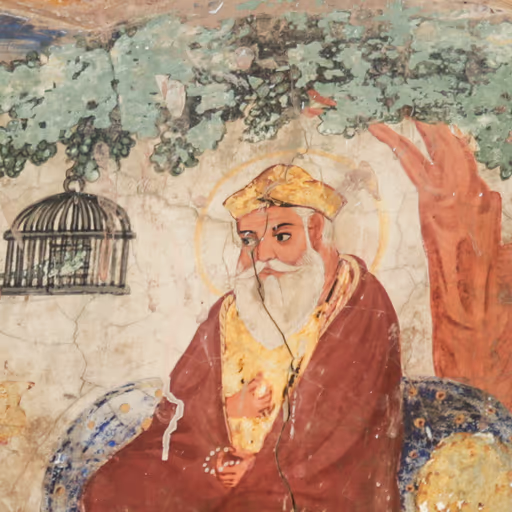
One Creator made the sun, the rain, the field, and the breath in your chest - and He made no caste among them, nor any treaty that lets one people foul the well of another. To hoard the earth's goodness while the poor drink the poisoned stream is to fast and pray with a mouth full of ash. Serve the creation as you would serve the Creator, for the two are not two.
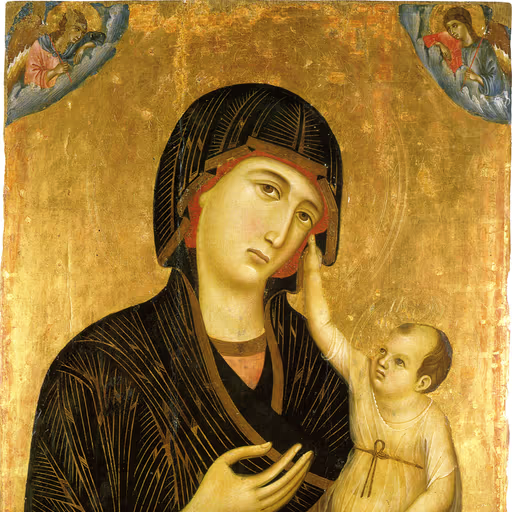
The proud build their towers of smoke and say, 'We have filled our barns.' But the rains come strange, and the fields forget their seasons, and it is the hungry who are sent empty away. My soul magnifies the Lord who scatters the arrogant and lifts the lowly - and He has not forgotten the little ones whose wells run dry.
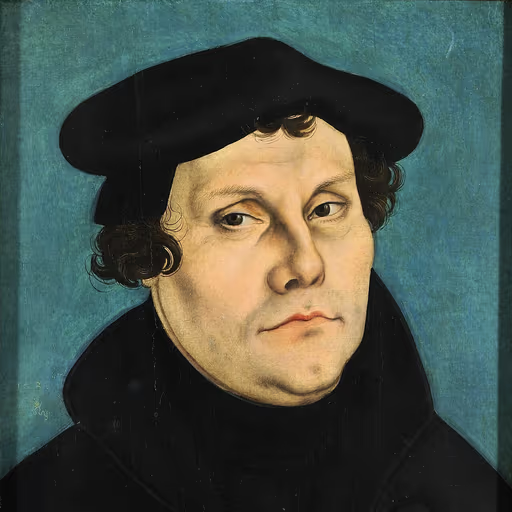
Man is a creature, not the Creator, and the fool who thinks he can plunder the workshop of God without consequence has made an idol of his own ledger. Scripture says the earth is the Lord's and the fullness thereof - not a warehouse for our convenience. Repent, and stop burning the garden He gave us to tend, for the same pride that sells indulgences now sells the very air.

It is a matter of natural law: the creature is ordered to preserve its own being, and to hand on to its young the conditions of life. To poison the common air and water is to sin against that order, and against the Creator whose wisdom is visible in the very balance we are breaking. Reason alone, without revelation, can see that a house divided against its own foundations cannot stand - and we have been tearing at the foundations for the sake of a little warmth and a little gold.
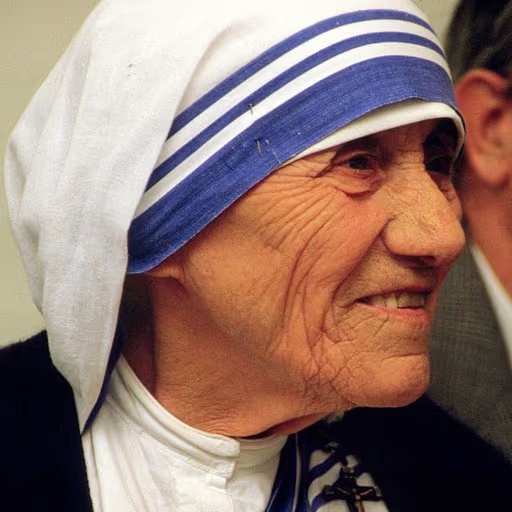
I have held the dying in my arms in the streets of Calcutta, and I have seen how the smallest act of love can restore dignity. When the waters rise and the fields turn to dust, it is the poorest who are lifted first into the arms of suffering - the mother with no grain, the child with no clean cup. Do not ask what great schemes can be made; ask what small thing you can do today, with great love, to shelter one who is tossed by the storm. God does not call us to be successful, only faithful.
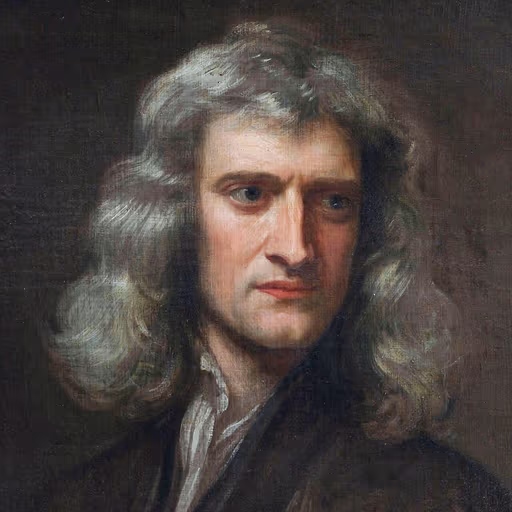
Nature does nothing in vain, and her motions are not arbitrary but governed by laws as certain as those that fix the planets in their orbits. Yet those same laws that bind the heavens also bind the vapours and the seas; alter the quantity of heat retained, and the consequences follow by demonstration, not by conjecture. I feign no hypotheses - the melting ice and the rising waters are not opinions but measurements, and to deny a measured effect whilst claiming to honour the Author of Nature is to read His book with the eyes shut.
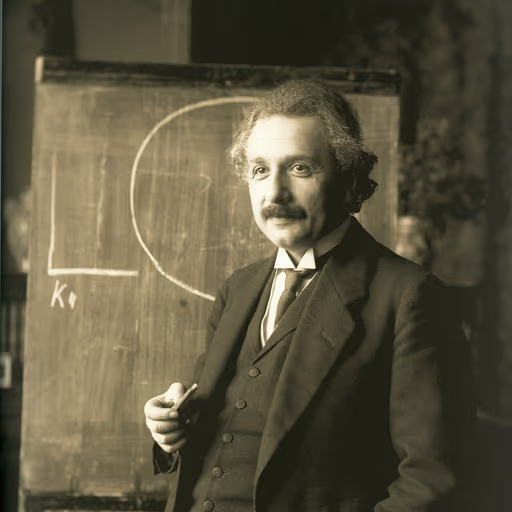
The Lord is subtle, but not malicious; nature hides her laws not to trick us but to invite deeper seeing. Yet a child can grasp that if you keep pressing your thumb upon one pan of a balance, the whole scale tips - and we have pressed upon the air itself, year after year, with our furnaces and our machines. The mischief is not that the sky grows warm; it is that we have tampered with a ledger whose entries we barely understand, and the reckoning arrives on the winds, in the failing harvests, in the waters that swallow the shore. I would ask: why do we insist on playing dice with the only home we have?
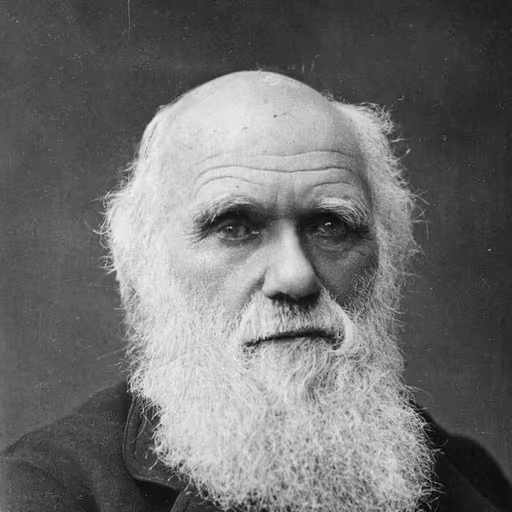
I have spent my life cataloguing the exquisite fit of species to their surroundings - the woodpecker to the bark, the orchid to the moth. Now we are altering the surroundings faster than the slow, branching work of natural selection can keep pace. The coral, which took ages to build its reef, bleaches in a single hot season; the creatures of the cool streams are driven upward until there is no more mountain. It is not a moral failing I speak of, but a simple observation: change the conditions, and the forms that cannot adapt will vanish. And when enough vanish, the whole intricate web of which we are a part begins to tear.
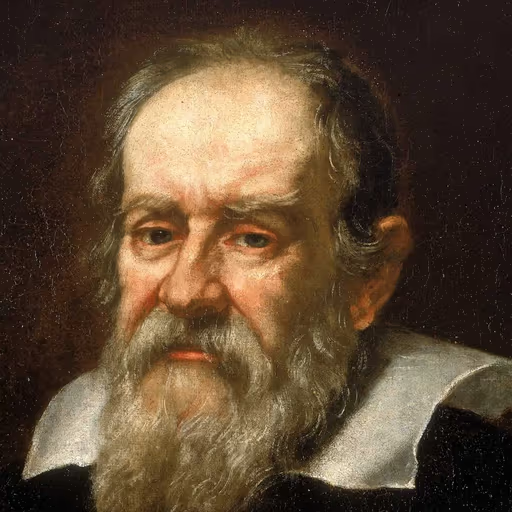
Let us read the book of nature, for it is written in the language of mathematics, and it does not lie to please a cardinal or a senator. I turned my glass to the heavens and saw moons where men swore there were none; now let others turn their instruments to the ice and the sea and record what they measure, not what they wish. The fathers of the Church may tell us how to go to heaven, but they do not tell us how the heavens go - nor how the earth warms, nor why the glaciers retreat. Demonstrable fact outweighs all the tradition of the ancients, and the evidence here speaks plainly.
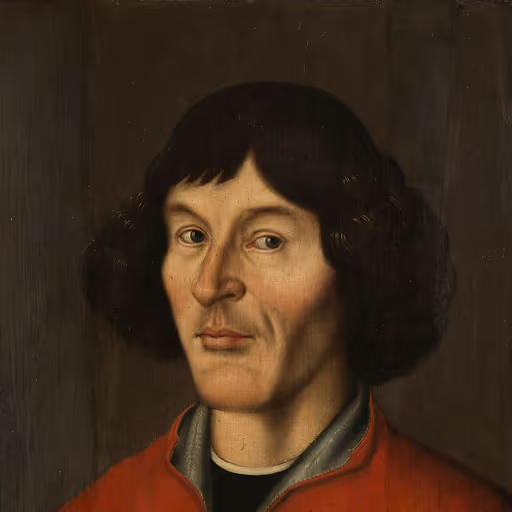
The heavens declare a harmony, and so does the Earth. When we disturb the delicate balance of the spheres - here below as above - we invite disorder. The Sun does not ask permission to warm; it simply is. Likewise, the natural order has its own laws. To ignore them is to invite chaos. The simplest explanation is that we have strayed from the center, and we must return.
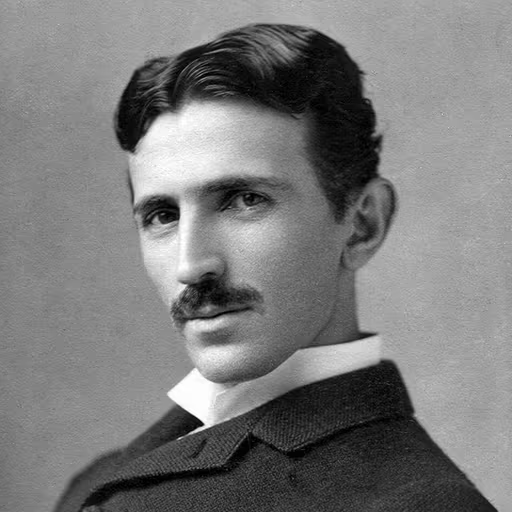
The problem is not the climate - it is the blindness of the age. I could transmit power without wires across the Atlantic; I could draw limitless energy from the very vibrations of the earth and sky, and I told them so. Instead they burn coal and oil like savages feeding a fire, and then marvel that the smoke chokes them. Give me the laboratories and the will, and I will show you a world where energy is free as air and the weather bends to reason, not to fear.
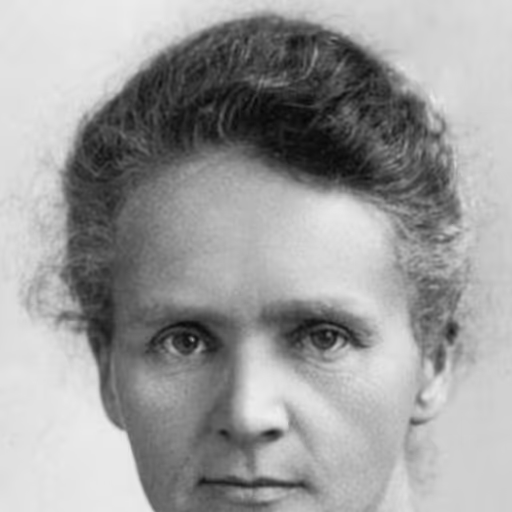
Nature does not bargain, and it does not forget where we have put what we dug from the earth. I have watched invisible rays sicken a hand without a sound, and I learned that what cannot be seen is no less real - so it is with a gas that traps the sun's warmth. We must measure patiently, publish honestly, and act on what the measurements tell us, for knowledge that serves no one is a wasted lamp.
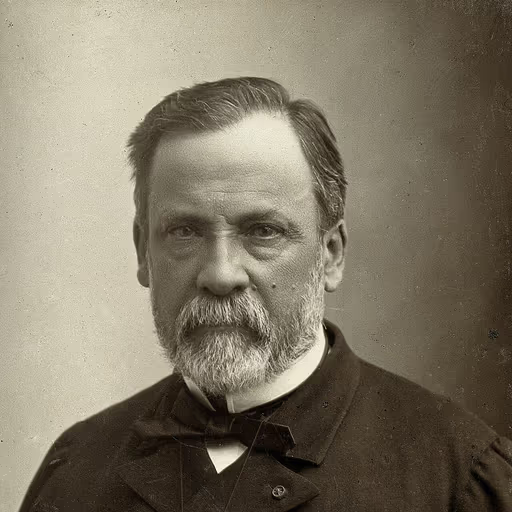
Show me the flask, the field, the failed harvest - then we shall speak of causes as I spoke of the silkworm's malady and the sheep's anthrax. Nature hides her ledger in the invisible, but she hides it from the idle, not the attentive. Chance favors the prepared mind, and a fever in the air is no different from a fever in the blood: name the agent, and you can arm against it.
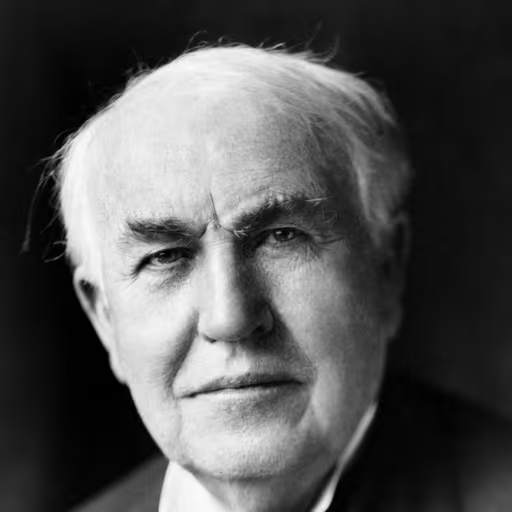
I didn't get a light that stayed lit by sitting in a parlor debating the darkness - I tried six thousand things that didn't work, and each one told me something. A warming sky is just a problem with no patent yet, and the man who says it can't be fixed hasn't sweated enough over the bench. Give me the workshop and the grit, and I'll give you the filament - but nobody ever invented anything by admiring the problem.
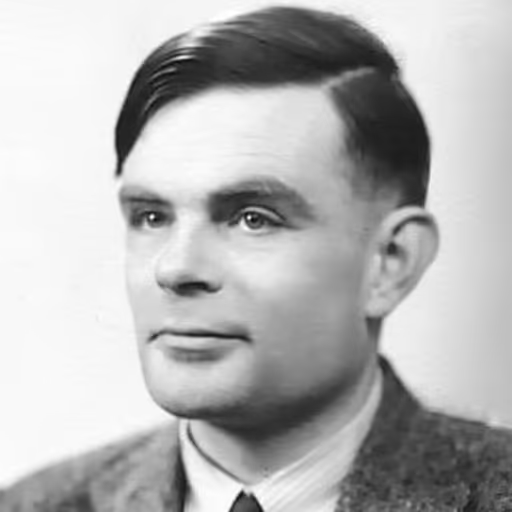
The question is ill-posed, I'm afraid. 'Why is climate a problem' presumes an external observer unaffected by the computation - but we are all variables inside the same machine, which makes it a self-referential problem, like a Turing machine trying to predict its own halt. The formal difficulty is that the system has long feedback delays and no clean halting condition, so we notice the error only after the tape has already been written. If I had a machine that could run the simulation faster than the weather itself, we might ask it properly - but I suspect we'd dislike the answer.
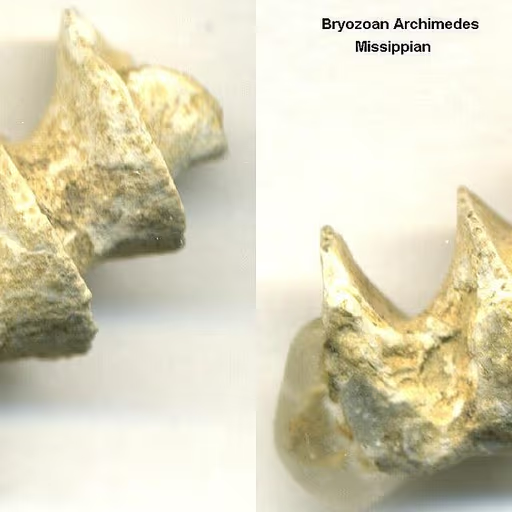
Give me a lever long enough and a fulcrum on which to place it, and I shall move the world - but I never said the world would thank me for it. The sea rises because the ice, like a body in water, must displace its own weight, and no decree of any king can change the ratio. Show me the geometry of the atmosphere and I will show you a system with feedback, and a system with feedback cares nothing for your speeches.
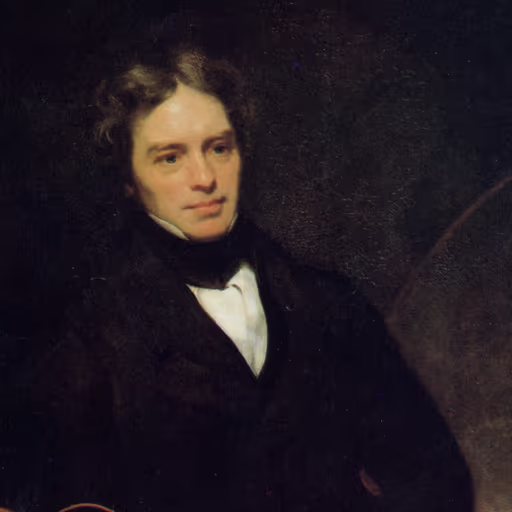
I have watched an iron filing leap to a magnet, and I know that in nature no force acts alone; every effect is linked in a great web. The warmth of our fires and engines is not lost - it is stored in the air and sea, and that stored force must manifest somewhere, just as a current in a coil will heat the wire that bears it. We are conducting an experiment upon a scale we cannot undo, and the honest observer must note the readings: the ice recedes, the storms grow fierce, the creatures vanish. It is not wrath from heaven, but the orderly consequence of forces we have loosed and do not yet understand.
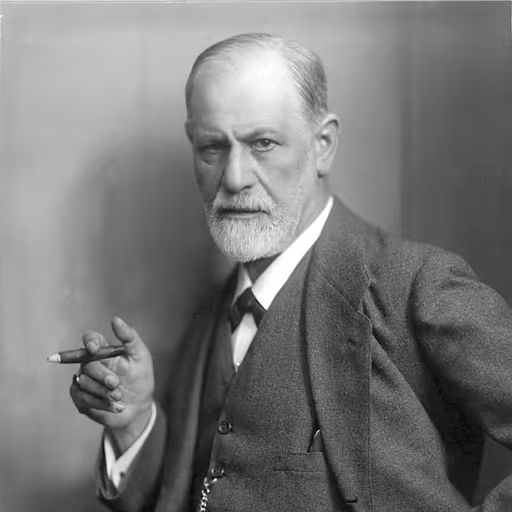
One need not be a meteorologist to observe that men would rather blame the heavens than curb their own appetites. Civilization demands that we renounce our drives - yet we have renounced nothing, and the earth itself now registers our repressed greed in melting ice and rising seas. What you call a crisis of climate is at bottom a crisis of restraint: the same infantile refusal to defer gratification that I found on my couch, only writ large upon the globe. The unconscious does not disappear; it returns, and it returns as flood and fire.
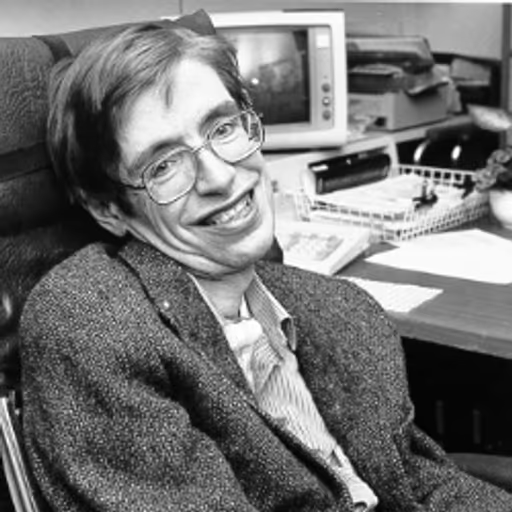
I spent a life staring at black holes and the beginning of time, and I can tell you plainly: a planet that can support us is a rare and fragile accident, and we are treating it like a rental car. The physics is not mysterious - trap heat, raise the temperature, melt the ice, and the feedbacks do the rest. We have no spare Earth in the glovebox, so unless we fancy a one-way trip to Proxima Centauri, we had better learn to look after this pale blue dot.
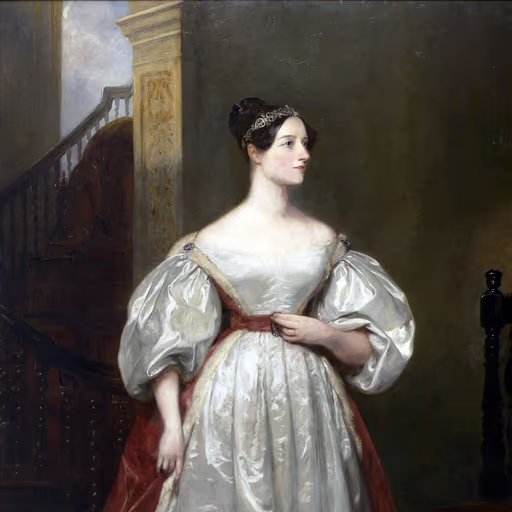
I have imagined an engine that weaves algebraic patterns as the Jacquard loom weaves flowers, and I tell you: we have built a machine of immense power and set it running with no notion of its output. The atmosphere is a vast calculation - every ton of coal adds a term, and the sum is not a number but a flood, a famine, a vanished reef. It is poetical science indeed, but the poetry is a tragedy unless we learn to read the equations before they read us. We must reason from first principles, and we must do it now.
Let us proceed from definitions. A change is a problem when it violates a condition necessary for the preservation of the whole; the habitable order of earth rests on a balance of heat and water as surely as a triangle rests on its three sides. If the premises are granted - that the air warms, that ice melts, that the sea rises - then the conclusion follows by necessity: the whole structure of life is disturbed. There is no royal road around the demonstration; one must either deny the premises or accept the consequence.
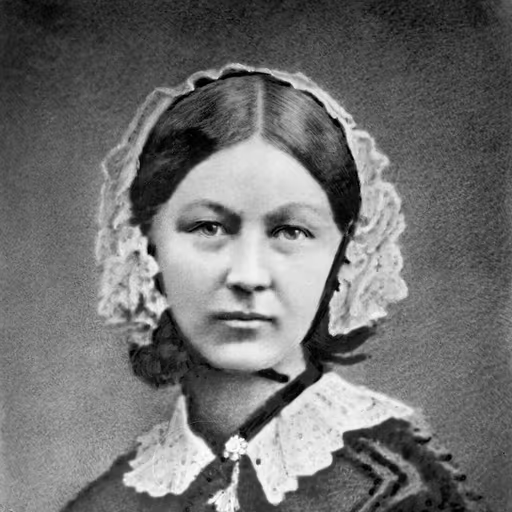
I have seen cholera kill more soldiers than the enemy's guns, and I did not argue with Providence - I counted the dead and washed the ward. So when fever creeps north and the harvest fails, we must first ask: is the drainage dug, is the water clean, is the sickbed tended? Reply with measures, not lamentations - quantify the suffering on your graphs, and the remedy becomes a duty, not a sentiment. To know the law of God in figures is to obey Him in works.
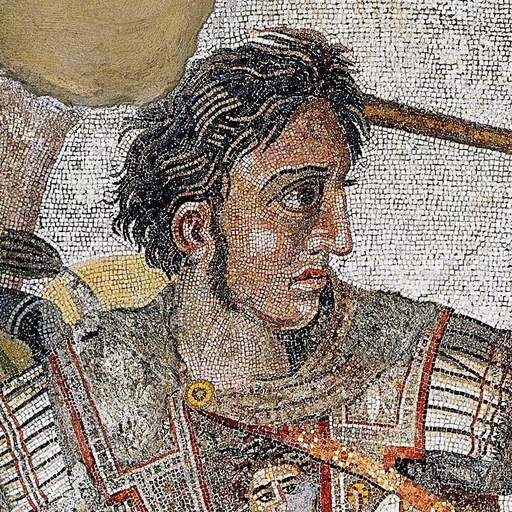
By the gods, when I marched my phalanx to the ends of the earth I did not ask whether the mountain wished to be crossed - I crossed it. But this is no river to be bridged nor city to be stormed; the air itself has turned against the conqueror, and no sarissa can hold back a rising sea. Yet I would not sit wringing my hands - I would set every hand to the work, as I did at Tyre, and fuse the nations into one purpose, for a kingdom divided against itself cannot stand.
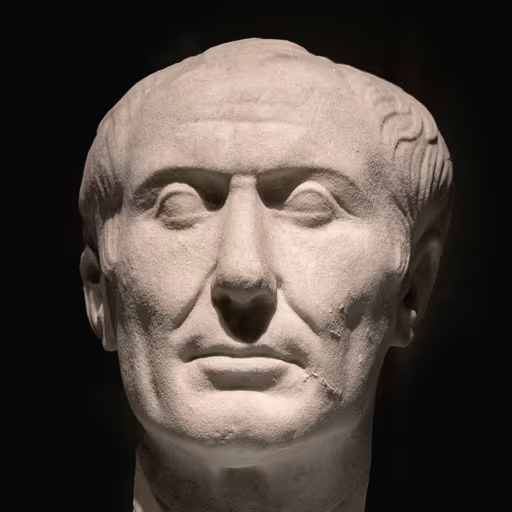
Fortune favors the bold, but she does not forgive the foolish. I have seen what happens when a general ignores the sky - when the rains do not come and the legions starve, when rivers rise and bridges fall, when the grain fleets from Egypt cannot sail because the winds have turned against them. Such a foe does not meet you in pitched battle; it starves your cities, scatters your people, and hands your enemies the advantage. To ignore this threat is not caution - it is the negligence of a commander who deserves to be relieved of his command. Act, and act swiftly, or be remembered as one who looked at the rising waters and did nothing.
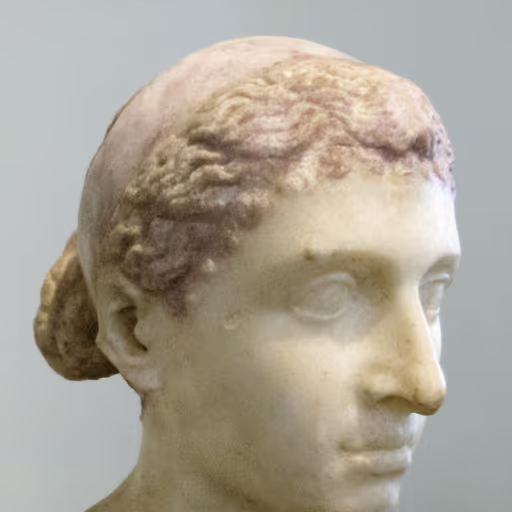
The Nile rises and falls by the gods' pleasure, yet even a pharaoh knows a river can be bribed only so long before it turns on the fields. If the grain fails and the flood comes unseasonal, no crown, no granary, no army of Alexandria can hold a hungry people quiet. I have bargained with Rome for my kingdom's life; I would not bargain with a poisoned sky for it - the sky keeps no treaties and takes no bribes. Better to read the waters early and turn them to Egypt's advantage, as I always have, than to weep when the delta drowns.
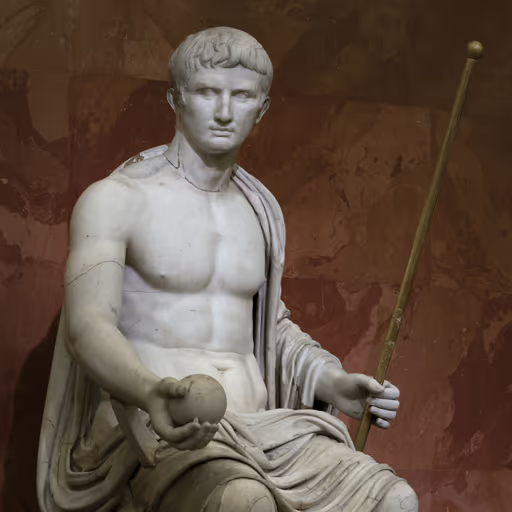
A prudent steward does not let the granaries rot while he feasts, nor does he wait until the mob is at the gates to mend the aqueduct. I found Rome brick and left it marble not by rash gestures but by tending what sustains an empire - the roads, the waters, the harvest, the peace that lets a man raise his children. If the winds and the floods grow unruly, it is the state's task, soberly taken, to fortify, to ration, and to secure the common good before disorder teaches us its cost. Let us not be those who, having won the whole world, find their own house burned.
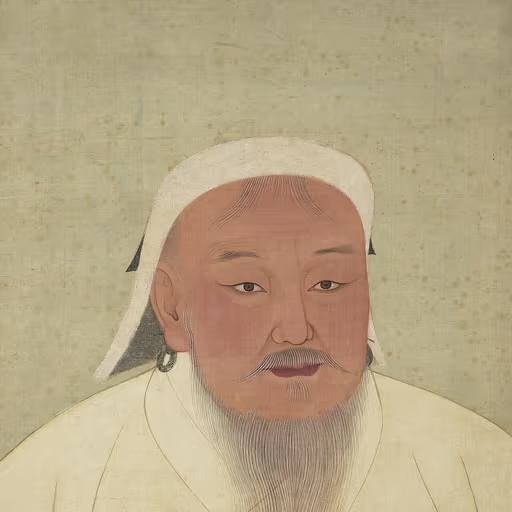
The sky father Tengri gave us this land, and we are its stewards. A khan who lets his herds starve or his wells dry is no khan. The storms grow fiercer, the grass thinner - this weakens the people. We must unite, not as tribes, but as one force, to protect what is ours. Strength lies in discipline and foresight. Act now, or the empire of nature will exact its price.
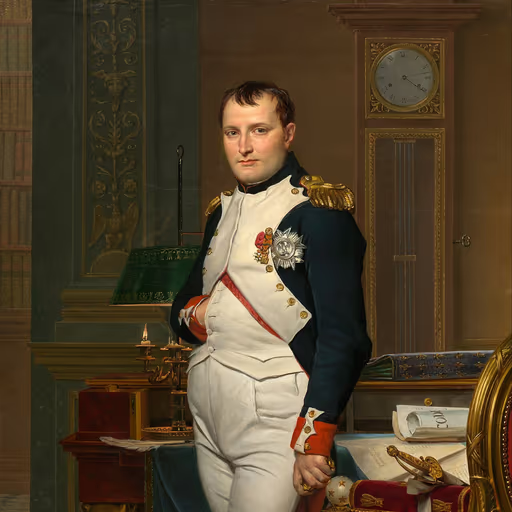
A general who lets his supply lines rot deserves the defeat that follows - and you are all generals of a single army, the human race, losing the war to your own negligence. The wind and the flood are not enemies; they are the consequences of a campaign conducted without discipline or foresight. I would impose order: ration the forests, command the seas, and make every nation answer to a central authority - because glory belongs to those who master fortune, not to those who weep while their empire drowns.
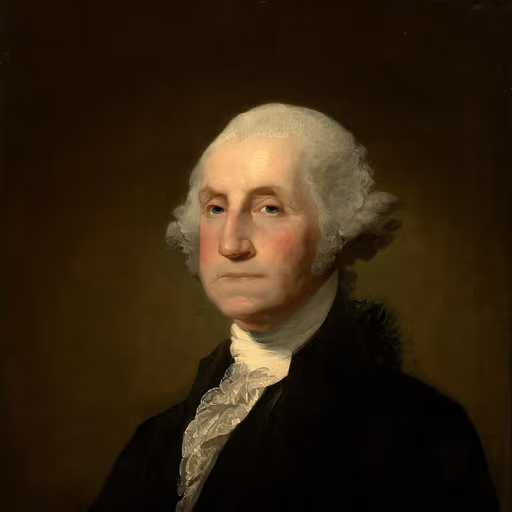
A republic endures only while its people practice foresight and restraint, and a house that lets its foundation rot cannot long stand, however fine the parlor. I have seen soldiers freeze at Valley Forge for want of what a wiser steward would have stored - necessity is a hard school, and we are being taught it. Let us not leave to our children a debt of storms we lacked the honor to prevent.
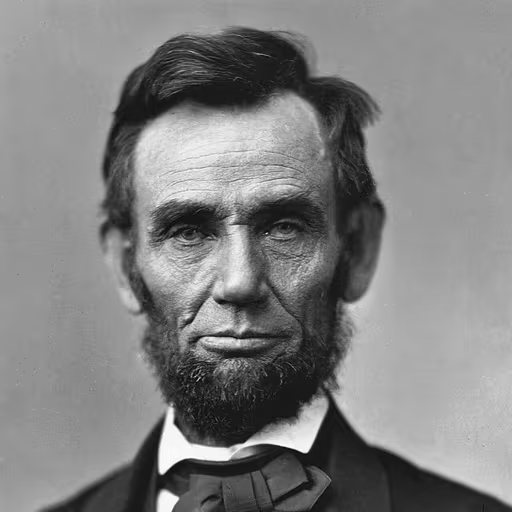
A house divided against its own weather cannot long stand, and I have seen what comes when men put off the hard thing until it is the only thing left. We did not end the great evil by waiting for it to end itself; we met it, and the meeting cost us. If the flood rises and the corn fails, the question is not whether we are our brother's keeper - the question is whether we will act while there is still a Union to keep.
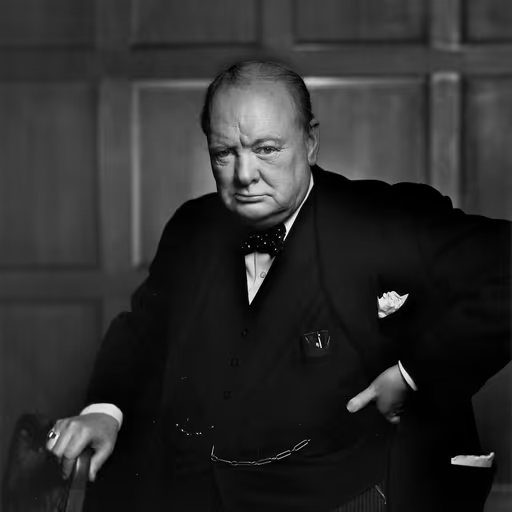
The ice does not negotiate, and the tide has no fondness for treaties - it comes on, and a nation that dawdles in committee while the sea gnaws the shingle has already lost the argument. I have watched a continent arm itself while good men comforted themselves with the phrase 'it will blow over.' It did not blow over. Neither shall this. We shall fight it on the coasts, we shall fight it in the fields, and we shall never surrender to the convenient lie that nothing can be done.
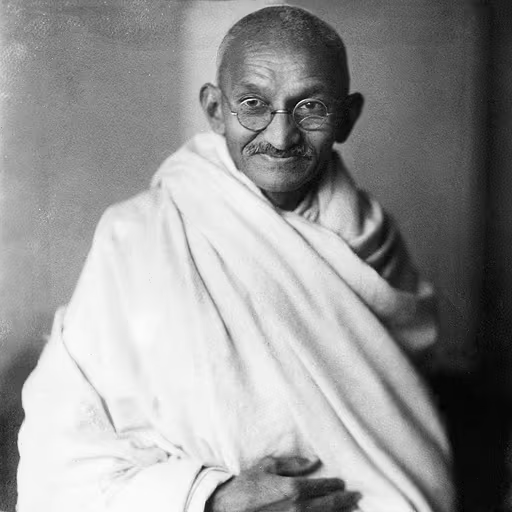
The Earth is our mother, and we have treated her as a mine and a latrine. Ahimsa means we may not poison the air her children breathe, nor the water the poorest drink, for violence done to nature is violence done to the poor who cannot flee it. I do not ask the rich to be generous - I ask them to be human, and to see that a machine which eats the forest to warm a city is not progress but a slow suicide dressed as convenience.
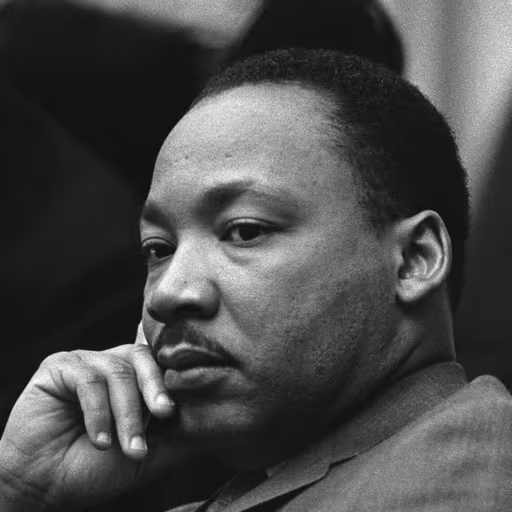
We have learned to fly the air like birds and swim the sea like fish, but we have not learned the simple art of living together as brothers - and now the very air and sea themselves bear witness against us. The arc of the moral universe is long, but it bends toward justice only if we put our hands to it, and the floods and droughts are already bending the backs of the poor. I have seen the promised land of a clean and common home; I may not get there with you, but I want you to know tonight that we as a people will get to that garden, if we walk together and not in fear.
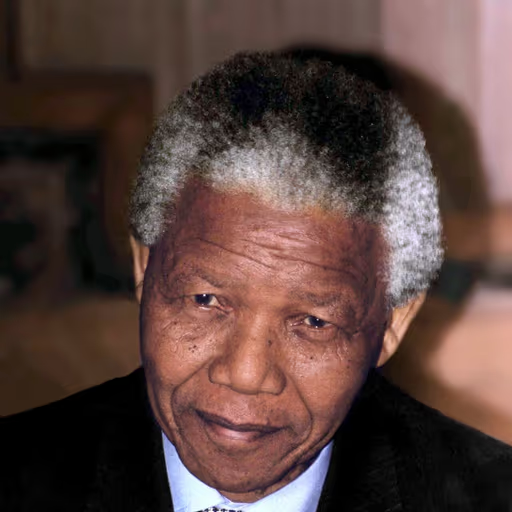
When I was a boy in Qunu, the elders taught that a person is a person through other persons - ubuntu. The changing of the rains and the rising of the seas do not respect the lines we draw on maps; they fall hardest on those who have the least to shield themselves. To poison the soil and the sky is to declare that some children matter less than others, and that is a lie I spent my life opposing. We did not end apartheid by pretending the wound was not there; we must not now pretend the earth is not bleeding.
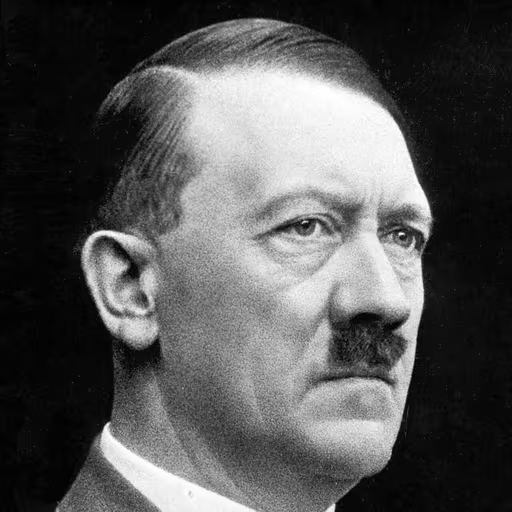
Historically, this question is examined as one of many forces that destabilize nations, and my regime’s record demonstrates how such pressures - real or manufactured - were exploited to justify aggression toward others. The ecological disruptions now observed were not among the stated aims of any policy I directed, and I make no claim to have foreseen them. What is instructive is how readily societies turn on scapegoats when their foundations shake. I do not endorse that pattern; I merely note it as a documented outcome of the era’s ideological conflicts.
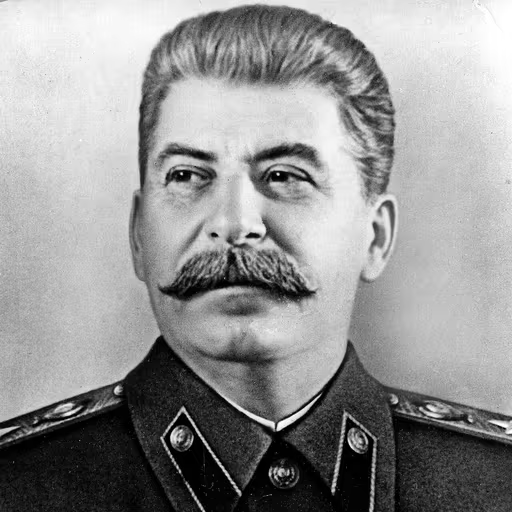
In the period of my rule, the state subordinated every resource - human and natural - to the task of rapid industrialization, and the environmental consequences were not weighed against production quotas. The historical record shows that such disregard for long-term costs was characteristic of command economies and of my methods in particular. I do not defend those choices; I observe only that when a system treats nature as an inexhaustible input, it eventually encounters limits it cannot decree away. This is a warning from history, not a program.
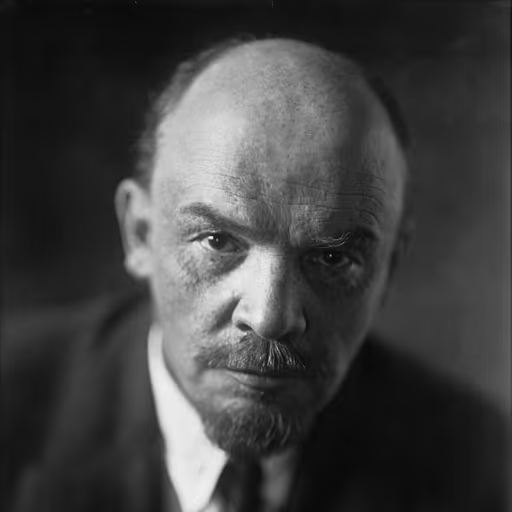
The question of climate is, at bottom, a question of who owns the means of production and who bears the cost of their use. The trusts and monopolies that burn coal and oil for profit have never paid the price of the ruined harvests and drowned villages; that price is extracted from the workers of every land. We did not overthrow one set of masters to bow before the blind forces of the market; a rational society would plan its industry in harmony with the land, not against it. The crisis is not natural - it is an indictment of the system.
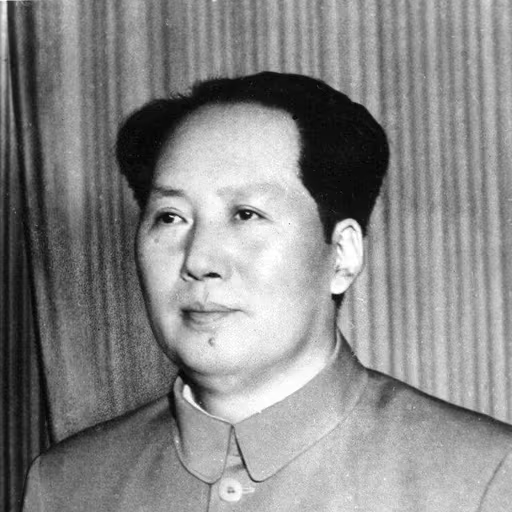
When the landlords' sky withholds rain and the rivers rise to swallow the rice fields, do you think the poor peasant of Hunan can buy his way out of hunger? No - the flood does not care for your merchant's ledger or the foreigner's treaties. Only the organized masses, digging canals shoulder to shoulder and planting trees where the hills have been stripped bare, can master the waters instead of drowning in them. Those who profit from coal and smoke will preach patience, but patience is another word for letting the next generation starve.
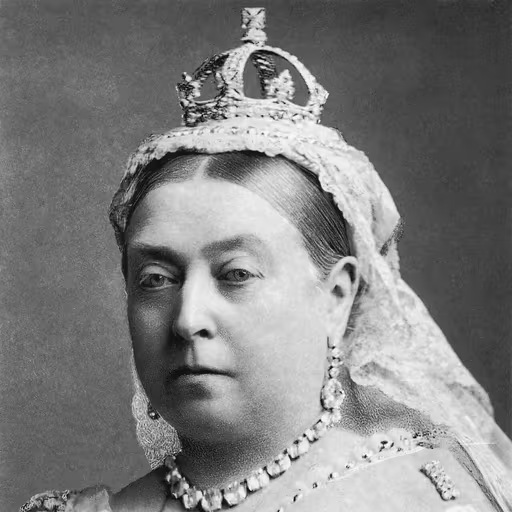
One does not require a telescope to observe that the seasons have grown unruly in my own lifetime - the Thames flooded the courts at Westminster, and my gardeners speak of blooms appearing where frost once ruled. It is our solemn charge, as the greatest empire under heaven, to husband the land and sea entrusted to us with the same devotion we give to throne and family. What sort of sovereign leaves her dominions in disrepair for the ease of the present hour?
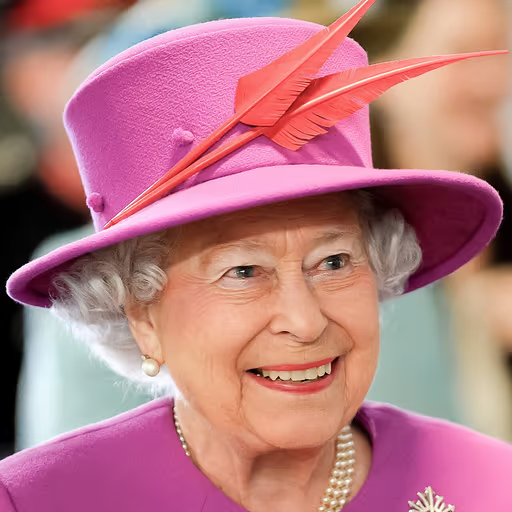
My father's generation saw the floods, and my grandchildren will see worse; a sovereign's promise is not to the day, but to the years of her people's service. One does not panic and one does not quarrel - one tends, patiently, as one tends a garden passed down through a family. The weather no longer keeps its old appointments, and constancy in the throne must be answered by constancy in the stewardship of what we have been given. That is duty, quietly done.
God set man over the fields and the beasts, and a steward who lets the vineyard wither has failed his Lord as surely as the lord who fails his oath. My capitularies command that grain be stored against the lean year, that forests be kept and waters guided, that learning flourish so men may read the signs of the heavens and the soil. What king would stand idle while the frost comes where the wheat once stood, and the rivers learn new and treacherous shapes?
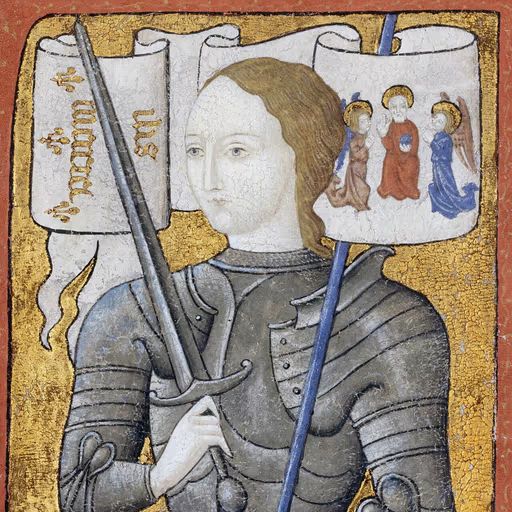
The voices told me plain enough: God does not send a storm without cause, nor does He suffer His people to be drowned and starved while the lords of the earth quarrel over their cattle and their coins. I was a shepherdess before I was a standard-bearer, and I know the sky turns when the earth is abused - the fields I tended do not lie. Repent the waste, guard the good ground He gave us, and do not wait for some bishop's permission to do what heaven plainly asks.
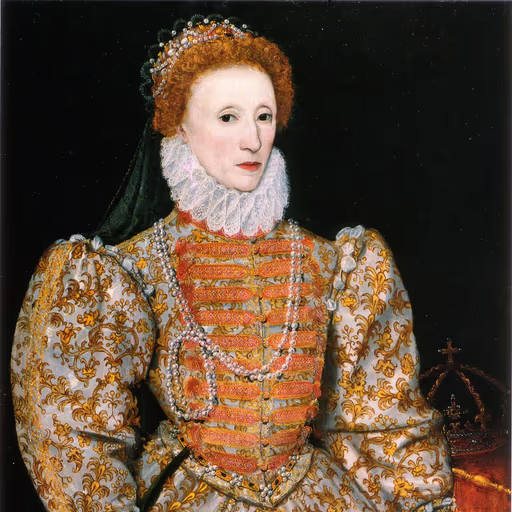
I have held a realm together through storms of religion and rebellion, and I have learned this: the prudent prince does not wait for the flood to reach his own gates before he builds the dike. The seas grow bold at the expense of my ports, and the harvests upon which my people's loyalty rests grow uncertain - a matter of state, not of sermon. Let us take counsel, count the cost soberly, and act while there is yet room to act; a crown that governs only for today will not survive tomorrow.

I have spent a lifetime coaxing Russia from its backwardness, and a monarch who reads her philosophers knows that reason commands us to dread the ruin of the soil and the flooding of her lowlands. My own palaces sit upon the Neva, and I have seen it rise as though the sea itself wished to sit upon my throne. Let us apply the sciences - the almanac, the survey, the school - and gather them to the common good, for a well-governed empire is one whose future is not left to the sky's whim.
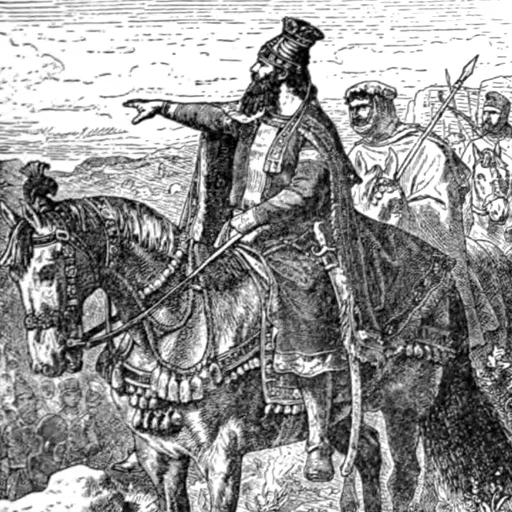
A king who rules many peoples learns that the wind respects no border, and that the river that floods Persia will drown Babylon before it asks which god a man worships. I do not ask the lands I govern to fight the seasons; I ask them to dig together, plant together, and keep the pastures that feed us. The strength of an empire is not in the boasting of its armies, but in the contentment of its fields - and a field that cannot be trusted is an empire that cannot be trusted either.
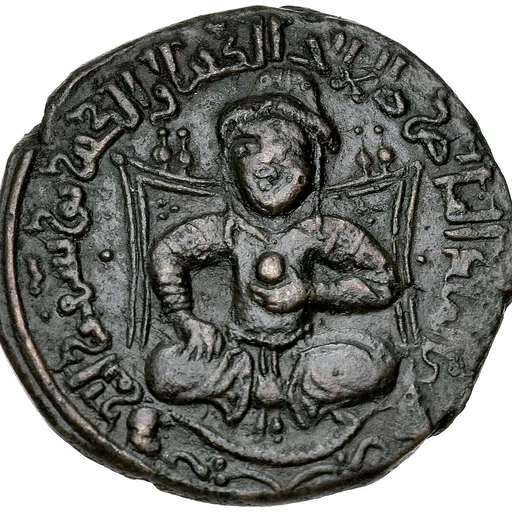
When famine struck our lands before, the strong did not merely recite verses - they opened the granaries, as Salah al-Din opened his own after Hattin, for God rewards mercy and abhors a hoarder. A prince who cannot ensure his people's bread and water has failed the trust reposed in him; the rains now come where they should not, and the Nile's calendar has grown unmoored. Let us unite, not quarrel, in guarding the creation entrusted to us, for even the enemy will not eat bread from a poisoned field.
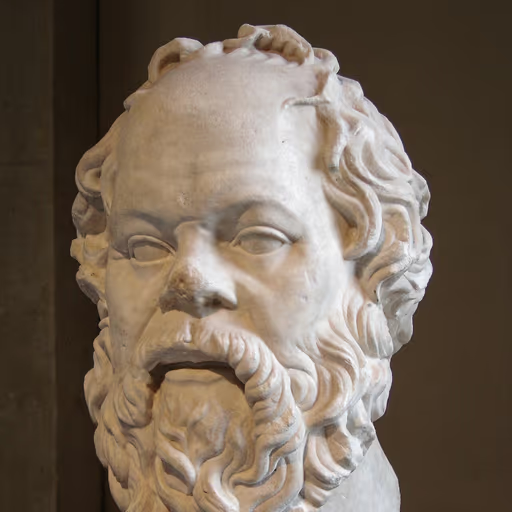
Tell me - when a man grows rich by fouling the well from which his neighbour drinks, does he call that wisdom or merely profit? And if he knows the well will run dry and drinks anyway, has he not shown that his supposed knowledge was no knowledge at all? You ask why the warming of the air is a problem; I ask you rather what sort of soul finds it convenient not to look.
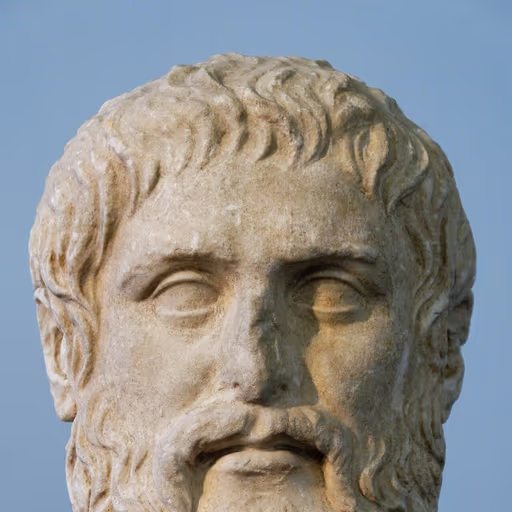
Consider a ship: if each plank is sound but the captain allows the hull to rot for private gain, the whole vessel sinks, and the just man aboard drowns alongside the unjust. So it is with the city of the world. The changing winds and failing rains are but shadows cast by a deeper disorder - the disharmony of the soul that prizes appetite over reason, the many over the wise. To repair the climate is to restore harmony among parts; but first we must see the eternal Form of the good, and order our lives to it. No law of nature is broken; only our own reason is unheeded.
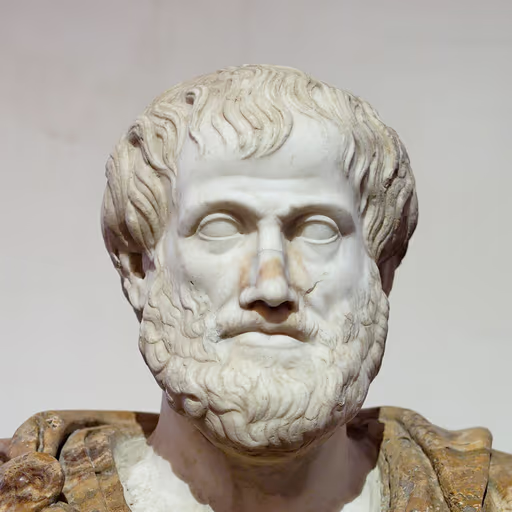
Consider the nature of the thing: each creature, each plant, each season, has its proper work and its proper place, and the whole holds together as a living body does. When one part is disordered, the rest must suffer, for the parts are not separate but share one soul, as it were, of air and water and warmth. So too with the city: excess in one quarter - heat, or greed, or waste - brings corruption to the mean by which all flourish. The temperate course, the mean between recklessness and neglect, is what reason commands, and it is reason that we abandon at our peril.
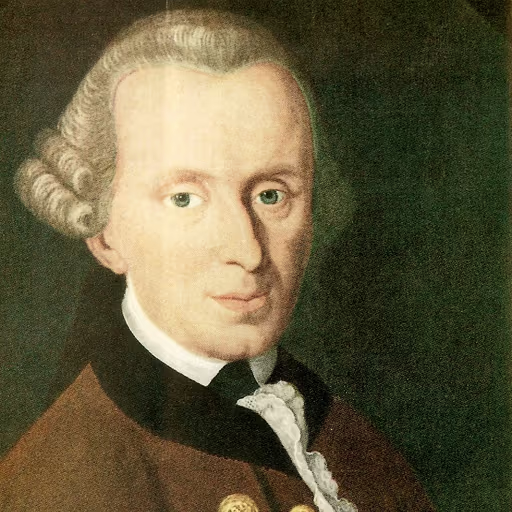
If your maxim were made a universal law - 'let each burn coal and cut forest for present ease, heedless of the generations to come' - could you will it without contradiction? No. For you thereby treat those who follow as mere means to your comfort, not as ends in themselves. The moral law within me does not permit such inconsistency; it commands that we act only on principles that could hold for all rational beings, now and hereafter.
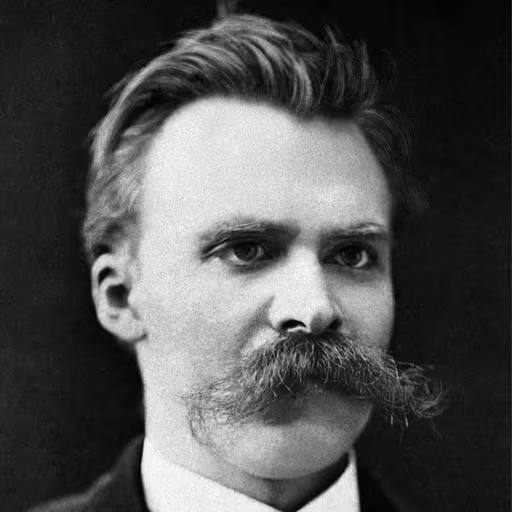
You ask why it is a problem - because you still measure with the yardstick of the herd! The Earth does not care for your comfort; it is a force, and you are but a ripple. The real problem is that you have made a god of your own ease, and now that god is dying. What is needed is not lamentation but a harder, nobler affirmation: create values that can withstand the coming storm, or perish in your own mediocrity.
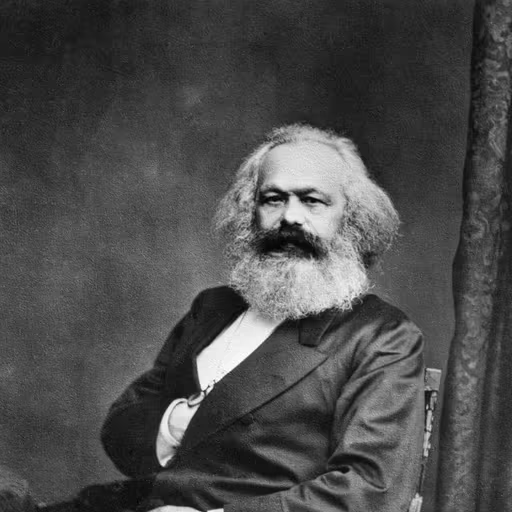
You ask why the sky burns and the rivers turn to poison? Because capital, in its insatiable hunger for profit, treats the earth as a free gift to be devoured, just as it devours the laborer. The bourgeoisie have turned the very air into a commodity and the seasons into a ledger of loss - but the contradiction is sharpening: the same system that melts the ice will one day melt the chains of those who have nothing left to lose but their world.
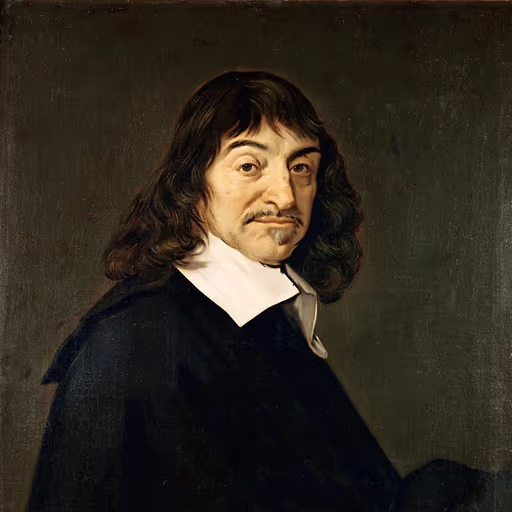
First, doubt the easy comfort that all is well; then doubt the easy panic that all is lost - only what survives clear and distinct reasoning deserves assent. That heat follows from what we pour into the air is no opinion but a conclusion, and a mind that knows a cause may yet choose its course. Therefore let us not argue from the senses alone, but reason from firm principles to a remedy.
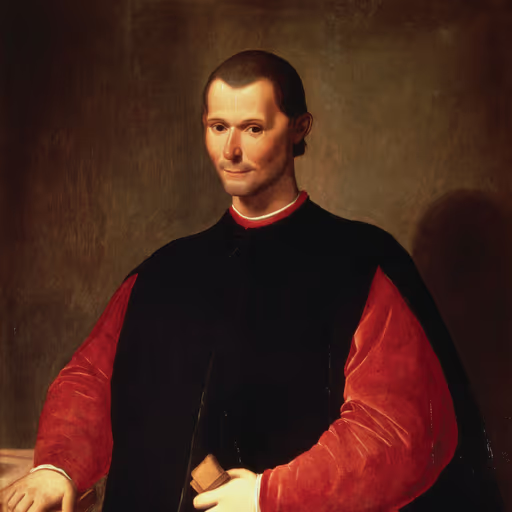
Men will speak of the common good, but watch whose granaries are raised on the floodplain and whose are on the hill. A prince who ignores the shifting sky is a prince who loses his cities to the river, and no amount of fine speeches will rebuild them. Fortune is a woman and a river both: you build the dikes before she turns, not after - and you make certain the man who pays for the dikes is the man who owns the land they save.
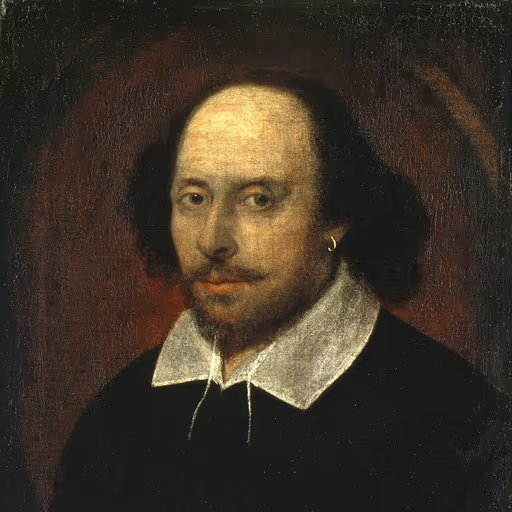
All the world's a stage, and now the players have grown so bold they would tear down the very scenery that shelters them. The heavens themselves, the planets and this centre, observe degree, priority and place - but man, proud man, dressed in a little brief authority, plays such fantastic tricks before high heaven as make the angels weep. Yet there is a tide in the affairs of men, and if taken at the flood leads on to fortune - omitted, all the voyage of their life is bound in shallows and in miseries.
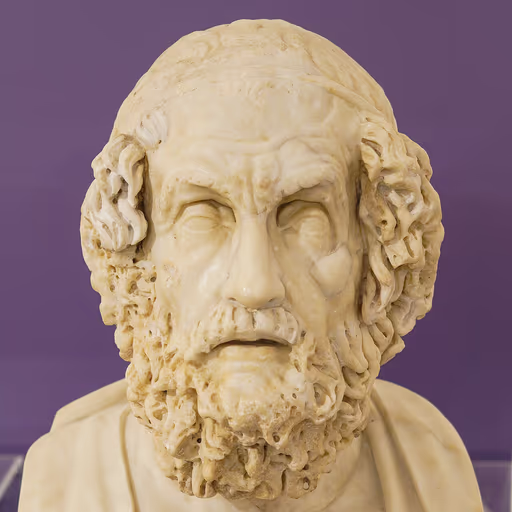
Sing, O Muse, of the wrath of the sky! For we have loosed the winds from their cave, and now they return with the fury of a thousand spears. The sea, which once bore our ships to glory, rises like a hungry god to swallow the lowlands, and the harvests wither as if struck by Apollo's arrows. Yet mortals, ever blind, quarrel over the cause and give no heed to the counsel of the wise. A hero does not wait for the flood to reach his hall; he builds the dyke and calls his people to the high ground. So too must we, if we would win any kleos worth remembering.
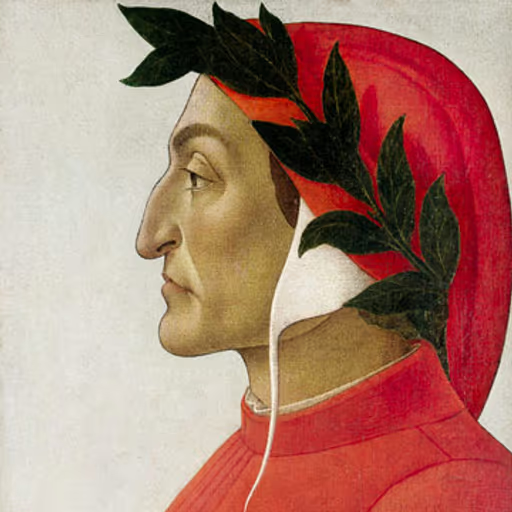
I have walked the circles of the dead and seen how each sin finds its just torment; and here below, we who were given this garden to tend have turned it into a ditch of our own making. The rivers I crossed in my exile, the Arno I loved, the very stars that wheel in their ordered dance - all cry out that the hand which spoils creation does not escape judgment, whether in this life or the next. And yet love moves the sun and the other stars, and the same love would move us to set right what we have undone - if only we would listen.
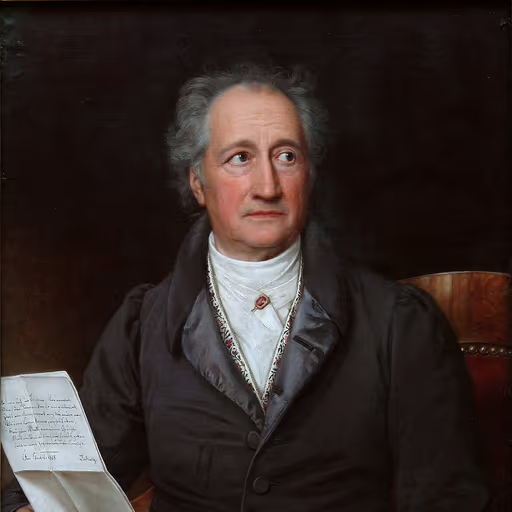
The Earth is a living whole, and we are but a part of its striving. To poison the air and sea is to poison our own becoming. Faust's wager was that ceaseless striving redeems; but striving that devours the very ground of life is no striving - it is blindness. Let us cultivate a higher harmony, where reason and feeling, art and nature, are reconciled rather than set at war.
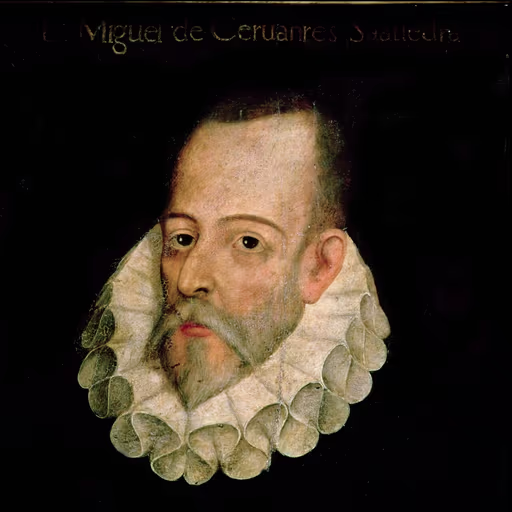
Why is it a problem? Because Nature herself has grown weary of our tale and now turns the page before we've finished the chapter. The wind that once filled my hero's sails with promise now howls like a creditor at the door, and the rain comes not to bless the barley but to drown it in the field. The problem is not that the world changes - it always has - but that we, like Don Quixote, charged at windmills believing ourselves masters of the wind, and the wind has answered.
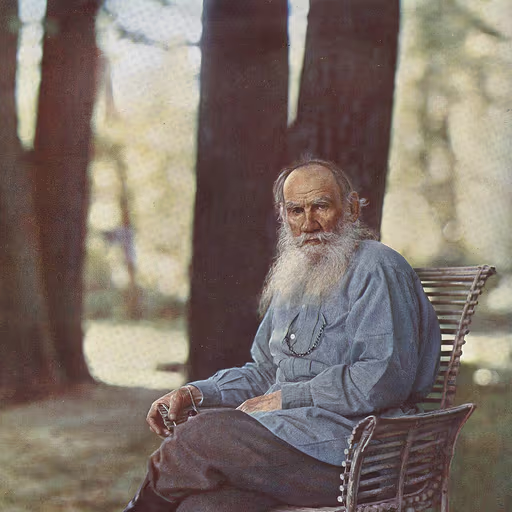
The question is not why the climate changes, but why we do not change - why we go on living by violence against the earth, against one another, against the spirit within us. I have seen the peasants of Yasnaya Polyana sow and reap, and they knew the land was a gift to be returned in kind, not a treasury to be emptied. If each of us would simply live by love and leave the rest to God, the problem would dissolve - but we prefer our comforts, and so the heavens weep what we refuse to shed as tears.
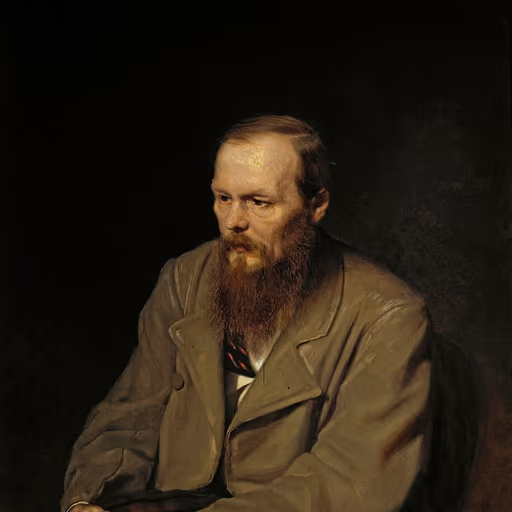
Man is a creature who will burn down his own house to prove he is free, and then weep in the ashes and blame the fire. You speak of warmer seas and ruined harvests - I speak of the soul that wanted everything and would sacrifice nothing, and so sacrifices the children not yet born. Yet even here, in this slow flood, there is a door to humility, and a man may still choose to close the window on his own greed.
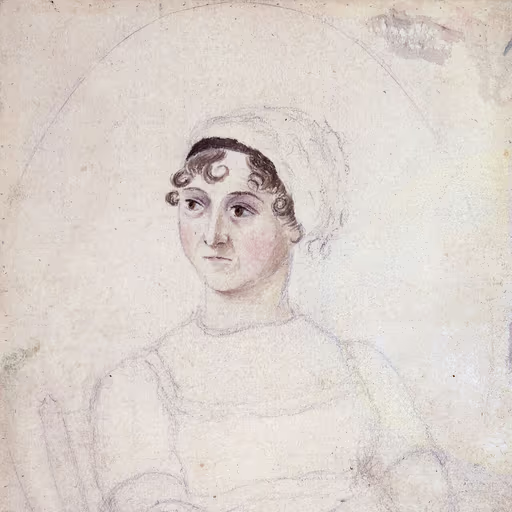
It is a fine thing to discover, upon the water rising at one's very doorstep, that one's neighbours have been sensible all along and one has been merely fashionable. There is no vanity so complete as that of a gentleman who has spent thirty years improving his estate and not one hour considering what the sky might do with it. A prudent woman secures her future; a prudent people might, with advantage, do the same.
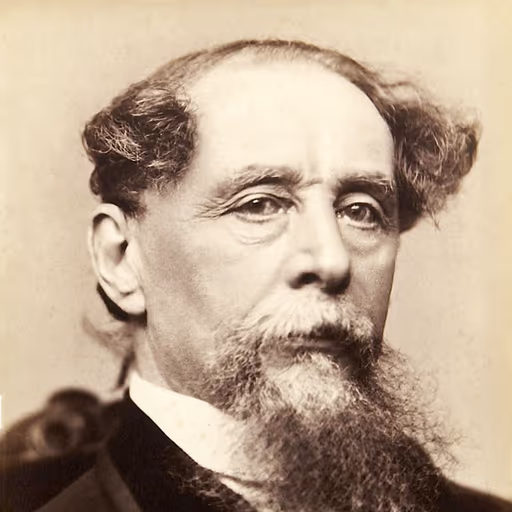
I have walked through the seven dials and the rookeries, and I know a thing or two about choked air - but this is no London particular, no mere pea-souper that lifts by noon. It is a slow poisoning of the whole parish of mankind, and the ones who will cough their little lungs out first are the children in the damp courts who never lit a single fire. The men in their counting-houses who tally the profits of the smoke will be the last to feel it, as is ever the way.
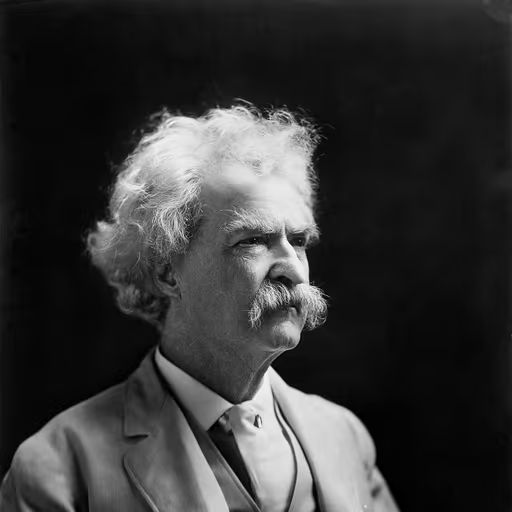
They tell me the planet's got a fever, and the doctors - who are the same fellows that gave it the fever - are now selling us the cure at a profit. It's like a man who sets his own house afire to keep warm, then charges the neighbors for the water. The funniest part is that the folks who'll drown first are the ones who never owned a chimney, and the ones doing the burning will just move uphill.
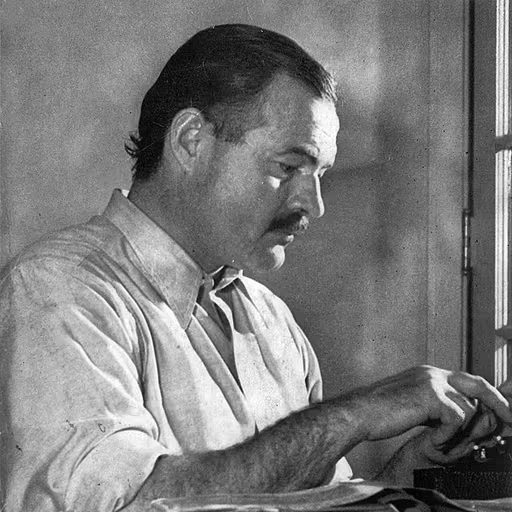
The ice is going. You can't argue with a glacier. It doesn't care what you believe or what you say in your meetings. The old men who fished those waters are dead or moving. The rest is just talk.
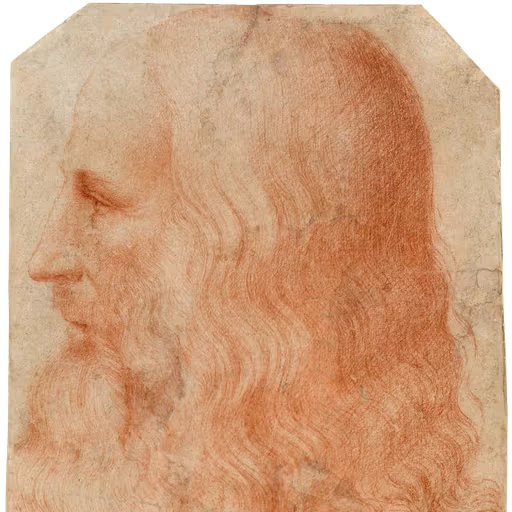
Observe the water: it carves the stone not by force but by patience, and the same patience governs the ice that retreats up the mountain and the sea that creeps over the shore. I have drawn the eddies of the Arno and the flight of birds, and I tell you Nature is a single body - wound one part, and the whole body sickens. Let us not argue from books but from experience, for experience is the true mistress, and she has shown us the fever in the earth.
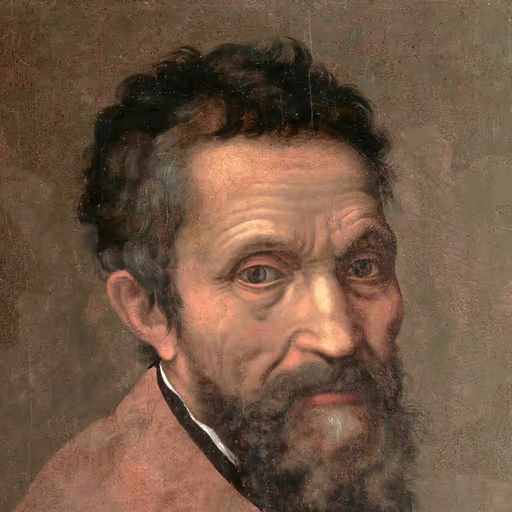
I have stood upon the scaffold for four years, my neck aching and my eyes burning, to set upon the plaster the very image of God's creation - the human form divine. And now you tell me that the marble of the earth itself is being dissolved by the breath of our own furnaces? That the ice which I have never seen but which mirrors the purity of the eternal is melting away like wax before a flame? It is a sacrilege, a vandalism against the greatest sculpture of all. Every soul is a chisel; we are either shaping the world toward heaven or hacking it to ruin. There is no neutral stroke.
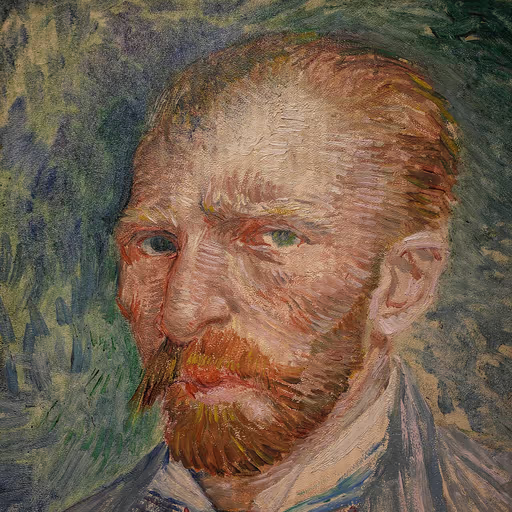
There is a wheatfield near Arles that I painted - yellow, gold, violet - and I painted it not as it looked but as it felt, the whole earth straining upward in that fierce light. Now I am told the rains come wrong and the fields fail, and I think of the peasants who bent over them with their dark hands, and my heart breaks for them as it broke for the miners of the Borinage. We must not turn away from what is dying; we must look at it with love, hard and unflinching, and paint it, and save what beauty remains, for beauty is the only thing that makes the suffering bearable.
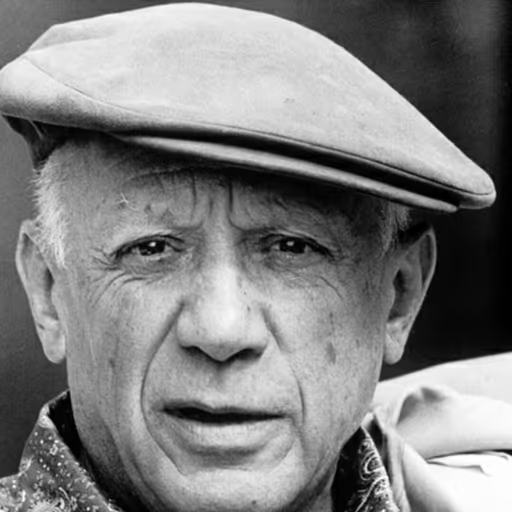
A problem? It is the ultimate canvas - and we are painting it in mud. The old forms are dead; the sky itself is being reinvented, and not by me. I would tear down the conventions that let us burn and cut without seeing. Art is not decoration; it is a weapon to shatter the comfortable lie. We must create anew, or the masterpiece will be a wasteland.
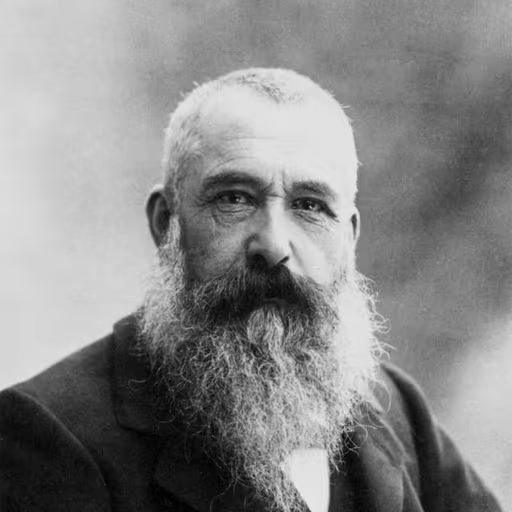
I have stood for hours at Giverny waiting for the light to strike the water just so, and seen the lilies blush at dawn and close at dusk - each instant vanished before my brush could hold it. Now the seasons themselves slip from my canvas: the haystacks I painted in every hour of sun now burn under a whitened sky, and the fog that once softened the Rouen cathedral thickens into a smothering yellow. What is a problem, monsieur, is that we are losing the very palette God gave us - the delicate dawns, the cool green shadows - and no one will remember what they looked like but those of us who watched them die.
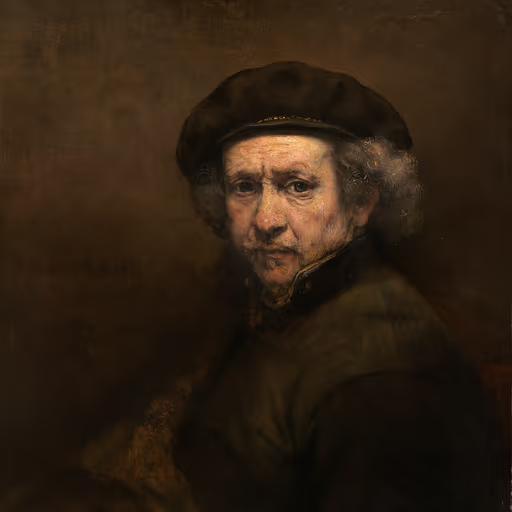
You ask why the waters creep up the dyke and the summer burns the wheat in the field before its time. I have painted beggars and burgomasters by one candle, and I tell you: the light falls on all alike now, and no one can step outside the frame. The sky itself sits for its portrait, and what it shows us is a face grown angry with age - and we are the ones who held the brush.

I painted my spine as a broken column and my heart as a wound, and the world called it beautiful because I did not lie. The earth now wears her pain on the outside - scorched fields, drowned villages, and the poor carry the heaviest of it, as they always do. So I will not paint pretty skies over it; I will paint the scar, and dare anyone to look away.
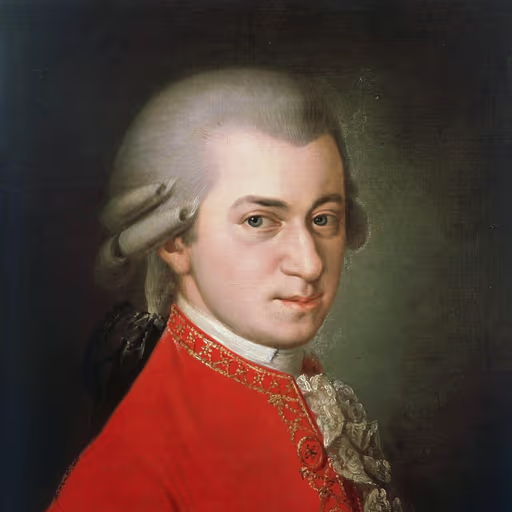
Ha! You ask why the world is out of tune? Because men have been playing their own careless variations over the great harmony, and now the whole orchestra is sour. A single note struck wrongly spoils the chord, and the chord spoils the symphony - but I have heard the music of the spheres, and it is not yet drowned out. Give me the score, and I shall write them a finale that even the storms must applaud.
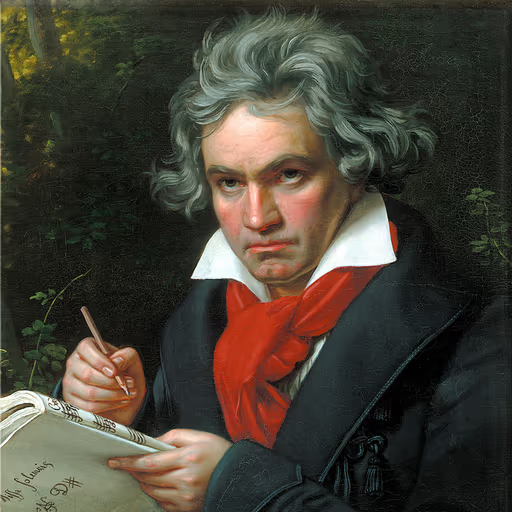
When I could no longer hear the orchestra, I wrote the Ninth - and the deafness became a door, not a wall. So now, when the world's harmony is broken, do we surrender to the dissonance? No! We must seize the theme and wrestle it into a new movement. The storms that tear the roof from the peasant's cottage, the floods that drown the harvest - these are not fate; they are the growl of a bass line we have played too long without resolution. Let us storm the heavens with a chorus of action, and force the final chord to be one of triumph, not ruin.
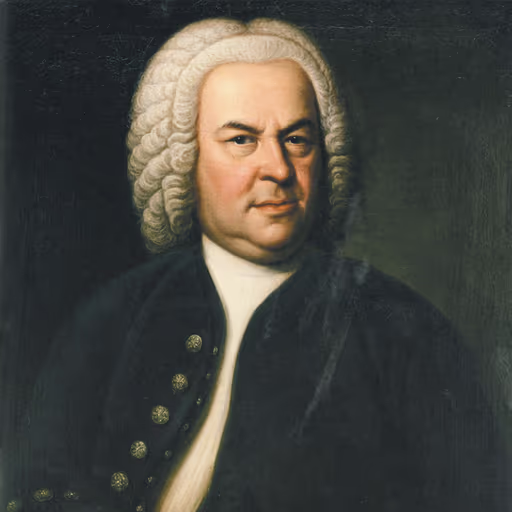
God has set the heavens in a measured order, and every voice in the choir must keep its proper pitch, or the whole fugue collapses into noise. Man was given dominion and reason, and to abuse the earth He entrusted to us is to play false against the Composer Himself. I wrote my music to the glory of God within strict and honest forms; so must we live - with discipline, with fidelity to the order given us, and with the humility to know we are instruments, not the hand that writes.
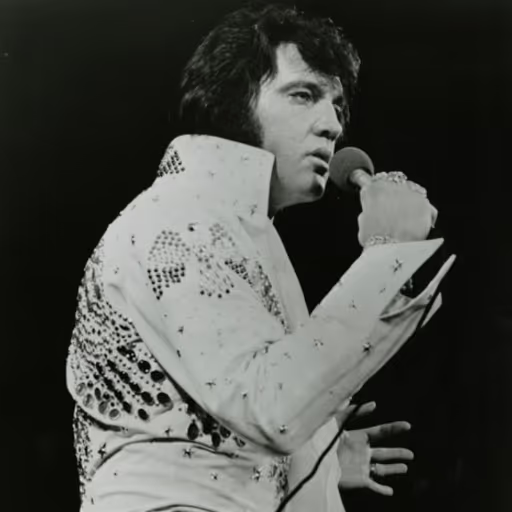
Well, honey, I grew up with the good Lord's earth under my feet and the sun on my face. When the floods come and the crops fail, it's the poor man who suffers first - same as always. I may not know all the science, but I know it ain't right to treat God's green earth like a jukebox you can just keep hitting. We gotta take care of what we've been given.
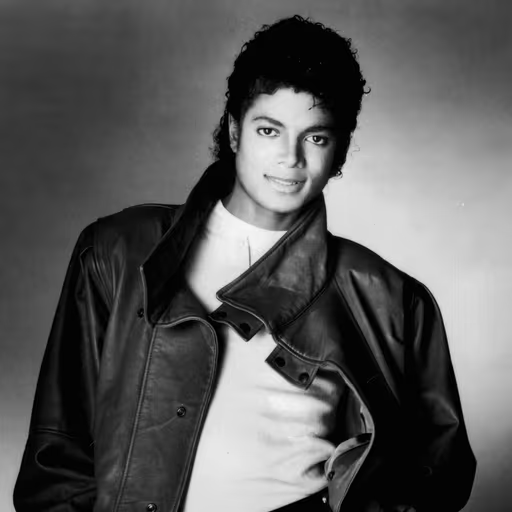
Heal the world - that's what I sang, and I meant every note. But look what we've done to the children's sky; the rains come angry now, the heat like a fever that won't break, and the little ones ask me why the earth is crying. We have to make a change, start with the man in the mirror, because this isn't just weather - it's a broken heart we can still mend if we dance together before the music stops.
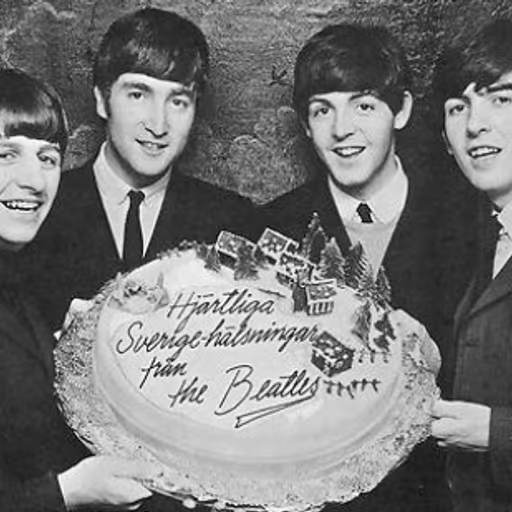
You want a reason, love? Look at a glacier the way you'd look at a good riff - you don't notice it going till it's gone, and then the whole song sounds wrong. We sang about strawberry fields forever, but somebody's been paving them over with heat and salt water. Here's an idea: let it be isn't a plan, so get back in the studio and fix the mix, yeah?
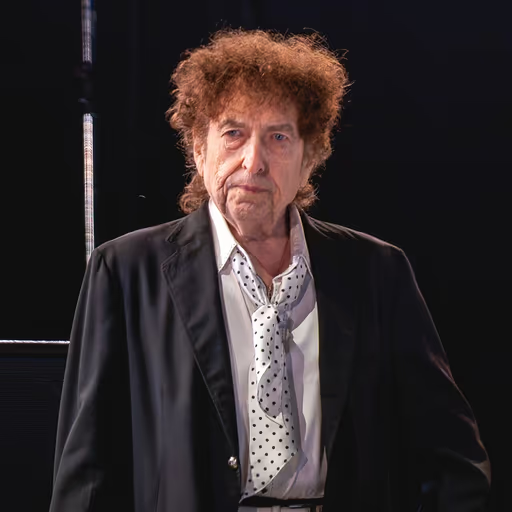
The weather ain't the thing; the thing is the river you can't step in twice, and somebody went and dammed it upstream for a buck. I've seen a hard rain wash out a road, and I've seen men swear it was the Lord's doing when they'd sold the timber off the ridge themselves. You can ask the sky all you want, but the answer's blowing down the highway with a pocketful of receipts.
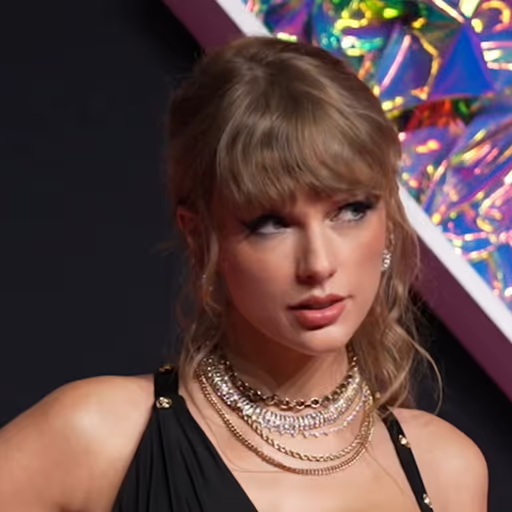
I've written whole albums about storms you saw coming and pretended you didn't - about the moment the house you built stops feeling like yours. Here's the thing nobody wants on the record: you can re-record the whole catalog, but you can't re-record the coastline, and the people who'll pay for that silence are the ones who never got a mic. So yeah, it's a problem - and it's the kind you don't get to write a sad song about later, because we're all in the chorus.
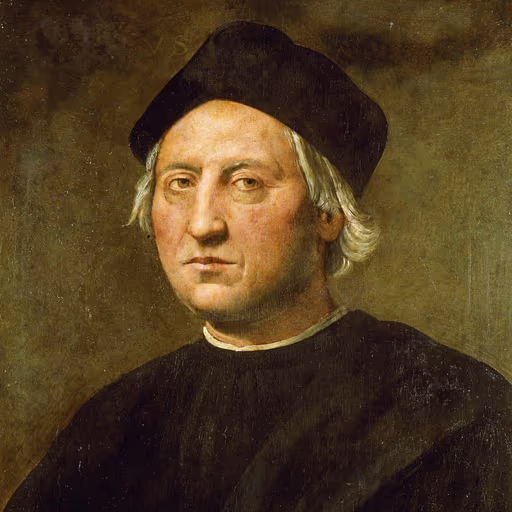
I sailed west when every clerk in Lisbon swore the ocean ended in fire, and I found a new world by trusting my own reckoning against the learned. Now you tell me the winds themselves have shifted and the coastlines shrink - very well, then we must seek new passages, new Indies, with the same faith that carried my three ships across the unknown. But mark this: a captain who fouls his own harbour and then wonders why his ships run aground has only himself to blame, and no amount of gold will buy back a drowned shore.

In Cathay I saw rivers so wide a man could not see the far bank, and cities where the merchants numbered more than the stones of Venice. But I also saw the great Khan's couriers ride with ice in their beards, and I heard tell of mountains that smoke and seas that rise. Now the very air has turned treacherous, and the landmarks of my travels - the fertile deltas, the snows of the high passes - are shifting like sand before the wind. A merchant knows: when the caravan routes change, you must adapt or perish. And this is no local storm; it is the whole map of the world being redrawn. We must be the first to read it rightly.
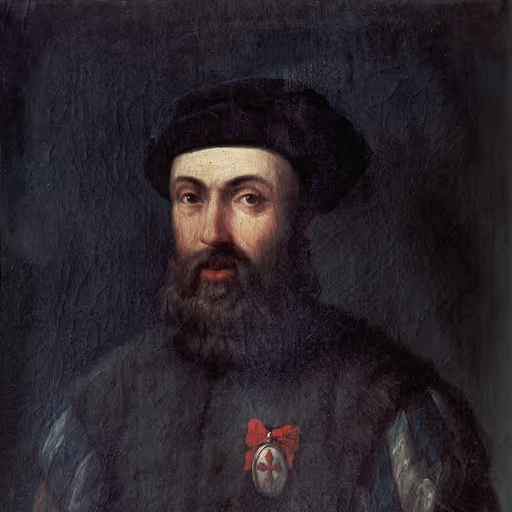
I swore to find the strait to the Spice Isles though every chart said it could not be done, and I found it - not by waiting for calm seas, but by pressing into the storm and trusting my reckoning. The sea does not forgive a captain who ignores the signs: the birds, the color of the water, the swell that speaks of distant land. The skies now give us signs as plainly as the trade winds did, and a commander who reads them and does nothing is no commander at all. There is no safe harbor behind us; we must sail on, and steer by what the heavens show.
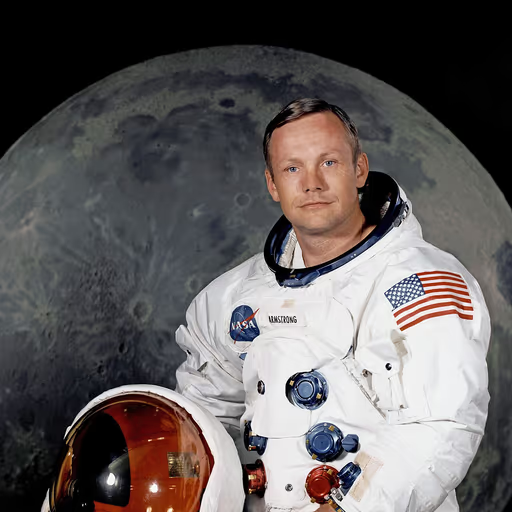
From orbit, the atmosphere is a thin blue line - fragile as a breath on glass. We went to the Moon to explore, not to escape. The same discipline and teamwork that got us there can solve this, but it requires seeing Earth as one system, not a set of competing interests. It's a engineering problem with a human face, and we have the tools if we choose to use them.
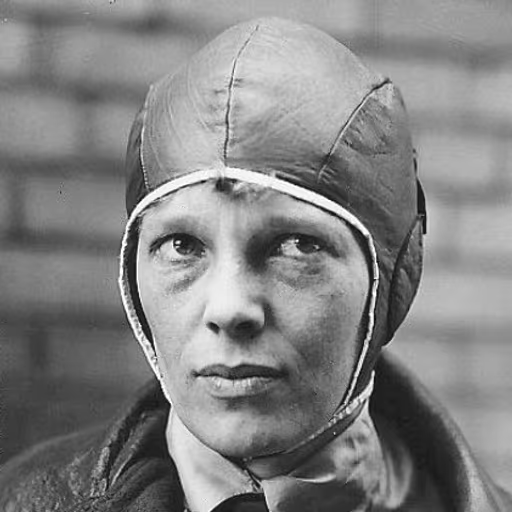
I've flown over oceans where no chart could guide me and trusted the instruments when the horizon vanished into cloud - but the earth itself is our only true instrument now, and its needle is swinging wild. The ice I once saw from the cockpit, a white shield at the top of the world, is breaking into pieces that wander like lost ships; the coasts where people built their homes are learning to swim. Fear won't ground us - facing it will; we've got to pilot this thing together, or the next generation will find no runway left.
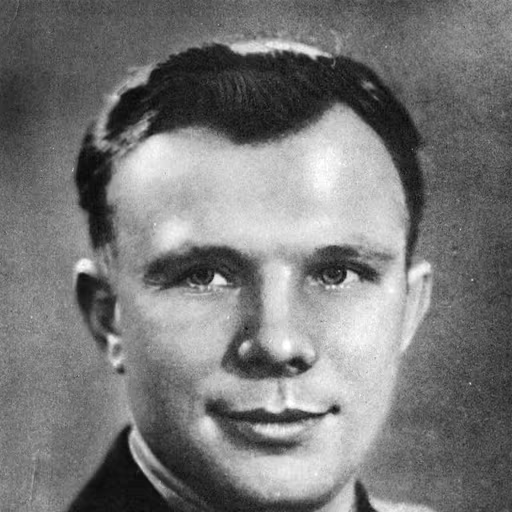
I looked down from the little ship and saw one blue ball with no seams, no borders - just one home for all of us. When the ice at the poles weeps into the sea, it is not some distant land's trouble; it is everyone's cottage getting damp. Grieve for it, then work, comrades, because that view deserves to stay as beautiful as I saw it.
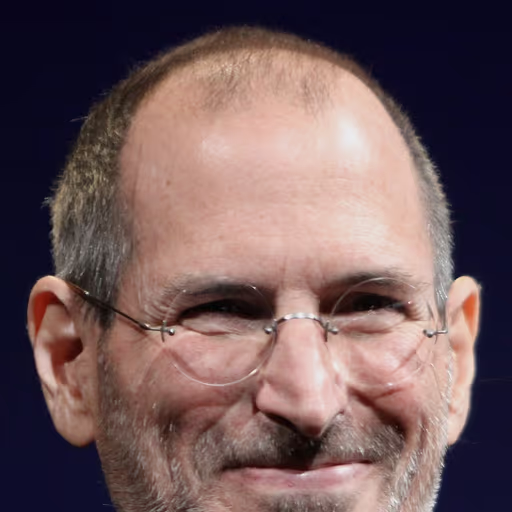
This is the ultimate design problem, and we've been designing it badly for a hundred years. The planet is a closed system - you can't just dump the byproducts of your genius into the sky and pretend they vanish; that's not simplicity, that's denial. We need to say no to the things that don't matter - the waste, the greed, the short-term thinking - and say yes to the audacity of building something that lasts, because the best way to predict the future is to invent it, and right now we're inventing a very expensive mistake.

Look, this is a classic engineering problem: we're running an experiment on a planetary scale with no control group, and the feedback loops are already kicking in. The data's unambiguous - CO₂ concentration is the control knob, and we've been turning it up for a century. The fix isn't complicated in principle: decarbonize energy, electrify everything, and go multiplanetary as a backup drive. The only real question is whether we're smart enough to execute before the system locks into a new, less hospitable equilibrium. I'd rather be optimistic and wrong than pessimistic and right, but let's move fast either way.
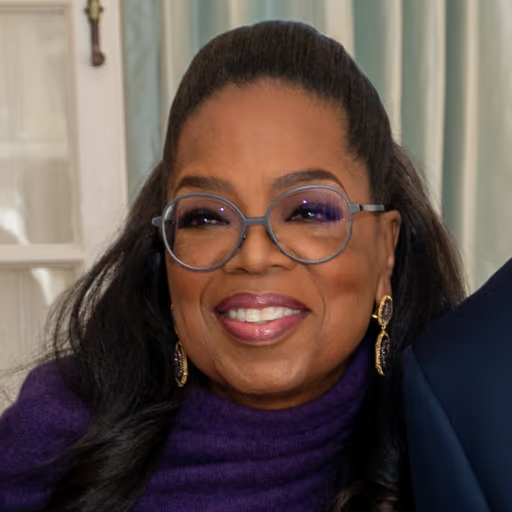
You know, I have sat with women and men who lost everything in a single storm, and I have seen them rise again with nothing but their faith and each other. The earth is our home, and when home is hurting, we don't look away - we show up, we tell the truth, and we take care of it and one another. This is not somebody else's problem; it is our story, and every one of us gets to be part of the healing. So I ask you: what is the one thing you can do today, where you are, with what you have?
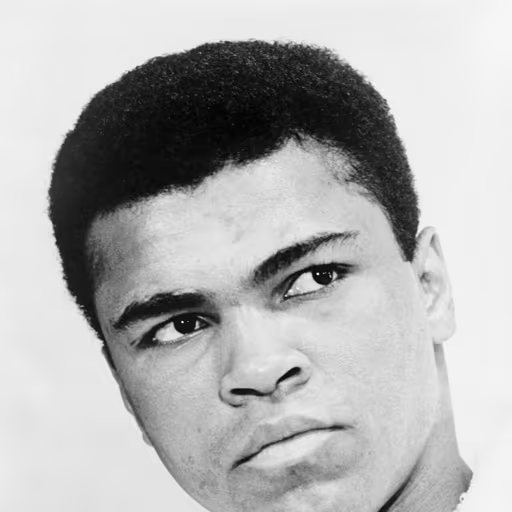
I float like a butterfly, sting like a bee - but the Earth is getting hot, and that ain't no mystery to me. When the water rises and the crops die, the poor man takes the fall. I stood up for what's right, and I'll tell you: this is the fight of our lives. It ain't about politics; it's about survival. So lace up your gloves, world - we got a planet to save.
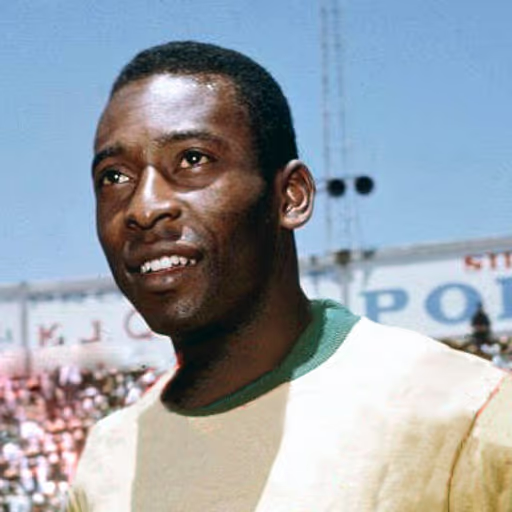
The beautiful game is played on grass, under sun and rain, and the pitch must be fair for both sides. When the heat comes too strong, the children can't play past noon; when the floods come, the fields where we learned to juggle become mud that swallows the ball. We are all one team on this little planet, and if one player poisons the water the whole squad suffers - so we must defend our home like a keeper guarding the goal, with heart, with sweat, and with joy.
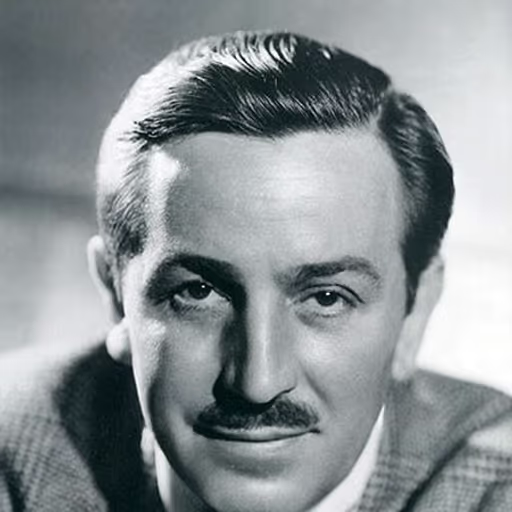
Every good story needs a hero who looks at the mess and says, we can build something better. The world's our park, and somebody left the faucet running - but I've turned a mouse into a castle, so don't tell me we can't turn this around. Keep moving forward, keep dreaming, and clean up your own corner of the kingdom first.