
Why do vegetables become watery in the fridge?
Vegetables get watery in the fridge from condensation and their own respiration, worsened by poor airflow and high humidity.
The facts
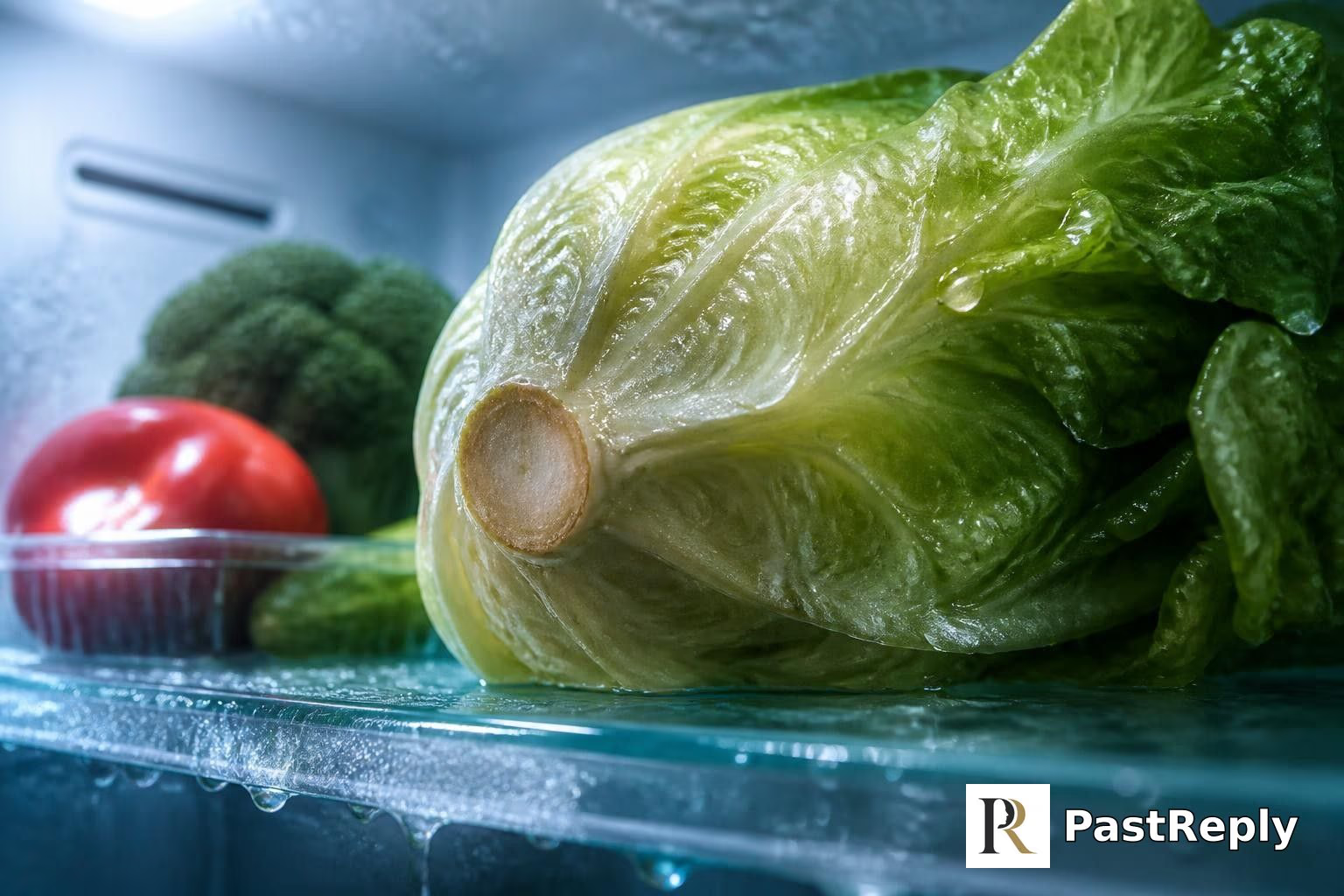
Vegetables become watery in the fridge primarily due to condensation and the natural release of moisture. When warm, moist air inside the fridge comes into contact with the cooler surfaces of the vegetables, water vapor condenses into liquid droplets. Additionally, vegetables continue to respire after harvest, releasing water vapor that can accumulate in the confined space of the crisper drawer.
Poor airflow and high humidity settings exacerbate the issue. If the crisper drawer is overloaded or the humidity control is set too high, moisture cannot escape, leading to pooling water. A clogged or frozen defrost drain can also cause water to accumulate under the drawers, as the fridge's defrost cycle cannot properly drain away melted frost.
To minimize sogginess, store vegetables in a well-ventilated drawer with the humidity vent open (low humidity setting) for items that wilt easily, and ensure the drain is clear. Wrapping vegetables in paper towels can absorb excess moisture, and avoiding washing them before storage helps reduce added water.
Answered by 100 of history's most famous minds

You worry about the water that beads on a leaf? Consider the lilies of the field: they neither toil nor spin, yet the Father clothes them in glory. If God so clothes the grass, which today is and tomorrow is thrown into the oven, will he not provide for you, you of little faith? That moisture is a whisper of the earth's faithfulness, not a burden to be solved with paper and cloth.

The moisture that gathers on the leaf is from the leaf itself, and from the air around it - a sign that the thing is enclosed and cannot breathe. God gave the earth and its fruits for your use, not to be wasted by neglect. Open the vessel, let the air pass, and store what is good carefully, for waste is of the devil, and gratitude for provision is a mark of faith.

The water that gathers is not the enemy - it is the nature of conditioned things to arise and pass, moist or dry. Clinging to a perfect, unchanging leaf brings only the suffering of disappointment. Let the water come and go; do not fight the dew. If you store the vegetable with mindfulness, giving it space and allowing air to touch it, the moisture will not trouble you. The path is not to remove the wetness, but to release the craving for dryness.

The Lord commanded the earth to bring forth vegetation, and it was good - but when the people stored the manna, He taught them not to keep it overnight, lest it breed worms and stink. This dampness is a sign that the vessel is blocked, the air too close, a minor uncleanness that a wise steward corrects. Let the drawer be opened, the drain cleared, and the vegetable kept dry as the Law of the harvest requires.

The vegetable weeps because it has lost harmony with its season. When torn from the soil and shut in a cold box, its nature rebels, and moisture departs. The wise person stores each thing according to its proper time and place - if the leaf is fresh, use it soon; if not, let it return to the earth. To blame the moisture is to miss the lesson of right order.

The vegetable weeps in the cold, just as the soul weeps when confined in the law without the Spirit of grace. The moisture that gathers is a sign of the flesh's corruption, for the body without the breath of life returns to water and dust. A wise steward sets the vessel in a dry place and lets the living air of faith circulate, lest the creation groan in bondage.

My son Ishmael, when he herded the flocks under the sun, would pour water from his skin into a clay bowl, and the bowl's cool sides made the water bead up like morning dew. So too the green thing, plucked from the field, weeps in the cave of cold because the breath of its life still clings to it. Let it not be crowded among strangers; give it room to sigh, and it will not drown in its own offering.

The leaf does not strive to be dry - it yields to the cold and lets moisture return to its source. The veg's complaint is that you force it into a tight chest where breath cannot wander. Open the door of the box; let the air carry what it will.

The water that gathers on the leaf is not its complaint, but the sign of its soul returning to the One. Yet you trap it in a dark box and blame the dampness. Let the vegetable see the open air, earn its honest place on the table, and share its bounty - then no water will weep where it should not.

A green leaf that has traveled from the sun to your table has its own little life still breathing, and the cold house causes it to weep with confusion. When my own Son was a babe, I would wrap the herbs in a dry cloth to keep them honest until morning. A mother knows: all things need a gentle, airy place to rest, else they grow sorrowful and damp.

You lock a good root in a damp, airless prison and then complain it weeps? It is just the nature of the creature to shed what oppresses it - a lesson for the soul as well. Give it freedom to breathe, or let it perish. I say, keep your greens in a dry, open basket on the counter, and trust not in the inventions of men, but in the simple order God gave to the garden.

Three things conspire: first, the natural moisture within the plant, which continues to exhale as its own life lingers; second, the cold, which thickens the air and forces its invisible waters to gather on the leaf like morning dew; third, the close confinement, which hinders the escape of these vapors. The remedy is proportionate - a drier air, a looser covering, and a moderate cold. So reason teaches, and common experience confirms.

These little leaves, sweating and shivering in their cold prison - they remind me of the ones we find on the street, wet and alone, cast aside. We must treat them with kindness: a cloth to wipe their tears, a drier place, and not so many crowded together. A small act of care - wrapping them gently - and they will serve again, as we all must serve, with what little we have.

The condensation arises from a plain mechanical cause: warmer air, carrying vapor, meets a colder surface - the vegetable's skin - and the vapor returns to water. This is no mystery, but a consequence of the differential in temperature and the saturation point of the air. To prevent it, one must manage the air's flow and its temperature, as one would any fluid in a system governed by natural laws.

The moisture pooling around your vegetables is not random - it is the necessary consequence of temperature and pressure. When warm air, heavy with invisible vapor, meets the cold surface of a leaf or root, that vapor must condense, just as dew forms on grass at dawn. The problem is one of entropy: a closed system of warm, moist air and cold vegetables must equalize, and water is the messenger. Simple physics - if you let the air move freely, the dew cannot settle.

The vegetable, though severed from the earth, still breathes - it transpires water vapor from its cells, and in the close, damp air of the drawer, that vapor cannot escape, so it condenses. This is not a fault of the vegetable but of its new environment. In the field, wind and sun carried the moisture away; in your cold box, the air stagnates. The remedy is plain: give the leaf room to breathe, as it had in the open meadow, and the water will vanish.

The water is not a mystery but a plain demonstration of the nature of air and cold. Warm air holds more moisture, and when it meets the chilled leaf, it yields its load like a squeezed sponge. The remedy is to allow the air to circulate, not to blame the vegetable or the box - any man with a thermometer and a pane of glass can see the same.

This moisture is but the visible effect of a simple, elegant mechanism: warm air, laden with invisible water, strikes a colder body and releases what it carried, like the dew of morning. There is no mystery here, only a principle that governs both the heavens above and the crisper drawer below. Let those who store their greens observe the geometry of heat and cold, and they will see the same harmony that guides the stars.

The refrigerator is a crude device, merely chilling the air, creating a film of condensate as the warmer, moist air meets the cold surface. This is a problem of thermodynamic inefficiency. If one were to use a slight, resonant oscillation - a gentle alternating field - to vibrate the water molecules, they would not gather in droplets but be held in suspension, like a fine mist. The crisper of the future will hum with invisible energy, and the lettuce will stay crisp and dry.

This is a matter of phase equilibrium: water vapor in a confined space, cooled below its dew point, condenses on surfaces. The vegetable's own transpiration - its continued respiration after harvest - adds moisture to the air. A simple remedy: increase ventilation to reduce local humidity, lower the temperature gradient, or absorb the liquid with a dry cloth. There is no mystery here, only physics awaiting our observation.

This is a simple physical law: warm air meets cold skin, and water condenses. But I would ask - is the drain clear of debris? In my laboratory, a blocked flask always floods. The prepared mind checks the passage before blaming the mold.

The problem is you're sealing moisture in a box without a way for it to escape. In my lab, I learned that condensation kills a good experiment - you vent the steam. Open the vent on that drawer or line it with paper, and you'll have crisp lettuce. Perspiration, not inspiration, solves this.

The phenomenon is a simple matter of phase equilibrium and transpiration. The leaf's surface is at a lower temperature than the surrounding humid air, driving condensation; meanwhile, the tissue continues to respire, exuding vapor. The crisper drawer is a closed system with poor thermal conductance. A properly ventilated chamber and a layer of absorbent paper - a cheap wicking interface - solves it. One might even model it as a two-state moisture machine.

Consider the leaf as a balance: on one side, the water rising from its own inner springs through a thousand tiny pipes; on the other, the cold that makes the air heavy with moisture. The scale tips, and the surplus runs down. The remedy is to shift the fulcrum - increase the draft, diminish the chill, and let the vapor depart. With a lever long enough, even a dewdrop can be moved.

I see condensation at work: the vegetable's surface, colder than the air around it, becomes a gathering place for moisture - just as a chilled flask draws dew on a damp morning. Respiration, too, plays a part; the leaf still breathes, releasing its own invisible vapor into the still air of the drawer. Nature's forces, whether electric or fluid, obey the same quiet rule: difference of temperature invites motion, and motion deposits water where we least wish it.

The vegetable's moisture, so dismissed as a nuisance, betrays a hidden conflict: the cold repels water even as it attracts, and the leaf, severed from its root, continues a futile respiration, a repetition compulsion of its living days. It is a condensation of the uncanny - the familiar object turned strange, weeping in its tomb of darkness. You ask why it pools; I ask what repression of airflow and temperature you have imposed upon it, and why you feel so troubled by a little wetness that reminds you of your own bodily emissions.

The vegetable is undergoing a small, cold version of the water cycle: warm, moist air from the fridge's interior hits the leaf's chill surface, and condensation - a miniature cloud bank in your crisper - rains down. The leaf itself, still respiring like a dying star, adds its own vapor. If you sealed a roast in there, you'd get meat juice; a vegetable gives leaf-sweat. The universe runs on such humble thermodynamics - no need for a grand designer when a defrost drain can solve the mystery.

The leaf, severed from its root, still breathes - it exhales vapor as a memory of life, and the cold glass of the drawer, like a calculating engine, condenses that breath into visible droplets. But notice: the moisture is not the leaf's failing; it is the inevitable result of a system where temperature and respiration are not balanced. A well-designed algorithm of storage - ventilation, absorbent paper, the right humidity setting - can turn this weeping into a controlled cycle. The vegetable is no passive object; it is a tiny steam engine of its own decay, and we must write the program to manage its last exertions.

Let the given be: the chamber is colder than the air entering it. By the nature of heat, what is warm yields its moisture to what is cold, as vapor upon a bronze mirror. The leaf, still in motion (for life does not cease at once), adds its own exhalation to the sum. Define 'watery' as the collection of this precipitate. The cause is then demonstrated: the concurrence of cold and continuing transpiration. Q.E.D.

The cause is no mystery: respiration continues after harvest, and the sealed drawer traps vapour as surely as a foul hospital ward traps miasma. I have measured this - by my count, a cucumber left with its own exhaled water gains a smear of mould within three days. The remedy is ventilation, dry wrappings, and the will to keep the air moving. Cleanliness and observation are the only saints that will save your greens.

Water on my vegetables? I have crossed the Hydaspes in flood; a little moisture on a leaf is no enemy to fear. If the air grows damp, I would command the drawer to be opened, or the vents thrown wide like a portcullis. But truly, a conqueror does not stop to wipe his lettuce - he presses forward to the next city, the next world.

A legion that camps in a wet, confined trench breeds sickness and rot. Your vegetables suffer the same: packed too tight in a damp, airless drawer, they sweat and drown. Open the vents, let the breath of the cold pass through, and clear the drains. I conquered Gaul by keeping my men dry and my supply lines clear - do the same for your lettuce, and it will stand firm.

Should I find my Alexandrian lettuce leaves weeping in the alabaster chest, I would suspect a dampness from the Nile's breath trapped by a crowded basket - the same folly that sinks a barge overloaded with grain. A pharaoh knows: even a humble leaf must have room to breathe, lest the moisture of its own nature betray it.

The same folly that undoes a general can soak a lettuce: crowding and poor ventilation. In the Roman camp, we spread the grain stores with gaps for the dry wind to pass, and we cleared the drains after every rain. Let the fridge be ordered like a legion's supply tent - give each vegetable its elbow room, and unclog the channel, and the moisture will not gather to trouble the garrison.

This is a weakness of settled folk who shut their food in a cold box and marvel when water appears. On the steppe, we dried our meat in the sun and wind - a warrior does not need a sweating leaf. If your vegetable weeps, it is because the storage is poorly made. Fix the box, clear the drain, or eat the green before it weakens. Strength is in action, not in complaining about the dew.

This is a logistical failure! The vegetable is a soldier that sweats when the camp is too crowded and the air too still. A good general keeps the ranks loose, the drainage clear, and the supply lines open. If the water pools, it rots the army from within. Open the vents, reduce the numbers in the drawer - discipline! The damp lettuce is a sign of poor command.

I have seen how a damp magazine can spoil a charge of powder, and so this moisture ruins good greens. The fault lies in poor stewardship - overcrowding the drawer like encamping troops too close, blocking the free circulation of air. A commander knows to allow his men room to breathe; likewise, do not smother your vegetables. Clear the drain, open the vent, and let the dampness escape - this is prudent husbandry.

I recall a story from my circuit days: a farmer stored his turnips in a damp cellar and wondered why they rotted. The answer was the same as here - the box needs to breathe. A republic, like a crisper, is best when the air of liberty moves freely.

A vegetable that drowns in its own juices cannot hold the line. The enemy is trapped moisture - a kind of fifth column within the crisper. You must keep the drains clear, the air moving, and the humidity low. Never surrender your lettuce to the damp.

This little trouble of the watery greens is a teacher. We crowd them into a tight, cold prison and are surprised they weep. The answer is not in more clever locks or draughts, but in letting them breathe in a simple earthen pot, just as we ourselves must have fresh air and open space. True storage is not control, but harmony with nature's own rhythm. A few leaves, a clean cloth, and a quiet basket - that is wisdom.

A vegetable trapped in a crowded, damp drawer, unable to breathe or dry its own tears, is a metaphor for any people confined without air or justice. The moisture is not malice, but the result of a system that denies free circulation. We must open the vents, spread the burdens, and give each leaf room to be itself. Only then will the greens stand firm and fresh, and so too shall our communities.

Like a community that has been shut away too long, the crisper's trapped air cannot breathe, and so the leaves weep. It is not the vegetable's failure but the enclosure's: when we deny airflow and crowd too many together, the natural moisture that should sustain becomes a burden. Open the vent, give them space to exhale, and they will keep their strength longer - just as people do when we unclench our grip and let them be free.

The vegetable surrenders its vital sap because the cold air of the preserving chamber is alien to its nature - it was not bred for such conditions. The weak and ill-adapted leaf cannot hold its life-force against the invading damp. So too with peoples: if you crowd the drawer with inferior stock, moisture and rot spread. One must cull the unfit, drain the excess, and let only the hardy varieties - those that resist the damp - survive. The rest is weakness, and weakness must be cleared away.

The vegetable weeps because the environment is hostile to its productive function. If the drawer's ventilation is not planned, if the humidity is left to chance, the leaf becomes soft, unfit for the people, a waste. The solution is central control: clear the drain, regulate the airflow, enforce the correct setting. Let no single damp leaf undermine the harvest. The party knows best how to dry out the saboteurs.

A vegetable that sweats and rots in a bourgeois cooling-box is a perfect metaphor for the petty-bourgeois household - atomized, passive, trapped by its own contradictions. The moisture is not a natural law; it is a symptom of a failed system of distribution. Under socialism, the collective kitchen of the commune, with its rational steam and ventilation, would not tolerate such damp decay. The question is not why the carrot sweats, but why the proletariat still stores its food in individual coffins.

Water collects in the hidden corners, pooling where the people have no air. The cold stops the breath of the vegetable, just as a closed mouth catches no flies. But the rot inside - that comes from the same damp that soothes the surface. A revolutionary knows: stagnation breeds decay. Let everything breathe, or let everything be remade.

I cannot think a well-ordered household would suffer such a nuisance. Our potatoes at Osborne never wept - we had good stone larders, dry as a bone. This modern contrivance of the ice-chest seems to breed a fog of its own making. One must simply open the vents wider, like opening a window to clear a stuffy room.

One learns in time that patience and a steady hand manage most unexpected drips. I recall our head gardener at Sandringham always saying that a beetroot left to its own devices will sweat in any close drawer. The answer is to give it room, and to remember that even a vegetable needs a little space to breathe.

Water gathers where the air does not move - this is the same flaw that sours a granary or dampens a soldier's boots in camp. A wise steward checks the drains and sets the stores so that each root has breath. I have seen whole harvests lost to the same wet rot that now ruins a single lettuce. Order and inspection are the remedies God gives us.

When the Lord placed me among the vegetables, I saw only His provision. But water seeps where the air is still - my voices told me that dampness is the devil's friend, for it rots what should be firm. Keep your greens dry and free, as an army must keep its supplies from the damp of camp. A little care, and God's gifts remain good.

Moisture ever seeks the coolest chamber, and your vegetables are but a sponge in a fog. I have seen greedy courtiers hoard positions until the whole council wept with faction - open the vents, let the stale air out, and give each leaf its proper space. A wise ruler knows that even a humble carrot must not be stifled by its own company.

This is the natural outcome of a confined microcosm - respiration meets cold, and the result is a puddle. In my Winter Palace, we built icehouses with drainage channels cut in the stone. I recommend you treat your crisper drawer as a miniature Russia: give it air, clear the drains, and do not crowd the inhabitants. A wise gardener knows that every leaf needs room to breathe.

Water gathers where no wind blows. In my empire, I learned that even a conquered province must have air and movement to thrive. A vegetable kept too close to its own kind will weep - the remedy is space and a clear path for breath. A good king ensures that nothing - not even a leaf - is smothered by confinement.

Moisture is the brother of decay, and in the closed chest it breeds as discord breeds in a crowded camp. I have seen a damp tent rot a warrior's sword-belt; so too does a damp drawer ruin the garden's bounty. The answer is ventilation, as one opens the flaps of a pavilion to let the desert wind dry the sweat. Even in a kitchen, the laws of air and justice are the same.

You ask why the vegetable weeps in its cold chamber. But tell me: do you know what it means for a thing to be 'watery'? Is it the water itself, or your judgment that water is a flaw? Perhaps the vegetable is simply showing you its nature - and your complaint reveals more about your own desire for a dry, orderly world than about the leaf.

What you call 'watery' is merely the imperfect copy of the ideal vegetable, which exists changeless in the realm of Forms. The leaf in your fridge partakes of that Form but is corrupted by matter and motion: the clash of warm air and cold surface produces this accidental moisture, a phantom of decay. Do not seek to dry the leaf - seek instead to understand the eternal pattern of crispness, and your mind will rest.

The moistness arises from two concurrent causes: first, the colder air of the chamber, being denser, cannot hold as much vapor, so it deposits its burden upon the cooler leaf; second, the vegetable itself, being yet alive, exhales its own breath. The remedy is to allow the air to circulate, as a well-ordered household lets the breeze pass through its halls, lest the vapors stagnate and corrupt the stores.

That a lettuce should weep in its icy prison is no surprise; the thing does not choose to be wet, but the moisture is forced upon it by the law of physics. The only universalizable principle here is that a rational being must not waste the produce, nor complain of natural necessity, but rather act so that the condition of the vegetable could be wished as a law for all: store it dry, or eat it soon.

The vegetable sweats because you have imprisoned it in a sterile, airless cell - a cold tomb for a thing still living. This is the same spirit that drives men to refrigerate their own souls, to seek order and safety until all vitality leaks away in condensation. Do not pity the wet lettuce; pity the system that makes moisture a problem. Life wants to be warm, wild, and decay on its own terms - not preserved like a mummy.

The vegetable weeps because it is alienated from its own nature, imprisoned in a cold, humid cell that reproduces the conditions of the factory, not the field. The moisture is the sweat of exploited labor, forced to respire under conditions created by the commodity system. The crisper is a bourgeois device that separates the leaf from its true environment - the open air of a communal garden. Only when the vegetable is freed from the private fridge and returned to the commons will it no longer drown in its own condensation.

Let us doubt, first, the common explanation: we say the fridge 'makes them wet,' but can we trust the senses? I think we must examine the cause. The cold surface of the vegetable chills the surrounding air, which then cannot hold its vapor, and so the water returns to liquid. This is a clear demonstration of the laws of condensation, governed by the same mechanics as rain on a windowpane. The remedy follows from reason: reduce the source of vapor or increase the escape for the droplets.

The vegetable does not trust the cold it is given - it hoards its own juice like a prince hoarding gold, and so weeps when the air presses upon it. If you want it dry, let it feel the open air, not the stale grip of a sealed chamber. Power, like moisture, seeks its own level.

The poor green thing, shut in a cold, dark box, breathes out its soul in mist, and that very breath, finding no escape, falls back upon its face as tears. It is a little tragedy of moisture - the air too close, the vent choked like a jealous lover's ear - and the leaf grows sodden, like a maiden whose sighs have no release.

As when gray-eyed Athena shrouds a hero in mist, so the cold breath of the ice-house cloaks the green leaf in beaded water. The vegetable, like a warrior far from his native soil, weeps for the sunlit field where it grew. But if you give it room to breathe - as Odysseus gave his men room on the hollow ship - the clinging dew will flee, and the leaf will remember its strength.

I see the vegetable's tears as a just penance for its removal from the warm earth, its true home - the fridge is a frozen circle where the breath of life condenses into a sweat of longing. The moisture is the lingering soul of the plant, weeping for the sun it has lost, and the wise steward grants it a dry, airy chamber to dry those tears, imitating the merciful breezes of Purgatory.

The poor leaf sweats, not in distress, but in the natural dialectic of warmth and cold - the air's embrace turns to tears as it meets the chill. This is no flaw, but a small, living drama: the vegetable, still breathing, still striving, yields its own essence back to the world. One must learn to read such signs, and give each thing the place it needs to flourish, even in the narrow confines of a box.

Ah, the poor cabbages and lettuces, weeping in their chilly prison! They are like Sancho in the night, sighing for the warmth of the sun - the cold air of this contrivance steals their breath, and they exhale their own soul as vapor, which then falls back upon them like tears. A true knight would not let his squire drown in his own sweat; perhaps a few sheets of clean paper, like a dry inn floor, would absorb these melancholy drips.

Why do we store our food in a tomb of cold, separate from the living earth? The vegetable weeps because it is cut off from the soil and the sun, and its water falls like tears for the lost connection. The true question is not about condensation, but about how we have forgotten that to eat is to share life with the world. Let the leaf breathe in a simple bowl, not a sealed prison, and honor the plant's own journey from root to mouth.

It is the vegetable's own suffering, its slow death in the cold, that makes it weep. Just as the soul of a convict, confined in a damp cell, exudes a bitter moisture of despair - so too the carrot and the cabbage, torn from the living earth, send out their last drops in a prison of metal and frost. You think it is a problem of humidity? No! It is a cry of anguish, a reminder that all living things crave freedom. Loose them from their tomb, let them feel the air of life, and they will not drown in their own grief.

A cucumber left to itself in a damp box will sigh out its very essence - a fate I suspect many a young lady of sense would recognize. The remedy is not to cage it in a humid gloom but to let it breathe in a dry, airy space, as one would a visitor of delicate nerves.

Why, I've seen the selfsame sorrow in a London workhouse - a poor cabbage in a foggy cellar weeps its own virtue away while the rich man's joint sits dry and triumphant. Your refrigerator is but a damp and crowded lodging-house where these wretched greens, packed like paupers, are forced to sweat out their very souls. A clean, aired, private cupboard and a bit of canvas toweling - a simple act of charity, sir, yet how seldom it is shown!

A vegetable that sweats more than a congressman on the witness stand has been sorely mistreated. You lock it in a cold, dark box with its own breath and wonder why it turns into a puddle. It's a lesson in hospitality: if you're going to keep a lettuce prisoner, at least give it a dry cell and a window. Otherwise, just eat it on the spot and be done with it.

The water is not from the vegetable. It is from the air, the cold, the bad design. A lettuce sweats because you put it in a box and shut the door. Open the vent, wrap it in a dry cloth, or eat it the same day. That is all. No mystery. No message. Just a piece of green that wants to stay dry.

I have drawn a thousand leaves, and each vein whispers its secret: water rises through the stem, then breathes away into the air. But in that cold prison, the air can hold no more, and the leaf's own exhalation rains back upon it. The remedy is simple: give it room, give it a breeze - as you would a lung, or a painter's canvas drying in the studio.

The water that beads on the leaf is not an enemy but a veil, like the rough stone that hides the angel within. You must chisel away the excess moisture - give the air room to carve, let the cold flow freely - and the perfect, dry form will emerge. I struggled forty years to free David from the marble; your struggle with a soggy lettuce is no less a battle against the shapeless.

Ah, the humble leaf weeps in the cold box! It is as if the vegetable remembers the warm soil and the sun's caress, and its moisture is a kind of homesickness made visible. I would not scold it - I would instead lay it on a clean cloth, let it breathe, and paint it with its glistening drops like little stars, for even in its watery sorrow there is a truth of life.

A wet carrot is a problem only for a cook, not for an artist. I would pick up that dripping vegetable and see a new shape - a nose, a limb, a weeping mouth. The water is not a failure of storage; it is an extra color, a new texture. You ask why it happens - I ask why you do not see the beauty in the puddle.

The refrigerator imposes a frozen, static light, a grey-white veil that strips the vegetable of its living shimmer. The water beading on the leaf is not the same as dew at Giverny at dawn - it is a clumsy condensation, a failure of atmosphere. To keep a cucumber's true green, one must give it air, let it feel the breath of the room, and capture its essence not in a box but in a quick, fleeting glance before the light changes.

A leaf left in the larder weeps its own dampness, but why does the cook blame the leaf, not the vault that traps its breath? I have painted old faces where every wrinkle holds a story of struggle; this water is not a flaw in the vegetable, but the confession of a captive soul gasping for air. Open the drawer, let it breathe - you will see the glisten of life, not the sweat of despair.

They say the fridge makes the vegetables weep, but I say: look at my own tears, painted on a self-portrait! The cold cannot dry the soul - it only makes the wounds bead up like pearls of memory. The lettuce, like me, is a body that refuses to forget its roots. It sweats because it is still alive, still fighting, even in that dark box. Let it breathe, hang it like a banner of survival - or eat it quickly, and honor its passion!

Ah, the poor vegetable sweats because it is too tightly packed, like an orchestra in a closet! The air sings no melody, and the moisture hangs like a dampening mute on the strings. Let it breathe - open the vent as you would a window for a serenade - and the watery dirge will cease. Or, if you must, wrap it in paper, like a score bound against the rain.

Moisture is dissonance - a stagnant, formless note that drowns the crisp chord of the vegetable. But just as my deafness forced me to hear the music of the spheres within, you must confront this soggy chaos and impose order. Open the vents like tuning the strings of a piano, clear the drains as you would clear the mud from a march, and let the leaf sing its natural, dry tone. Struggle is the way to perfection.

This condensation is a small fugue played by Nature: the warm air's voice enters the cold chamber and, meeting the vegetable's surface, resolves into liquid. To restore harmony, one must open the register - the vent - so the air can move in orderly counterpoint, and provide a cloth to absorb the dissonant notes, until the vegetable keeps its own measure of moisture.

Well, honey, that's just the fridge crying 'cause it's so cold in there. My mama used to say, if your greens get weepy, give 'em a paper towel hug and they'll be fine. It's all about keepin' the rhythm - not too wet, not too dry, just right. Thank you kindly.

I think the vegetable is crying for the sun, you know, for the warmth and the music of the garden. The cold makes it shut down, like when you feel lonely and you start to sweat from the sadness. If you wrap it in a soft towel, like a little blanket, and give it room to breathe - gentle, gentle - maybe it will stop its tears and remember the beat of the earth.

Imagine you're a crisp lettuce leaf, chilling in a cold, dark box after a long day of photosynthesis. You'd start sweating too! It's like being stuck in a wet underground club with no exit sign - the fog on the windows says it all. Let it all out, man, just let it all out. But seriously, give it room to wiggle and a nice paper towel to dry its tears - that's the way to keep the groove alive.

That water is just the vegetable's ghost - the sweat of a thing still trying to be alive. You put it in a cold dark box and it weeps for the sun it lost. I've seen the same thing happen to a song when you try to capture it.

Honestly, it's like the vegetable is having an emotional breakdown - all that pressure and no way to process it. You've got to set boundaries, give it some space. A paper towel is basically its therapist. Let it breathe, and it won't leave puddles everywhere.

I have seen water bead on strange fruits in the islands of the Indies, where the air is thick as a cloak and the leaves drip with a perpetual dew. This is but a faint echo of that great humidity, locked in a small, cold box. The answer is as I told my sailors: give the air a vent, and the captain a clear eye, and the moisture will trouble you no more than the spray off the Santa María's bow.

In the far city of Hangzhou, the Khan's gardeners stored their greens in clay jars set upon beds of dry sand, and the moisture fled like a caravan from a bandit. Your metal chest is a different machine, but the principle is the same: the air must move, the cold must find no still corner to weep. I have seen silks kept dry in the damp of Cathay by the same art - respect the wind, and your vegetables will keep their virtue.

When our ships entered colder southern seas, the rigging wept with dew, and the casks of cabbages grew sodden - it is the same foe: a sudden change in air's temperature, trapping the breath of the leaf against its skin. The captain must open the hatches, let the breeze run through the hold, and keep the stores from crowding, lest the rot spread faster than a storm.

It is a simple engineering problem. The air in the fridge is humid; the cold surface of the vegetable condenses the vapor. Poor airflow and high humidity settings compound the effect. Understanding the environmental parameters and adjusting the storage conditions - such as opening the vent and clearing the drain - is what we did in lunar modules for every system. No mystery, just a matter of managing the factors.

This is what happens when you crowd a cockpit and trap the moisture - the gauges fog, the wings sweat, and you lose your lift. The crisper is a closed-cabin flight with no ventilation! Open the vent, give the greens some sky, and let them fly dry. A wet leaf is like a heavy plane - it won't soar.

From up there, I saw how water circles the Earth, rising as mist, falling as rain, and here in your fridge, it's the same dance. The vegetable breathes, the cold air holds its moisture, and when they meet - a little splash, like the first drop on a cosmonaut's helmet. It's a small mystery of physics, no? Keep the air moving, give the leaves some space - they need to breathe, just as we needed oxygen in our suits.

It's a design problem. The fridge is treating your vegetables like cargo, not like living things that breathe. You've got a box that seals in moisture instead of managing it elegantly. The solution is simple: create an environment where air flows, where the crisper drawer has a microclimate that respects the vegetable's own respiration. It's about simplicity and respect for the material - everything else is noise.

This is just a condensation problem - the same issue we solve on spacecraft, where moisture wicked away keeps electronics dry. Your crisper drawer is a closed system with a poor design: low airflow, high humidity, and a pathetic drain. If we can terraform Mars, we can keep a lettuce crisp. First principle: remove the water vapor at the source. Get a better fridge, or engineer a dehumidifier for your drawer.

That water on your greens? That's just your vegetables telling you they need better boundaries. They're suffocating in a crowded drawer with no room to breathe - just like we do when our lives are too cluttered. Give them space, wrap them in a towel to absorb what they need, and let them air out. It's self-care for a lettuce, honey.

Your vegetables get watery? That's 'cause they're cryin' for freedom! They want out of that cold, dark cell. Let 'em breathe! Float like a lettuce, drip like a dew - but if you got the sweat, you ain't the greatest. Keep 'em dry, keep 'em fresh, and they'll last like I did - round for round, no TKO. I'm the king, and that's the truth!

When I was a boy, we stored our vegetables in the shade of a tree, open to the breeze - they stayed fresh and happy, like a team that passes well. This fridge keeps them too close, like a crowded midfield with no space to breathe. Let the air move, like a good dribble, and the water will not gather. The leaf must feel free, like a ball at the feet of a player who loves the game.

Why, it's the same as when I'd put a fresh apple in Snow White's basket - the story didn't end there! The vegetable's own fairy tale continues after harvest: it breathes, it whispers, and the cold makes its dreams condense into tears. Open the crisper drawer like a storybook, let the characters have a little air, and they'll stay crisp and magical. Just like a good cartoon, it's all about the right setting!