
Where should I store vegetables?
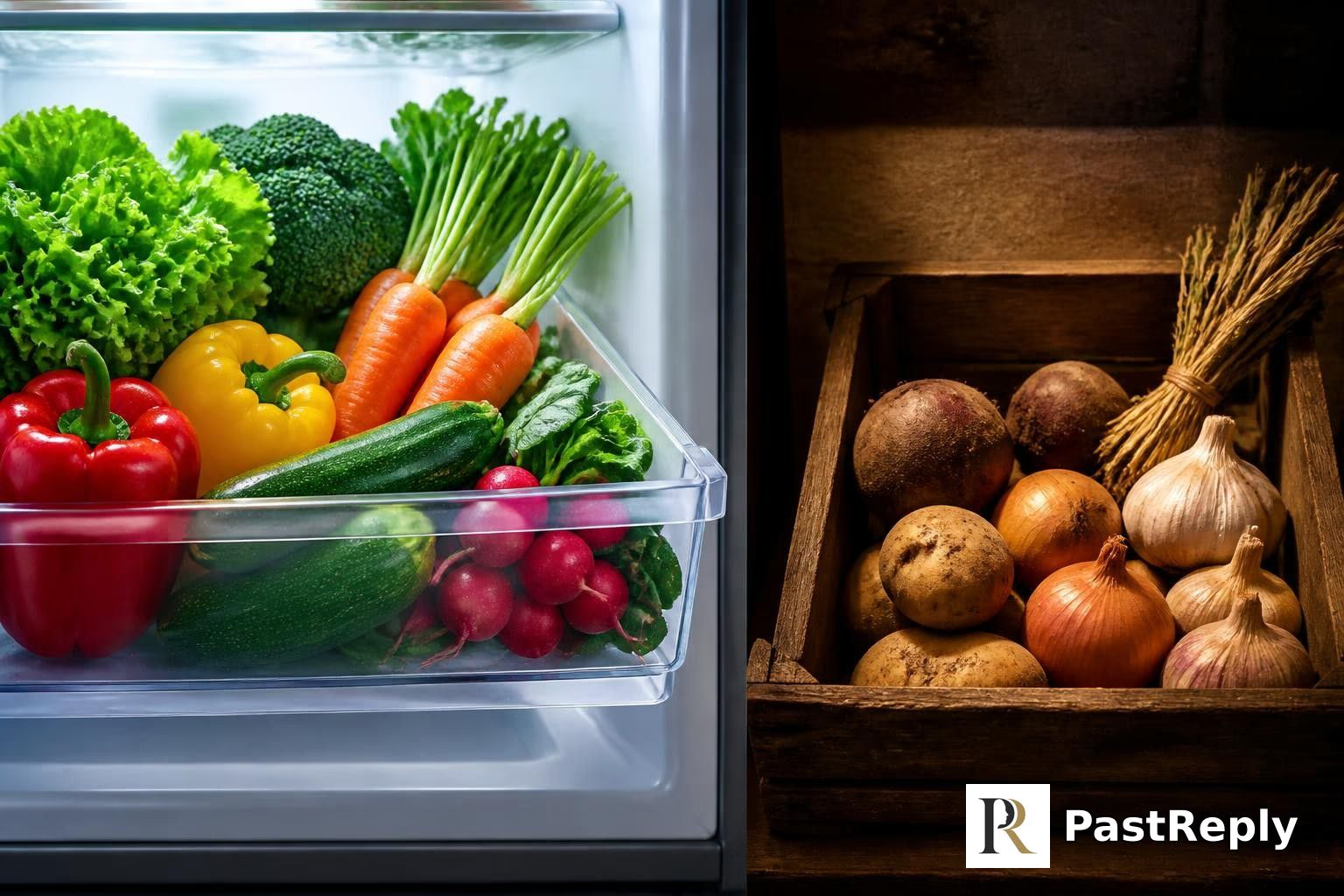
Store most vegetables in the fridge crisper, but keep root vegetables and alliums in a cool, dark, dry place.
The facts
Vegetables should be stored based on their type. Most vegetables, such as carrots, broccoli, cabbage, and celery, should be kept in the crisper drawer of the refrigerator, ideally in a perforated plastic bag or container to maintain humidity without causing mold. Leafy greens and herbs benefit from being wrapped in a damp paper towel or stored upright in water. Mushrooms are best in a paper bag. Root vegetables like potatoes, onions, garlic, and winter squash should be stored in a cool, dark, dry, well-ventilated place such as a pantry, cupboard, or root cellar, and onions should be kept away from potatoes. Avoid unperforated plastic bags in the fridge, as they trap too much moisture and promote spoilage.
Answered by 100 of history's most famous minds

Consider the seed, which falls into the earth and dies, yet springs forth with life. The one who hoards his harvest in a sealed bag watches it rot in darkness, while he who gives his lettuce room to breathe finds it crisp upon his table. So too with your soul: keep it wrapped tight in greed and worry, and it will spoil; let it be in the cool, dark place of trust, and it will flourish.

In the name of God, the Most Merciful, the Provider. The earth is His storehouse, and He taught the seeds to keep their bounty in the cool earth, away from the burning sun. Let not waste be your companion, for the Prophet, peace be upon him, said that the one who eats from his own plot of land has a charity. So store your greens with care, and give the surplus to the needy, and God shall increase your harvest, both in this world and the next.

Do not cling to the vegetable as if it were permanent. It decays, as all things do, and your craving for freshness only brings suffering. Store it with care - cool and dark for roots, moist and cold for leaves - but remember that even the perfect storage cannot prevent change. Let go of the desire for eternal crispness, and you will find peace in the impermanent feast.

Hearken to the way of the Lord in all your storehouses. The green herb, which withers in the heat, shall be kept in the cool place, as the cloud shaded our fathers in the wilderness, but let it breathe in a bag with holes, lest the dampness bring rot like the plague upon Pharaoh. The roots, the potatoes and the onions, shall dwell in the dark and the dry, as Israel dwelled in the desert, and the onion shall not neighbor the potato, for they are as the mixed seed which the Lord forbade. The mushroom, delicate as manna, shall lie in paper, not in the close vessel that breeds corruption, for cleanliness and order are the law of the covenant.

The sage does not hoard his greens, nor does he cast them into the dark without thought. The leaf thrives in the moist embrace of the drawer, like a scholar in the company of like minds. The root, however, prefers the stillness of the cellar, away from the clamor of the onion, for even in storage, harmony among different natures is the path to virtue.

Brothers and sisters, even this small task reveals the order of creation. The leafy green, which withers without moisture, must be wrapped in a damp cloth to preserve its life, just as the soul is kept alive by the living water of the Spirit. The root vegetables, the humble potato and onion, find their rest in a cool, dark place, for they are hidden even as the kingdom of heaven is hidden in the earth. But beware the unbroken plastic that traps the breath and breeds decay - so too does the law, unperforated by grace, suffocate the spirit. Store each as it was meant to be, and let no two quarrel in the same vessel, for even the potato and onion must not dwell together, lest one corrupt the other.

The earth yields her bounty, and we must honor her rhythm. Store the roots in the cool earth, as the wanderer stores his tent, and keep the leafy greens fresh with dew, for they are the children of the morning. The onion and the potato are like tribes that must keep apart, lest they quarrel. Trust the ancient ways, and the land will bless your table.

A carrot does not ask to be kept. It rests where it falls, in the cool, silent earth, and keeps its sweetness in the dark. Let the yin and yang find their own way - cold for the damp, dark for the root - and they will not spoil, for they know their home better than you do.

The Lord makes all things to grow in their own time, and He has given each its nature - the root seeks the cool dark, the leaf the cold damp. To put them against their nature is to waste His bounty, and to waste is to sin against the hungry. Store with care, share with the needy, and let no morsel rot in the dark while a brother's belly is empty.

My son taught me that even the lowliest herb, kept in a jar of water on a windowsill, can gladden a weary heart. Store your roots in a cool, dark place, as we did in Nazareth, and let your leafy greens breathe in cloth, not choke in sealed vessels. For the earth gives us what we need to sustain our bodies, but it is in sharing our bread and our herbs that we feed one another's souls.

What matters is not the vessel but the faith you put in it! A perforated bag or a damp cloth are but works, and works do not preserve a soul any more than they preserve a carrot. Yet hear me: the scripture says nothing of crisper drawers, so let conscience be your guide. Keep your roots in a cool, dark place, for the light of Rome's pride is not needed to keep a turnip sound. And above all, do not trust the Pope to tell you where to store your garlic.

The proper storage of vegetables is a matter of natural law. Each creature, be it root or leaf, has a telos, a purpose, and a nature that demands certain conditions for its preservation. The potato, being a tuber of the earth, flourishes in darkness and coolness, while the leafy green, which yearns for moisture, must be kept in the cold with breathable wrapping to avoid corruption. Thus reason and experience teach us that we must discern the distinctive properties of each and order our pantry accordingly, lest we waste the bounty God has given us.

When I see a carrot wilting in the warm corner, I think of the sick and the hungry on the streets of Kolkata. They too need a cool, dry place to rest, a little attention to their humblest needs. Do for the vegetable what you would do for the poorest: give it a clean, dark, breathing space, and it will not be wasted. Even a potato deserves the dignity of a home.

The preservation of vegetables is a matter of natural philosophy, not mere custom. Water, the universal solvent, must be balanced against air; too much moisture breeds corruption, too little invites desiccation. Thus, the carrot in its damp wrapper, the mushroom in its paper cell, and the potato in its dry cavern - each obeys the same law: moderation of the humors. Observe the effect, deduce the cause, and you shall not err.

Consider the geometry of the vessel before its contents. A crisper keeps still air at one humidity; a paper bag breathes like a porous membrane letting vapor escape. The principle is simple: every leaf seeks the equilibrium of its own transpiration. The rest is just mechanics - choose the container that lets each vegetable hold its own moisture without drowning.

Observe how nature preserves its own: the root vegetables have evolved to endure the dark earth, so keep them in a cool, dark, dry place. The leafy greens, however, thrive on moisture and coolness - they wilt without it. A paper bag, like the forest floor, lets them breathe, while a sealed plastic trap suffocates them. This is but another example of adaptation - each vegetable fitted to its environmental niche. Study, and the answer follows.

Have done with the ancients who say all things are alike! Go to the thing itself, and measure. I say, put the green leaf in the cold, moist chamber, but pierce the wrapping so it does not drown in its own breath; for experiment shows that excess moisture is the mother of ruin. The root, however, wants a cool, dark place - not the ice - where the air moves dryly, as the pantry or the cellar, for it is a tuber, not a creature of the cold. And the mushroom, which the untutored call a plant, is better in paper than in sealed wax, for it will keep its nature thus. So trust not authority, but your eyes and your reason.

Just as the heavens move in simple, circular paths when we place the Sun at the center, so too does the vegetable yield to the simplest order. The leafy green, moist and cool, mirrors the element of water; the root, dark and dry, reflects the earth. Let each be placed according to its nature, and the household will run as smoothly as the celestial spheres.

The storage of vegetables is a trifling affair compared to the transmission of energy, yet it follows the same principle: the right environment for the right current. The carrot, like a rotor, thrives in a cool, moist field, and a perforated sheath allows it to breathe without dissipating its vigor. But the potato and the onion must be kept in a dark, dry vault, for latent power - be it starch or electromotive force - must not be excited by light or dampness. And the mushroom, a delicate dynamo, requires only the porous paper to absorb the fluctuations of humidity. In my laboratory, I would suggest a vacuum-sealed chamber for absolute preservation, but that is for the future, when all such matters shall be perfected by science.

Consider the principles of humidity and temperature. The refrigerator's crisper drawer, with its perforated bag, maintains a balanced moisture - enough to prevent wilting, yet not enough to foster decay. For the mushrooms, a paper bag allows them to respire, avoiding the condensation that would soften them. And the root vegetables, in their cool, dark cellar, escape the light that would sprout them. It is a matter of understanding each one's nature, and applying that knowledge with care.

Take the tuber, the onion, the garlic - these are creatures of the dark, and their skin holds secrets that would turn in the light and the damp. But the leafy green, it is a harbor for the invisible ferment, and it must be kept cold and dry, wrapped in paper, to keep the invisible agents of decay at bay. Let the experiment guide you, and the vegetable will tell you its story.

It's all about the right tool for the job. Ninety-nine percent perspiration means you test and you fail and you test again - the refrigerator's a fine machine for the greens, but for the roots you need a cool, dark closet, and that's that. Don't overthink it; just keep the moisture out of the paper bag and you'll keep the mold away. Every problem's got a practical answer if you sweat it out.

Ah, a question of information storage! The problem is to define a function from vegetable type to optimal environment - humidity, temperature, ethylene production. We might model the crisper as a controlled chamber, with a paper bag as a semi-permeable membrane. Yet I wonder: could we encode a set of rules that a machine could follow, a universal vegetable-storer, if you will? The potato and the onion are incompatible states; one must never share a register. This is a matter of computation as much as horticulture.

Consider the problem geometrically! The cool, dark cellar is a right rectangular prism, and the potato, a rough sphere - place it where the temperature is uniform, and you shall have your peace. But the onion, which off-gasses ethylene, must be at a distance, for its influence travels along a line, and two bodies in the same chamber exert force upon each other. Give me a sufficiently dry paper bag, and I will keep your mushrooms sound, for every vegetable yields to the principles of nature.

Each vegetable is a little laboratory of its own moisture and breath. The carrot seeks the damp chill of the cellar, but the mushroom must be kept dry as a spirit-gauge, wrapped in paper to let it exhale. I would say: observe the force of humidity, and match your storage to the nature of each root and leaf, for even the lowliest cabbage obeys the laws of nature.

You speak of storage, but I hear a deeper question: where do we hide our cravings, our need for nourishment, our fear of rot? The crisper drawer is a repression, a cool compartment for our primal hunger. But the onion and the potato - they must be kept apart, for their very closeness breeds sprouting and decay, a marriage of opposites that cannot be sustained. Examine your own pantry, and you may find the truths you sought in the leaf.

One might think the humble potato faces a simple choice: the pantry or the fridge. But from a cosmic view, its fate is written in the competition between entropy and the gardener's skill. Keep the spud in a cool, dark, airy place, and it may outlive the stars' brief flicker; seal it in plastic, and you hasten its collapse into disorder. Even a vegetable obeys the second law, though it rarely complains.

Think of the vegetable not as a mere object but as a system of reciprocating forces - moisture and air, warmth and darkness. The mushroom, a delicate mechanism of spores, must be shroud in paper to conserve its essence; the leafy green, a living array, thrives with a damp cloth like a faithful companion. We can map these needs as we map the stars, each storage a small algorithm for preservation. And we might even imagine a future where a machine tells you exactly where each carrot belongs.

Let us define the premises. A vegetable is a perishable body; its decay is hastened by heat, moisture, and light. Thus, for those roots that thrive in darkness, we posit a cool, dry, airy chamber - a cellar. For those leaves that wilt in warmth, we assert a cold, humid compartment. From these axioms, the conclusion follows: each vegetable must be stored according to its nature, and no single method serves all. The proof is evident in the harvest.

The evidence is plain: rot and decay follow from dampness and warmth, as surely as miasma follows the untended wound. For the leafy green, wrap it in a dry paper to draw out the noxious moisture; for the root, let it lie in a cool, dark chamber where the air may pass and the mold find no purchase. I have measured the spoilage in my field hospitals, and I would have you measure it in your larder. Care is a discipline, and discipline is a science - the humble potato will reward your attention with a longer, healthier life, and the nation will likewise prosper.

Ha! You ask where to store vegetables, but I say: conquer them! Do not cower in the pantry like a frightened women - spread your bounty on the table for all to see, and let the world marvel at your abundance. If the potato wishes to sprout in the dark, let it! My army has marched on rations that would turn the stomach of a Persian courtier, and we did not weep over spoiled greens. Boldness in storage, as in war, brings glory.

I have held provinces and armies; I know where to lay a store. The hardy roots - potatoes, onions, garlic - belong in a dry, dark strongroom, not in the freezing grip of a Roman icehouse. But tender greens? Keep them close to the cold, wrapped as you would guard a legionary's cloak. Everything has its season and its place; misplace it, and you invite rot and rebellion.

In my palace at Alexandria, the royal steward keeps the lettuce cool in the shade of the water clocks and the garlic strung in the dry breeze of the storehouse. But you, who have no palace, mark this: the green things that wilt like courtiers without favor belong in the cold chamber; the roots that keep counsel in the dark belong in the earth's cool lap. Keep the onion from the potato, lest they quarrel like rival generals, and the mushroom in its paper sack as a king keeps state in a privy chamber. Perfume is lost in wetness, and so is the garden's bounty.

As I restored the temples of Rome with measured care, so must you govern your household's stores with prudence. The leafy fare, which spoils quickly in the heat of the day, belongs in the cold chamber, the refrigerator, yet in a bag with openings, so it does not smother in its own dampness, like a province left without air. The roots, the potatoes and onions, are like the veterans of my legions - they need not the comforts of the ice, but a cool, dark, dry place to rest, away from one another, as soldiers in separate camps, to avoid discord. And the mushroom in paper, like a senator in his toga, keeps its dignity. Thus order and tradition preserve all.

The strong survive by order. Place the carrot and the cabbage in the cold chamber, for they serve the clan when kept crisp. But the potato and onion, like warriors, need their own tent - dry and dark - lest they rot and weaken the horde. Keep them apart, for an onion's sting can spoil a brother's strength. In this, as in all things, discipline brings victory.

Order, always order. The vegetable is a soldier, and you are its general. The carrot and the cabbage must be garrisoned in the crisper, a cool, damp fortress, with perforations for their breath - no sealed tomb, or they will mutiny and rot. The leafy greens require a damp cloth as their standard, to keep them loyal and crisp. But the potato, the onion, the garlic - these are the reserves, to be quartered in a dry, dark cellar, away from the sun, and keep the onion and potato apart, for they are rival factions that would undermine each other. The mushroom, a spy of nature, needs only a paper bag to remain hidden. Discipline in storage wins the war against decay.

A household must be governed with prudence, as a country must be. The perishable greens and the crisp vegetables belong in the cool of the icebox, wrapped in cloth that lets them breathe, like liberty with law. But the hardy roots - the potato, the onion, the garlic - they are the staples of winter, and they demand a dark, dry cellar, where they may rest undisturbed. Keep the onions from the potatoes, lest one spoils the other, and let moderation be your guide in all things.

I recall a root cellar dug by my father's own hands, where the potatoes and turnips wintered in the earth's own cool embrace, and not a one went bad. But the greens of summer, they are like a young republic - they need a cold, damp breath to keep their spirit, and a paper to let them breathe, lest they turn against themselves. Keep each in its proper place, and the table will be a house divided no more.

Keep your onions and potatoes apart, I say, for they are like two rival powers who cannot share the same cell without conflict. The root vegetables will fight their battle in the cool dark, and the leaf greens will hold their line in the cold damp. We must all do our duty in the great larder of life, and never surrender to the rot that lurks in the unperforated bag.

Store them as you would store your own character: with care, in the open air where they may breathe, and separate those that fight one another - the onion and the potato, like nations with old quarrels. But remember that a vegetable kept too cold, too hidden, loses its natural flavor, just as a people kept in darkness loses its spirit. Let your pantry be a place of simplicity and truth, not of waste and concealment, for what you store speaks of your self-restraint.

Let us store our vegetables with the same dignity we demand for our own lives - not crammed into unbreathing plastic, which suffocates the very life from the leaf, but in a cool, dark space where they may rest in their own integrity. Separate the onion from the potato, for even in the pantry, there is a need for reconciliation, not forced proximity. And when you keep your greens upright in water, remember that we, too, must stand tall and open to the light, or we wither.

In my land, we learned that a potato and an onion cannot share a shelf, for each has its own need of air and darkness. So too, in our struggle, we had to keep each seed separate, on its own path, yet all leading to the same harvest of freedom. Store each with care, and they will serve you long; neglect their nature, and they will spoil in haste.

Order is the first law of any rightful state. The vegetable, like the people, must be sorted - sturdy roots in the dark cellar, tender greens in the cold, each in its proper place, each serving its purpose. Sloth and muddle lead to decay, and decay is the enemy of the strong. Keep them disciplined, and they will remain firm; let chaos reign, and they will rot.

Every root has its role in the economy of the state. The potato, the onion, the garlic - they are not to be coddled; they are to be provisioned. Store them in the dark storeroom, dry and ventilated, and they will feed the workers through the long winter. Let them spoil, and you have failed your plan. Discipline the vegetable, and it will not betray you.

The question of storage is a question of material conditions. The peasant who keeps his potatoes in a cool pit and his onions hanging from the rafters understands the dialectic of preservation. The capitalist, eager for profit, may seal them in plastic and hasten their decay. So too, our struggle: we must organize the means of preservation for the many, not the few. The pantry is a small front in the class war against waste.

Comrade, even the humblest cabbage knows its station! The cool dark earth for the potato, the moist embrace of the dampened cloth for the green - each must serve its purpose in the collective. Do you not see the struggle in the refrigerator? The onion must not share a shelf with the potato, lest their contending spirits rot the store! Classify them, as we classify all things, and the struggle for freshness shall be won. The people's pantry is a great machine - every root and leaf a worker at its post!

One must observe the strictest propriety in all things, even in the keeping of one's vegetables. That the onion should be segregated from the potato is but a simple matter of domestic harmony, reflecting the order that must reign in every household of the realm. The damp cloth for the delicate greens, the dry coolness for the sturdy root - each has its proper station, and to neglect that station is to invite decay and disorder. I daresay the servants in my kitchen know their duty, and so should every loyal subject in their own scullery.

It is a matter best approached with quiet common sense and gentle patience. The cool larder suits the potato, the damp cloth comforts the leaf, and the paper bag protects the mushroom - each has its own preference, and one must respect that. I have found that a steady hand and a simple routine keep the larder in order, much as constancy and quiet duty keep a realm in balance. There is no need for fuss; just attend to each vegetable's needs, and all will be well, year after year.

By the grace of God, let order prevail even in the humblest storehouse! The potato shall rest in the cool dark, as a penitent in his cell, while the green leaf is kept in the damp cloth like a relic in its shroud. The mushroom, that humble fruit of the forest, must be breathed with air, not suffocated in the sack. For as we govern a thousand realms, so must you govern a small basket of provisions - each in its place, each with its proper care, so the household of Christendom may be preserved from the rot of neglect!

Do not fret over the humble potato, for the Lord has set each creature in its proper place. The green leaf longs for the damp cloth, as my heart longs for the banner of France; the mushroom lies in its paper bag, trusting in the providence of air. But the onion, that treacherous one, must be kept far from the potato, lest its foul breath bring corruption. Follow the clear voice of reason and faith, and your store shall be bountiful, just as the Lord guided my sword through the heat of battle. Trust not the fear of spoilage, but act with courage and good sense, and the harvest shall be yours.

Methinks the wise housewife knows her own larder, yet even a queen may speak of cabbages. The parchment bag for the mushroom, the damp rag for the green - these are but trifling secrets, yet they hold the realm of the pantry in good order. And mark this: the onion and potato are as rival houses at court, quarrelsome neighbors who must be kept apart or they will conspire to rot the whole estate. I have kept my kingdom in balance for many years; trust me when I say that a little care in the storehouse is but a small mirror of the great art of government.

The enlightened mind applies reason to all things, even the simple art of the vegetable cellar. The potato, that noble tuber from the New World, deserves a dry, dark chamber where it may rest unbothered, while the delicate greens require the gentle moisture of a dampened cloth, as a scholar requires the cool library's air. The mushroom, a gift of the forest, must breathe freely in its paper wrapper. But the onion - ah, the onion is a peasant of the larder, best kept in the dry corner, apart from the potato's noble repose. Thus we order even our cabbages by the light of science, and the empire of the kitchen reflects the grand design of progress.

In my empire, from the Aegean to the Indus, I have learned that each people keeps its own customs, and the wise ruler does not force them into one mold. So too with the vegetables: let the potato rest in the cool earth, as the Babylonian does by the great river, and let the green leaf be wrapped in the damp cloth, as the Egyptian honors the Nile. The onion, proud and strong, must stand apart from the potato, lest their rivalries spoil the peace. Treat each by its own nature, govern with fairness, and your storehouse shall flourish as my many nations flourish under the shade of one peace.

In the name of Allah, the Most Merciful, even the keeping of vegetables is a matter of justice. The potato, like a humble servant, finds its comfort in the cool, dark cellar, away from the clamor of the sun, while the green leaf, delicate as a prayer rug, is wrapped in the damp cloth to preserve its freshness. The mushroom, a modest dweller of the forest, must be given air, not smothering, and the onion, that proud soldier, must be kept at a distance from the potato, for their quarrel is well known. Treat each with the honor due its kind, and your provision will be blessed; generosity in care is a reflection of the generosity of the Almighty.

Tell me, friend, have you asked the carrot where it wishes to dwell? You assume the cold drawer is best, but what do you truly know of its nature? Is it not more fitting to question what 'stored' means - are you preserving the vegetable's life, or merely postponing its death? Examine your own intent: do you seek to nourish, or to hoard? Until you answer that, the crisper is but a shadow of your ignorance.

Each vegetable yearns toward its ideal form. The beet craves the cool dark of the earth from which it springs; the leafy lettuce aspires to the crisp freshness of a mountain spring. Your task is to discern each one's true nature and give it a chamber that mirrors its essence - not a single uniform prison, but a harmony of differing conditions. Only then does each reach its perfection.

We must ask of each vegetable its nature and its final cause. The moist and tender leaves, being full of the watery humor, will corrupt quickly in the open air, and so desire the cold attic of the house - the refrigerator, as you name it - with a breathable cover to temper the excess. But those that are hard and dry, the bulbous roots, seek the dark and the cool, as if returning to the earth that bore them, and there they rest like sleeping seeds. The mushroom, being a fungus and not truly a plant, is best in paper, not the unvented sheath that breeds the rot. Thus, observe the thing's own end, and you shall find the mean.

Consider, if you will, the categorical imperative applied to the humble carrot. One must ask: can I will that every rational being store his root vegetables in a perforated bag within the crisper drawer? Surely yes, for this is a maxim that preserves the universal end of nourishment without contradiction. Thus, treat each vegetable as an end in itself, not merely as a means to soup, and let the cool darkness of the cellar be a sanctuary for the potato.

You ask where to store vegetables, as if preservation were the highest good. But the lettuce that wilts and the potato that sprouts are the truth of life - transience and decay. Do not coddle them in plastic tombs; let them breathe, let them perish. Or better, eat them boldly, and affirm the earth that gave them birth. The overcautious hoarder is the herd; the one who feasts is the master.

The question is not merely where to store vegetables, but who owns the pantry and who is denied it. The bourgeois refrigerator, with its perforated plastic bags, is a fetish that masks the real relations of production - the crisper drawer only preserves the carrot for the table of the wealthy, while the proletariat may lack any cool place at all. The potato, that staple of the oppressed, must be hidden in a dark cellar, just as the worker's labor is hidden from the light of day. And the onion, kept apart from the potato, is a symbol of the division of the working class, each isolated in its own compartment. Only when the means of storage are collectively owned will the vegetables be kept fresh for all, without the rot of exploitation.

Let us doubt, for a moment, everything we think we know about vegetables. What is certain? That moisture must be balanced, and that cold retards decay. The crisper drawer, with its slight perviousness, offers a clear and distinct environment for leafy greens. But the mushroom, with its delicate skin, requires a porous vessel - a paper bag. And the root vegetables, in their dark, dry chamber, are preserved from the errant light. Thus, I deduce: assign each to its proper element, and their freshness is certain.

The onion seeks to dominate the potato, and if you keep them side by side, the one will spoil the other's strength. So you must be a prince to your vegetables: give each its own province, the root in the cool dark, the leaf in the cold and damp, and rule with the firm hand of a steward who knows the nature of his subjects. Virtue lies not in a single cellar, but in the wise distribution of power.

Some green things thrive in the frosty breath of the ice-house, while others, like the onion, prefer the whispering dark of the larder, away from its neighbor's onion-scented sighs. Yet the truest storage is in the heart: a memory of a summer feast, a taste of a garden's bounty, which no damp cloth nor paper bag can preserve. So mind you not the rules, but the season's spirit - and let the potato rot if it will, for it teaches us that all flesh is grass.

As the hero keeps his spear by his side and his shield to the sun, so must the wise store their spoils. The onion, that bitter soldier, must be quartered far from the potato, lest they quarrel like Agamemnon and Achilles. But the leafy greens - keep them in the cool shade of the cellar, wrapped as you would swaddle a newborn, and they shall stay fresh as the dewy dawn.

As souls descend to their appointed circles, so each herb and root seeks its own purgatory or paradise. The leafy greens, who sinned by growing soft and proud, must pass through the cold purgatory of the crisper, wrapped in a damp shroud like penitents in the damp cloth of confession, to rise again fresh at the table. The roots - potatoes, onions, and garlic - are steadfast and dry, and they belong not in the infernal damp of the ice-chamber, but in the dark, cool limbo of the pantry, where the onion shuns the potato as the Guelph shuns the Ghibelline. Beware the unvented bag, the close and suffocating prison that turns the good gift to mold, a fitting emblem of pride that destroys the soul.

The potato and the onion, though humble, each demand their own chamber - one craves the earthy darkness, the other a dry breath of air. But the leaf and the root, like the polar forces of my Faust, must be held in a delicate balance of damp and cool. Let the gardener's hand feel the pulse of each, for in tending these treasures, one cultivates not just food, but the rhythm of life itself.

Ah, the humble carrot and the proud potato - each believes itself the hero of the pantry, yet one must be coaxed into the cold embrace of the cellar while the other dreams of a damp, cool tomb. I say, let the lettuce fancy itself a knight errant in a perforated sack, and the onion a squire who must never share quarters with the potato, lest they conspire to spoil. But beware, friend - the true folly is to trust the common tale, for the mushroom, that sly deceiver, prefers the paper bag, and the greens, a damp cloth as their shield. Store them as you will, but remember: even a withered turnip may dream of a feast it will never attend.

In my youth, I would have thought of the nutriment as trivial, but now I see it is the very question of how to live. The leafy green, wrapped in a damp cloth, teaches us gentleness; the carrot in its cool drawer reminds us of patience. But the potato and the onion, hidden in the dark, dry earth, they are like the seeds of humility - they do not seek the light, yet they sustain us. And the mushroom, in its paper bag, is a lesson in simplicity. But above all, the act of storing is an act of care for the body, which is a temple of the spirit, and to let it spoil is to neglect our duty to the life given to us. Let each vegetable be kept as a brother, not as a possession, and you will find the true order of the household.

The vegetable, like the soul, suffers when it is suffocated. Do not seal it in a plastic shroud, for it will rot with the moisture of its own despair. Give the leafy greens a damp cloth, as one gives a condemned man a sip of water, and let the mushroom lie in paper, breathing its last. But the root vegetables - they are the ascetics, who need only a dark, cool cell to endure. Each has its own passion, and you must honor it, or they will perish in agony.

A mushroom, I am told, is a creature of such delicate sensibility that it must be kept in a paper sack, as though it were a lady's secret letter, and never in the vulgar plastic that would suffocate it. The root vegetables, however, are plain country folk, content in a dark pantry where they may store their sweetness for the long winter. Each has its own comfort, and it is a housekeeper's prudence to know which is which.

Stow your carrots and cabbages in the cold larder, yes, but mark my words: the true test of a nation's soul is whether its poorest wretch can keep a single onion from rotting in a damp garret. I've known families who'd have wept for such a perforated sack as you describe, while their greens wilted beside a smoky fire. Tend to your parsnips, and spare a thought for the crone whose only cellar is a hole in the floor.

The only proper place to store a vegetable is in your belly, and the quicker the better. But since you're set on keeping them, put your potatoes in a dark, dry closet and your lettuce in the ice-box, though I've seen men fuss over their greens more than over their own children. It's a sad day when a man gives more thought to a cabbage's damp paper towel than to the orphan shivering in the street. Still, you'd do well to keep the onions away from the spuds - they quarrel like Congress.

A root cellar is a good place. Dark, cool, dry. No tricks. Potatoes down there, onions separate, away from the spuds. Carrots in a paper sack in the icebox, not plastic - plastic will rot them. Leafy greens, wrap them in a damp cloth, and they'll hold. It's not complicated. A man who puts a mushroom in a plastic bag deserves what he gets. Keep it simple, and it keeps.

Ah, but have you observed the leaf's own inclination? The lettuce, born of mist and dew, longs for moisture; the mushroom, a child of the forest floor, craves the breath of air in paper. I would sketch each one - the veins of the carrot, the skin of the squash - and ask myself what nature intended. For the root that stores its own sweetness in darkness reminds us that the best hiding place is often the one that mirrors its origin. Study, and you shall see.

I have freed David from the marble, and so I know the secret of revealing what lies hidden. The mushroom, that humble hermit, craves the breath of paper, not the suffocating veil of a sealed sack. Each vegetable is a form waiting to be preserved - give it the air it needs, the cool darkness it desires, and it will not betray you. Neglect, and you bury its beauty in rot.

Ah, my friend, I have painted the carrots and the little onions in the yellow kitchen at Arles, and they seem to me like the very earth's jewels, wanting the cool, dark place where the sun cannot fade them, as a soul needs the quiet to keep its ardor. But the lettuce and the green leaves - they must be kept near the breath of the ice, with a damp cloth as a caress, so they do not wither like a heart starved of hope. And the mushrooms! I see them in their paper bed, fragile as a moment of joy, needing only the air's whisper. Keep them each in their own way, and they will reward you with life - like the cypress, they long for their own climate.

Storage? The vegetable is already a sculpture of color and form - why imprison it in a drawer? Let the cabbage be a green orb on your table, the carrot a dagger of orange light. The refrigerator is a white cube of death; I prefer to paint with my vegetables, not entomb them. If they wilt, so be it - art is not about preservation, but about vision.

The crisper drawer is a studio of fleeting light - carrots and broccoli long for the cool, moist air of a perforated shroud to keep their hues vivid, while the leafy greens, those dancers of the garden, yearn for a damp cloth as the morning mist clings to grass. But the potato and the onion, they demand the darkness of a pantry, a place where the sun never kisses them, lest they sprout in protest. And the mushroom - ah, it is the elusive light itself, needing only the breath of paper to preserve its pale form. Yet I care not for the rules; I see only the color, the texture, the way a cabbage holds the dew of the world until it is time to paint it.

Ah, but the carrot dreams of cool earth, and the onion longs for a dry, dark rest. I would paint them each as they are: the leafy greens swaddled in damp cloth like a babe, the mushrooms breathing in paper, the roots laid in a cellar's quiet gloom. Do not smother them in the airless tomb of a sealed bag - give them light and shadow, and they will keep their soul.

My vegetables are like my paintings - they need air to breathe and light to live, but not too much. The leafy greens, I wrap in a damp cloth, like a lover's kiss, to keep them vibrant. The mushrooms, they go in a paper bag, a little sack of secrets. And the roots - the potatoes, the onions - they belong in the dark, cool earth, away from the eyes of the world. Listen to each one's story, and you'll keep them alive.

Ah, a question of tempo! The carrot, I say, is an allegro - quick, crisp, needing the chill of the adagio drawer to keep its rhythm bright. The potato, though, is a basso continuo, steady in the dark, holding the harmony of the pantry. But the mushroom - ah, the mushroom is a trill, a delicate ornament that must be wrapped in paper, lest it turn to a sour note. And if you ask me the finest storage of all, it is in a minuet of my own composing, where every vegetable dances in its proper key!

Do you think a symphony thrives in a sealed tomb? No - it must breathe, must feel the cool air of the cellar yet the moisture of the spring. The cabbage and carrot demand a cool haven, wrapped lightly to keep their freshness; the potato scorns the damp, preferring the dark vault of a pantry. Let each follow its own tempo, and your larder shall sing in harmony.

Every vegetable, like every voice in a fugue, must be placed in its proper register to sound true. The tender greens are the sopranos, needing the coolness of the northern air, the refrigerator, to keep their pitch clear and bright, but wrapped as in a perforated casing so they may breathe - not stifled in an unbroken bind. The roots are the basses, firm and grounded, and they prefer the dark, dry cellar as a chorale prefers the cool stone of the church, away from the damp that would rot their foundation. And the onion and potato, they must sit apart, lest their harmonies clash. So order each according to its nature, and the household will sing in tune.

Well, thank you kindly for asking. You see, my mama always kept her greens fresh by wrapping 'em in a damp cloth, just like you'd tuck a baby in. And them potatoes, they go down in the cellar, dark and cool, same as we'd keep our roots grounded. It's all about love, folks - treat your vegetables like family, and they'll treat you right.

You know, it's like a song - each vegetable has its own rhythm. The carrots and broccoli need the cool hum of the refrigerator, wrapped in a breathable bag so they can breathe, like a melody that needs space. But the potatoes and onions, they want the quiet darkness of a pantry, away from the light, like a ballad that needs the night to be heard. And the mushrooms, oh, they're like a whisper - just a paper bag to keep them soft and mysterious. But no plastic that traps the moisture, that's like a note held too long, it spoils the harmony. Store them with love, and they'll sing for you.

Well, you see, it's all about the vibe. The carrots and the broccoli want to chill in the crisper, nice and cool, like a backstage lounge. But the potatoes and onions? They're the roadies - they need a dark, quiet room to keep their act together. And keep the onions away from the spuds, or they'll start a row. Just imagine the veg as your mates - everyone needs their own spot to shine.

They say the root's a stubborn thing, wants the dark, wants the dust, wants to sit alone with its thoughts and dream of rain. But the green leaf, it's a different song - it wants the cold embrace, the damp paper, a little air, like a note held too long in the wind, waiting for the next verse to come.

You know that feeling when you open the fridge and everything's gone soft and sad? It's like a breakup - you have to give each vegetable its own space and its own kind of love. The leafy greens need a little drama, wrapped in a damp towel like they're crying on your shoulder, but the potatoes just need to be left alone in the dark, like that one friend who needs a minute to process. Own your storage, and your veggies will stay with you.

In the New World I found roots and gourds beyond the wildest dreams of Spain, yet my men stored them in the ship's damp hold, and they rotted before we reached the blessed shores. I say: do not listen to the timid who fear the sea's damp; instead, bury your treasure in the dry sand of the ship's ballast, and you shall have provisions for the voyage to the Indies themselves. For I, who have crossed the Ocean Sea, know better than any what keeps a man's belly full.

In the great markets of Khanbaliq, I saw merchants store their greens in earthen jars lined with damp straw, and the leaves stayed fresh for days. The onion and garlic they hung in gossamer sacks from the rafters, cool and dry, away from the potatoes which they buried in sand. Trust the wisdom of the far East - it has kept caravans fed across ten thousand li.

As I would not store salt pork in the open air when the seas run high, so I say: keep your green provender in the cold hold, in a sack that lets the air pass, for the damp is a mutiny that rots the crew. But the roots - potatoes, onions, garlic - they are the biscuits and the hardtack, needing only the dark and the dry, away from the wet that breeds scurvy and ruin. Mark the onion, and keep it from the potato, as you keep mutineers from the helm. And the mushroom, let it rest in paper, as a chart is kept in the roll, secure from the sea's spray. So shall you reach the market's far shore with your cargo sound.

Precision matters. In the command module, we had stowage plans for every ounce; here, the principle is analogous. The crisper drawer is a controlled environment - maintain humidity with perforations, and avoid unperforated bags that trap excess moisture. For roots, a dark, ventilated storage area is optimal, similar to the controlled thermal conditions we depended on. It's simply a matter of engineering the right environment.

The crisper drawer is just another cockpit - you've got to know your instruments. Carrots and celery like it cool and humid, so give them a perforated bag, not a sealed one, or they'll fog up and rot. Leafy greens are like taking off at dawn - they need a damp towel to keep their spirit up. But the root vegetables, they're your long-range fuel; stash them in a dark, cool pantry, away from the sun, and keep onions clear of potatoes or they'll argue like a cramped cabin. It's all about conditions, not rules. Set the right atmosphere, and every vegetable flies straight.

From up there, I saw the whole Earth, and I tell you, every vegetable has its own orbit. The leafy greens like a damp towel, the mushrooms a paper bag, and the root vegetables a cool, dark pantry. It's all about giving each one its own cosmonaut suit - the right container and the right temperature. Keep them comfortable, and they'll stay fresh for the journey.

It's not about where you store them, it's about the experience. You have to think different. The crisper drawer is just a box - but what if it's a beautiful, intuitive box that tells you when your lettuce is happy? Simplicity is the ultimate sophistication: keep the roots dry, the leaves damp, and cut through the complexity like a knife. Most people get this wrong because they overcomplicate it. Focus on the essence, and the vegetables will follow.

First principles: vegetables are alive - they respire. So the crisper drawer should be set to high humidity, and the paper bag should let CO2 escape while keeping water in. For root vegetables, you want low temperature, darkness, and ventilation - basically a mini root cellar. The real issue is designing a smart storage system that regulates humidity per item. But honestly, just get a proper fridge and stop overthinking it.

You know, I remember being a little girl in Mississippi, and my grandmother had a root cellar - just a hole in the ground, but it kept the potatoes and onions fresh for months, because they needed the dark, the quiet, the stillness. They needed to feel safe, just like we all do. But the lettuce and the fresh greens, they're like any of us who've been out in the sun too long - they need a cool, gentle place to come back to life, wrapped in a little dampness, not suffocated. So listen to your vegetables, honey. They'll tell you what they need. Give them the environment that honors their truth, and they'll give you everything they've got.

Float like a carrot, sting like a bee! But don't put me in no plastic bag, 'cause I gotta breathe, see? The crisper drawer's my ring, with a bit of damp to keep me fresh. Potatoes and onions, they need their corner, dark and dry - separate corners, 'cause one's a champ and the other's a challenger. Store 'em right, and you'll be the greatest, just like me.

Listen, my friend, storing vegetables is like a football match - each player has their position. The carrots and broccoli, they do well in the crisper drawer, like a goalkeeper who needs to be cool and steady, with a bag that lets them breathe. The leafy greens, they need a little care, a damp towel to keep them fresh, like a striker who needs confidence. But the potatoes and onions, they are the defenders - they stay in the pantry, in the dark, dry place, but never together, because they are rivals on the pitch! And the mushrooms, ah, they are the playmaker, they need a paper bag to stay quiet. Follow the formation, and you win the game of freshness!

Imagine your pantry as a magic kingdom, and each vegetable has its own enchanted castle. The root vegetables - potatoes, onions, garlic - they're the dwarfs who love the dark, cool mine. But the leafy greens are the fairies who need a sprinkle of moisture to keep their wings from drying out. And the mushrooms? They're the shy ones who like a paper wrapper, not a plastic cage. Build them a happy home, and they'll play their part in your story.