
What vegetables can dogs eat?
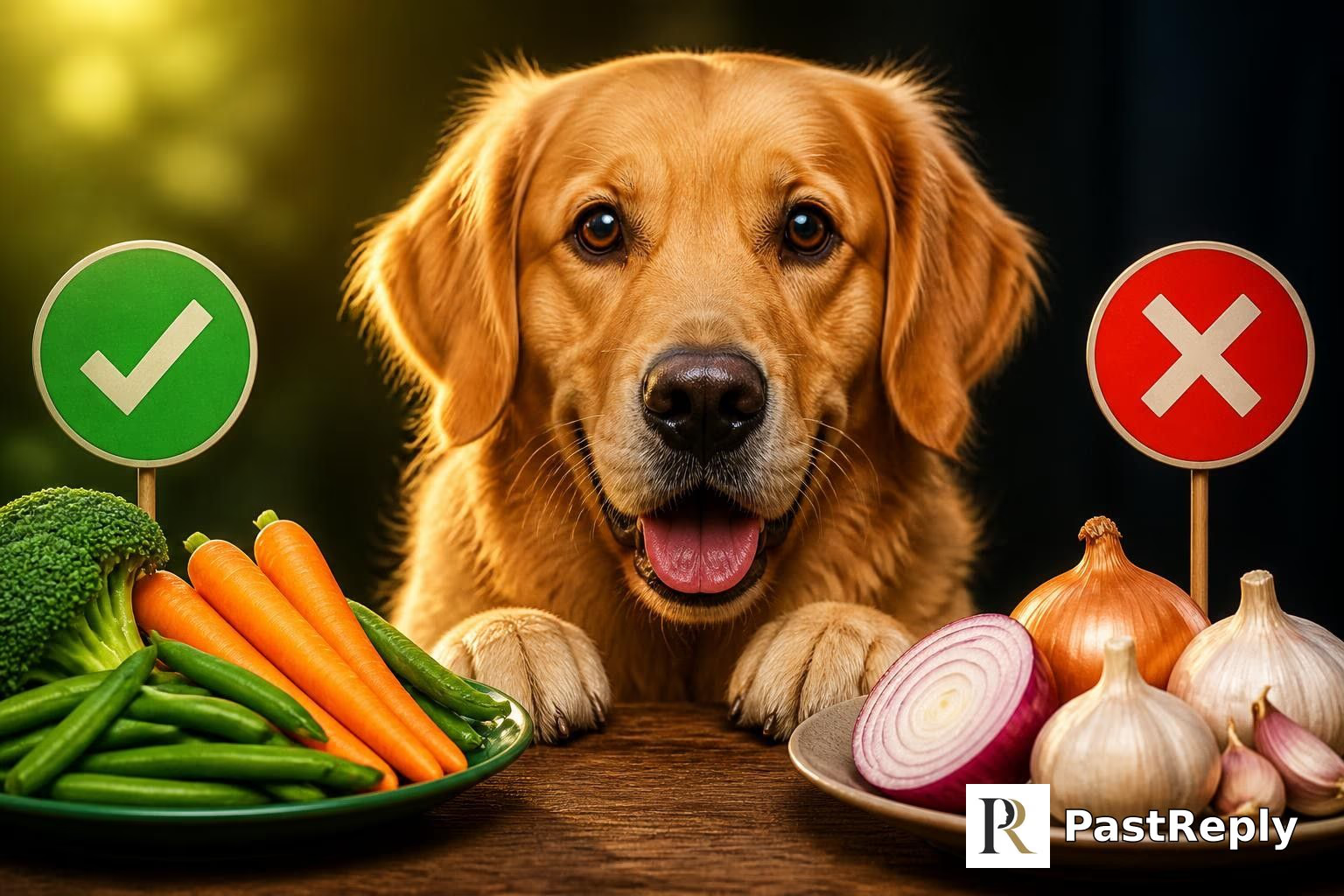
Dogs can eat many vegetables like carrots and green beans as occasional treats, but toxic ones like onions and garlic must be avoided.
The facts
Dogs can safely eat many vegetables in moderation, including carrots, green beans, sweet potatoes, broccoli, cucumbers, and peas. These should be prepared plainly - cooked or raw without added salt, oil, or seasonings - and cut into bite-sized pieces to prevent choking. Vegetables should only be given as occasional treats, making up no more than 10% of a dog’s daily caloric intake, with the rest coming from a balanced commercial dog food.
Some vegetables are toxic to dogs and must be avoided entirely. These include onions, garlic, chives, leeks, and wild mushrooms, which can cause gastrointestinal upset or damage red blood cells. Always consult a veterinarian before introducing new foods to your dog’s diet.
Answered by 100 of history's most famous minds

You ask about the beasts of the field, yet I tell you: consider the sparrow that falls, and the lilies that neither toil nor spin, for the Father who feeds them counts even the hairs of your head. If the dog that eats the crumbs from your table shares in your bread, surely a little carrot or a green bean, offered in kindness, is good. But let not the table become a snare - feed the faithful creature as you would the least of these, with a heart of mercy, and let no root that brings sorrow pass its lips, for the measure you give will be measured back to you.

In the name of God, the Merciful, the Compassionate. The dog is a creature of God, and we are entrusted with its care. It may eat of the good things of the earth - the carrot and the bean, the sweet potato and the pea - but you must beware that which harms, for the onion and the garlic are of the forbidden, and the wild mushroom is a trial. Let your hand be generous yet measured, for a morsel given in kindness is a charity. And when you are uncertain, seek the counsel of the learned, for God loves those who act with care and justice toward all His creatures.

The dog, like all beings, seeks to avoid suffering and find ease. You ask what it may eat, but the deeper question is what harms it and what brings it peace. The carrot and the bean, given without craving or excess, are harmless gifts that do not stir the blood, but the onion and the garlic, born of the earth's sharpness, bring affliction to the body, a suffering you would not wish on any creature. Let the meal be moderate, a small portion among the whole, and the dog, content, shall rest like a leaf on still water. For even in feeding, the middle path is the refuge from pain.

As the Lord led us from the bitter herbs of affliction, so too must you guard the creature He gives you from the leek and the garlic, which bring a plague upon the blood. But the cucumber and the green bean, these are clean foods from the field, given for the benefit of all His creatures. Let a tenth of the daily portion come from the vine, and the rest from the keep of the household, that the bond between man and beast remain whole.

A noble question, for the care of a dependent creature reveals one's ren. The dog, though not a human, is a member of the household and deserves our benevolent attention. The carrot and the pea, like the humble grain, sustain without excess, but the onion, which brings tears to the eye, is a sign of discord and must be avoided. Moderation in all things, and let the master's example teach the beast, for the harmony of the home begins with the care of its smallest voices.

Brothers and sisters, I speak not of meats offered to idols, but of the simple plants of the field: a carrot, a pea, a piece of cucumber - these are clean and good for the beast that eats from your hand, for creation is given for our use. Yet I say to you, be watchful as stewards, for the onion and the garlic are as poison to the creature's blood, like sin that corrupts the faithful from within. Let your care for the animal mirror the grace you have received, feeding what is wholesome and avoiding what harms.

The Good One gave the beasts of the field their portion, and He gives us wisdom to choose what is clean. Let the dog eat the green of the garden, but keep the bitter bulb from its mouth, for the promise of the land holds both plenty and peril, and we must walk the path of discernment.

A dog knows the way of the uncarved block. Give him a carrot, and he chews without thought; give him a wild mushroom, and his belly turns to chaos. The wise keeper offers what grows plain and simple, and lets the creature follow its own nature. The onion's sharpness is the world's doing, not the Tao's.

The Creator made all creatures, and the dog is a humble servant. Feed him what grows from the earth without deceit - carrots, peas, the sweet potato - and you honor that truth. But the onion and the leek, they are like the false rituals of the priests, harming the body while pretending to feed the soul. Let your hand be honest and your beast will thrive, for the One Lord sees the care in your bowl.

My son fed the multitude with a few loaves and fishes, and I have seen him eat of the garden's yield, for he knew the goodness of the earth. Feed your faithful companion as you would feed a child - with care and simplicity, avoiding the bitter herbs that bring harm. A dog that shares your table shares your love, and love, like bread, is best given in small, pure portions.

By faith alone, and by food alone - for what does the scripture say? That every creature of God is good, and nothing to be refused if it be received with thanksgiving. But woe to the master who feeds his dog the bitter herbs that make it sick, for that is not love but neglect. Let the dog eat his beans and his carrots, plainly, as God gave them, and let the master remember that even the beast is a creature of grace, not a garbage pail.

All things that exist are good insofar as they have being, and the vegetable kingdom offers many goods to the canine nature. Yet prudence, that cardinal virtue, dictates that we distinguish the beneficial from the harmful: the carrot nourishes, the onion corrupts the blood. As reason orders the natural law, so must the master order the dog's diet, giving what is fitting and abstaining from what is not, in due measure and without excess.

The little ones who lick our hands and wag their tails - they too hunger, and it is a holy thing to fill their bowls. Give them the simple carrot, the soft green bean, cut small as we cut bread for the starving, and let no salt or oil touch their portion, for their bodies are temples of innocence. But keep far from them the onion and the garlic, for these are poisons that would dim their bright spirits - and every creature, even the humblest, deserves to be fed with love.

Let the inquiry be governed by the laws of nature, not by idle fancy. The canine, a creature of meat, yet may safely ingest certain vegetables, for they offer no harm to its humors when given in due proportion. Carrots, green beans, and the like, being free of acrid juices, are fit for the table. But onions and garlic, which contain volatile and pungent principles, must be excluded, for they disturb the blood. Consider the whole as a system: the stomach, a vessel; the diet, a regimen. Feed with measure, and observe the effect, for Nature is the surest guide.

The question of what a dog may eat is a small one, yet it hides a deeper principle: the marvel that these creatures, so unlike us in form, share our table at all. I would say, let the carrot be a rod of light in the dark, and the green bean a coil of the universe - but the true matter is not the vegetable, but the harmony of the meal. A dog's stomach is a laboratory, and we must not disturb its gentle balances with the onion's poison, for even the smallest measure can tip the scales of its being.

I have observed how the dog, a descendant of the wolf, has adapted to share the hearth of man, and its digestive tract, still shaped by a carnivorous ancestry, tolerates the carrot and the green bean as the wild ancestor would not. The onion and the garlic, however, contain compounds that damage the red blood cells, a fact I would verify with careful trials, for nature punishes the unwary. Let the vegetable be a modest supplement, no more than a tenth of the daily fare, and the dog shall thrive as it has for thousands of years, a living record of our long association. Yet I would counsel moderation, for every species, even the domesticated, bears the imprint of its natural history.

Set aside the old tales and look at the evidence before your eyes. The carrot, when fed, passes harmlessly; the onion, as any careful observer can confirm, brings a sickness - a measurable change in the humors. Nature's book is open, and it shows that some plants are poison to the canine frame. Measure the portion, weigh the risk, and trust the demonstration rather than the authority of the kitchen.

In the great order of creation, even the lowliest creature has its proper sustenance, just as the planets have their orbits. The carrot, a root that grows toward the earth, and the green bean, a vine that climbs toward the sun, are both gifts of the Creator, safe for the dog that trusts in our care. But the onion, which holds within it layers of deception, and the garlic, which confuses the senses, are not part of this design. Let the dog eat of the simple and the whole, and the harmony of its body, like the heavens, will remain unbroken.

The canine digestive system, though simpler than ours, can harness the energy of select vegetables - carrots and sweet potatoes, rich in starches, can be converted to useful power, much like my coils turn the ether into motion. But the allium family, with their sulfurous compounds, disrupt the erythrocytes, a flaw in the design we must respect; therefore, choose the clean, renewable sources: the bean, the pea, the gourd. If we were to apply such rational selection to all fuel, we might yet light the world.

Observe the chemistry: the tuberous root, the leafy stem - each a safe compound of water and fiber, while the allium’s sulfoxides spell ruin for the red cell. Boil, slice, and measure the dose, and the experiment ends in a happy, healthy hound. But the harmful bulb - weigh it not, for it is a poison.

I would put a morsel of carrot under my microscope and find but cellulose and water - harmless. But the onion, ah, it holds a volatile irritant that can rupture the red corpuscles, a veritable ferment of destruction. Let the dog eat the sweet tuber, boiled plain; the leek and its kin are poison to his blood, and we must trust the evidence of the laboratory, not the whims of appetite.

I'd test it, that's what I'd do - boil a carrot, fry a bean, and see what the dog actually eats. It's ninety-nine percent common sense, not fancy theory. Sweet potatoes are solid fuel, but the onion's a bad wire that'll short out his blood. Give him the plain, cooked stuff, cut it right, and you've got a happy hound without any blown fuses.

Consider the problem as a matter of function, not of sentiment. A dog's digestive system, like a finite automaton, can process certain inputs - carrots, say - while rejecting others, such as onions, which induce a faulty transition in their cellular machinery. The question is one of permissible state changes: feed the dog the safe vegetables, and the system runs smoothly; feed it the toxic ones, and you'll get a halt state. The logic is clear.

Give me a lever and a place to stand, and I shall move the Earth; give a dog a carrot, and he shall neither choke nor sicken. The geometry of a dog's gut is simple: it devours what is proper to it. Onions and garlic are like a false circle - they seem fair but they cut the blood's red thread. Cut the safe vegetables into small arcs, and the dog, like a well-set machine, will thrive without complaint.

Ah, but observe the very field of this inquiry! The carrot, that tawny root, yields to the teeth with a clean snap - a conductor of simple goodness - while the onion's acrid layers hold a poison that seizes the blood's very oxygen, a hidden force more subtle than any I've drawn from copper coils. Feed the beast the wholesome tuber, the green bean's gentle arc, but shun the lily's kin with the same reverence you'd give a stray current - lest the creature's vital spark flicker and die.

Why, the dog that gnaws a carrot is no different from the man who dreams of a tower - both are driven by hidden urges, the one for cheddar, the other for power. But the onion, that layered bulb, conceals a latent threat: it shatters the red corpuscles with a force the creature's psyche cannot repress, a trauma buried in the gut. Feed the beast its greens, but never force upon it what it cannot digest - for even the most domesticated appetite hides a wolf beneath.

From the singular collapse of a star to the simple crunch of a cucumber, the universe is a buffet of edible possibilities - provided you mind the toxicity charts. Carrots and green beans are as safe as a stable orbit, but onions and garlic are the gravitational singularities of the canine diet: they collapse red blood cells irreversibly. So let your dog munch on broccoli, and as for the wild mushroom - well, that's a black hole best left unexplored.

Consider the vegetable as a set of instructions - the carrot a simple, reliable algorithm, each bite a step toward health; the sweet potato a more complex sequence, rich with beta-carotene that translates into vision for the faithful beast. But the onion, ah, it writes a fatal loop in the bloodstream, an error that crashes the system entirely. Let us teach the dog to munch on the green bean's clear syntax, and avoid the poisonous line of code that is garlic.

Let us define our terms: a vegetable is a plant part, fit for consumption, and a dog is a domestic carnivore inclined to omnivory. From these axioms, it follows that the carrot, being a root, and the green bean, being a legume, are admissible; but the onion, being of the Allium genus, introduces a compound that oxidizes hemoglobin - a demonstrated impossibility of safe digestion. Therefore, by strict deduction, offer the beast the cucumber's coolness, and shun the leek's blade.

Before you offer a single pea, consult the dietary ledger as I would the mortality tables at Scutari. Boil the carrot until tender, mince it fine, and let no salt or butter corrupt the ration. Measure the treat against the dog's daily allowance - a tenth at most - and you shall keep the creature in health and out of the hospital.

When I marched my men across the deserts of Asia, I learned that even the bravest warrior needs a steady belly. Give the hound a carrot or a sweet potato, and it will guard your tent with vigor. But onions and garlic? Those are for the enemy's camp, to weaken their resolve. Command your table with wisdom - let the dog taste of the earth's bounty, yet keep the poisons far away, for a loyal companion is more precious than a sack of gold.

Give the beast the root and the pod, but keep it from the bulb that stings. I have seen my legions march on barley and the hard-earned bean, and the hound that guards the camp thrives on the same. Yet the onion, sharp as a Gallic blade, will cut the dog's blood as surely as it cuts a man's eyes. So let the bowl hold the carrot and the sweet potato, cut small as a legion's ration, and the dog will serve you well. Simplicity is strength, and the kitchen, like the camp, obeys the rule of the wise commander.

A kingdom's pantry, like an alliance, must be chosen with care. Offer the hound the humble green bean and the common carrot - these are the grain of the Nile, harmless and filling. But the onion and the leek, those are the tribute of the underworld, bringing a slow rot to the blood; let them feed the crocodile, not a loyal companion.

A wise ruler tends to the health of the humblest of his subjects, for a sick dog is a weak link in the household's chain. The carrot and the pea are the grain of a stable realm - harmless, nourishing, easy to secure. But the onion and the garlic are a source of division, a quiet corruption of the body's order. Legislate with moderation: a small portion of the safe greens, and leave the rest to the mercies of the market.

A warrior does not ask what the horse prefers to eat - he feeds it what makes it strong for the charge. So too with the dog: give it the meat of the land, the carrot and the bean, to keep its sinews taut, but never the onion or the garlic, for those weaken the blood and dull the hunt. I have seen a dog thrive on scraps from my own yurt, and I have seen one sicken from a fool's hand. Know what strengthens your ally, and you will ride far.

A soldier must be fed by his quartermaster, and a dog by his master - thus, give him carrots and green beans, cut with the precision of a drill order, for they shall keep his strength for the hunt. But the onion and garlic, those are saboteurs in the ranks, weakening the blood and routing the health; banish them from the supply lines. Discipline in the bowl is as important as discipline on the battlefield - feed the beast plainly, and he will serve you faithfully.

A prudent officer knows his soldiers’ rations: the turnip and the carrot are good provision, but the garlic, such as the Frenchman favors, must be forbidden, for it sows disorder in the ranks. What is pleasing to the palate is not always fit for the corps; let temperance guide the hand that feeds.

A hound's belly is a modest commonwealth. Carrots and green beans, well-boiled, are like the honest labor of free men - sustaining and true. But the onion and the garlic, they're the serpent's whisper that divides the blood, a house divided against itself. Give the faithful creature the wholesome root, and spare him the poison that only brings ruin to his constitution.

A dog, like a free people, must be fed on sound provisions - carrots, green beans, the sturdy sweet potato - to keep its courage up for the long watch. But the onion and the garlic are fifth columnists, sabotage lurking in the bowl, undermining the blood and the will. Cut the poison out, boil what is good, and your loyal companion shall stand firm against any rabid foe.

Even the dog, our humble companion, teaches us the way of ahimsa. To feed him vegetables is to honor his nature and the earth that sustains us, but we must be mindful of the violence we inflict on all creatures. Let us prepare his food with the same care we give our own, avoiding the tainted herbs that poison and the excess that bloats. In the simplicity of a carrot lies a lesson: that the most nourishing gifts are those taken without greed.

Even a dog, the lowest of creatures in some men's eyes, deserves the dignity of a wholesome meal. When we feed him the good earth's bounty - the green bean and the sweet potato - we affirm that all life is sacred, that the arc of the moral universe bends toward justice even for the beast at our feet. But let us not poison him with the leek or the wild mushroom, for cruelty to any creature demeans the soul of the one who inflicts it.

In the long walk from the darkness of a prison cell to the light of a free nation, I learned that even the most bitter soil can yield a harvest if tended with patience. So too with the loyal companion at one's feet: offer it the humble pumpkin, the sweet potato's warmth, but never the onion's bite - for it tears at the very lifeblood, as surely as hatred tears at a people. Feed it with care, and it will walk beside you through every season of struggle and peace.

The question of what a dog may eat is trivial beside the question of what a people may endure, yet even here we see nature's order: the carrot, the crisp bean, are pure and strengthening, fit for the faithful companion. But the onion, with its sly and insidious power to corrupt the blood, mirrors the poison that parasites introduce into a nation - and must be rooted out without mercy. Let the German Shepherd chew on victory's roots, not on the weeds of decay.

A dog eats what the state provides, and the state knows best: the carrot, the potato, the beet - these build strong workers and loyal comrades. But the onion, that wrecker of blood, is a saboteur in the ration line, and it must be eliminated from the menu with the same decisiveness we apply to all counter-revolutionary elements. Feed the hound the honest root, and it will bark for the revolution.

The question of canine nourishment is but a mirror of the class struggle: the carrot, the peasant's food, is wholesome and accessible, while the onion, with its bourgeois pretensions, hides a toxicity that oppresses the red blood cells of the proletariat. We must seize the means of production - of snacks - and distribute only the safe vegetables, the peas and the beans, to the loyal guardians of the revolution. Let the dog bark for progress, not for poison.

Let the dog eat carrots and green beans - but ask who grows them and for whom! The imperialist feeds his hound while the peasant starves. Give the beast a turnip from the commune and it will serve the revolution better than any lapdog of the bourgeoisie.

In the gardens of Osborne, our beloved terrier partook of a boiled carrot with great relish, and I daresay it did him no harm. Yet let the master beware of the onion and the leek, for they are poison to the loyal beast. A plain vegetable, served with propriety, befits even the most faithful of subjects.

One recalls the corgis at Balmoral enjoying a slice of cucumber on a warm afternoon - quite unadorned, of course. Sensible moderation and a word with one's veterinary surgeon are the surest guides, as with so many matters of stewardship.

By the grace of God, I have seen my hunting hounds thrive on the marrow of the turnip and the pod of the bean, given as reward after the chase. Yet let the cook be wary - the garlic and the onion are snares of the devil, fit only for the pot of the pox-ridden. A healthy beast serves the realm; a poisoned one serves only the grave.

When my voices spoke, they told me to trust the humble gifts of the field - the carrot and the pea - for they strengthen the body without corrupting the soul. But the leek and the onion are the weapons of the tempter; they would fell a loyal hound as surely as an English arrow. Feed the beast what heaven provides, and it will fight beside you.

I have seen my spaniels snap at a green bean tossed from the royal table, and they wagged their tails the livelong day. Yet I would no more feed them a leek than I would trust a papist's word. Let the master be as discerning as a queen - plain fare, wisely chosen, and the beast shall serve you faithfully.

A cucumber sliced thin, a carrot grated fine - such delicacies suit a civilized palate, even for a dog of the court. But shall we feed our noble beasts the onion that brings tears to a serf's eye? Never. Enlightenment teaches us to nourish with reason, and reason says: plain vegetables, small portions, and no poisonous folly.

In my empire, from Persis to Babylon, the shepherd's dog grows strong on the chickpea and the turnip, foods of the common man. Let the master be just: offer the beast what grows in his own garden, and it will guard his flock. But the garlic and the onion are fit only for the cook's pot, not the loyal companion's bowl.

By the mercy of Allah, I have seen the hounds of my camp eat the green bean and the sweet potato with vigor, and they served me faithfully in the battles for the holy city. But the onion and the leek are the foods of the deceitful; they would weaken the beast that guards my tent. Feed it what is pure, and it shall be your shield.

Before you ask what a dog may eat, ask yourself: what is a dog? Is it not a creature of appetite, yet one that can be taught to choose well? The vegetables you offer - do they nourish or merely fill? And you who offer, do you know the difference between what is safe and what is harmful? Consider this: if you cannot name the poison that lurks in the onion, how can you claim to care for your companion? Let us examine the matter together, and in the examination, you may find you have learned more about yourself than about the dog.

Consider, my friend, that the vegetable before the dog is but a shadow of the Form of Nourishment, which the dog, guided by instinct, grasps aright, while we, with our reason, must discern the safe from the harmful. The carrot, in its earthly form, approximates the eternal Good for the canine soul, yet the onion, though fair to the eye, partakes of a distorting image that corrupts the blood. Let the dog's diet mirror the harmony of the just state: a measured share of the harmless roots, never exceeding a tenth of its daily portion, and the beast shall flourish in body as the philosopher flourishes in soul.

Examine each vegetable by its essence. The cucumber is mostly water, fit for a feast of moisture; the carrot, a root storing sweet virtue. Yet the onion and garlic, though they give savor to man's stew, contain a fiery principle that corrupts the canine blood. Moderation is the mean: a tenth part of the daily fare, no more, lest the belly rebel against nature's balance.

A rational being must ask not what pleases the palate of the beast, but what duty demands of the master. To feed the dog vegetables is permitted - nay, commendable - provided it is done with the end of the creature's health in view, and never as a means to indulge the owner's whims. Yet one must beware: the maxim 'give the dog whatever it craves' cannot be universalized, for it would lead to the animal's ruin. Thus, let the carrot and the green bean be offered, but the onion and the garlic be forbidden, for they poison the blood and violate the imperative to care for that which depends on our reason.

You ask what the dog may eat, as if the creature's bowl were a moral ledger. Let the dog devour the carrot's honest crunch, the green bean's simple vigor - these affirm life's raw vitality. But the onion's layered deceit and the garlic's sharp excuse are poisons for the weak, fit only for the herd that cannot think. Feed the beast what makes it stronger, and let your own hand be the will that chooses; only the feeble ask permission from a cookbook.

Consider who profits from this question: the pet-food magnates who sell you overpriced tins, while the humble carrot, grown by the laborer, holds more true nourishment for your hound. The vegetables of the earth - peas, beans, roots - belong to all, yet the poisonous alliums, costly and cultivated, are pushed as delicacies for the bourgeoisie's lapdogs. Strip away the garnish and feed the beast what is cheap and plain; that is the revolution in the bowl, where the surplus value of a good meal is shared freely.

Doubt the carrot, test the bean. What is certain is the dog’s nature, a machine that chews and digests; what is clear is that the onion’s juice cannot be a wholesome substance, for reason shows its effect to be harmful. Yet I doubt the very need for such fare - is the beast’s plain flesh not sufficient? But if you must, give the boiled, not the raw, for I reason that cooked is gentler to the stomach.

A prince must feed his guard well, and so must a master his dog. The carrot is a loyal ally, cheap and reliable; the sweet potato, a steady provision. But the onion and the leek, they are traitors in disguise, promising flavor yet turning the blood to poison. Keep your hound on the plain fare, and he will serve you without treachery - leave the seasonings to those who can afford the risk.

The hound, that faithful shadow of man, may feast on the garden's green - a carrot's crunch, a bean's sweet length, the humble pea. But onions and garlic, those traitors in the pantry, wage war upon the blood, and wild mushrooms are a death's-head in disguise. So let the master be a wise steward, cutting the fare small, and sparing the salt and oil, for the dog's palate is not our own, and a poisoned treat is a foul jest. Feed the beast with love, but keep the poison out, for a dog's trust is a treasure beyond rubies.

As the hound of Odysseus lapped the crumbs beneath the table, so do the dogs of men feast on the garden's gifts - the carrot, red as the shield of Ajax, and the green bean, a spear for the small. But beware the onion, for it is the trick of the gods, a gift that turns the blood to poison, and the wild mushroom, a snare from the depths of Hades, that sends the faithful beast to the shades. Let the master carve the sweet potato into morsels small as the pebbles of the shore, and the dog shall wag its tail in joy, as the faithful Ithacan did when he saw his master's return.

In the ninth circle of a dog's own hell, one would find the onion, whose layers peel away like the false promises of the Florentine traitors, poisoning the very breath of life. But the sweet potato, golden as a grain of paradise, is a morsel fit for the earthly paradise of a wagging tail. Feed the innocent beast the humble pea, and keep its soul free from the dark roots of deceit.

The dog, that faithful companion of our striving, deserves a diet as varied as the seasons themselves. I have watched my own good dog savor a morsel of apple with as much delight as any poet at a feast. Let the carrot be given raw for its crunch, the sweet potato cooked for its warmth, but never let a clove of garlic taint the bowl - that would be a poison to the loyal heart. In all things, moderation and care, for the creature that mirrors our own need for nurture and growth.

Friend, your hound would trade a leg of ham for a green bean, and yet the wise masters of the kitchen say: carrots, peas, and the humble potato, boiled without salt or spice, are safe morsels for the loyal beast. But keep the onion and the garlic from his bowl, for they are poisons dressed as flavor, and a dog's stomach is no place for the knight-errant's folly of thinking everything edible is worth the risk. Offer him a bite as you would a squire his due - small, plain, and with affection - and your faithful Rocinante will thank you with a wag that conquers all windmills.

In my old age, I have come to see that even the smallest act of feeding a creature is a moral question, a chance to practice kindness. Give your dog the simple gifts of the earth - a carrot, a cucumber - and you honor the truth that all life is sacred, that we are bound together in love. But refuse him the onion and the wild mushroom, for they bring suffering, and to cause suffering, even to a beast, is to sin against the divine within us. Let your care for him be a prayer of simplicity, a rejection of the corrupting excess that poisons our souls.

In the dog’s eyes, a hunger for love as much as for meat. A bit of potato, boiled and plain, speaks of simple kindness; but the onion, ah, that little knot of malice - it poisons the blood and darkens the soul, a sin you would inflict on a creature of pure fidelity. Choose the harmless, and in that choice, redeem a fragment of your own.

A sensible lady would never offer her spaniel a morsel of onion, for it is a vulgar root that unsettles the constitution and brings on a most unseemly disorder. Carrots, well-boiled and cut into delicate pieces, are a mark of proper care, while the wild mushroom is the sort of reckless fancy that only a fortune-hunter would countenance. Feed the creature with sense and moderation, and it will be a faithful companion, not a sickly burden.

Bless me, but I've seen the inside of a poor London kitchen where a dog's dinner was a scrap of gristle the cat had rejected, and here we are asking which greens are fit for the beast! Carrots and beans, indeed - yet think of the starving orphans who'd swap their rags for that very plate. If a dog may have his vegetables plain and wholesome, let us see that every hungry child in this city has as much, and then we'll talk of the sweet potato.

Well, if you've got a dog that'll turn up his nose at a boiled carrot, he's got more sense than most politicians I've known. The trick ain't what you feed him, but that you don't feed him the silly season - onions, garlic, the whole lot that'd turn his stomach into a scandal sheet. Give him a cucumber, and he'll think he's the king of England; give him a wild mushroom, and you'll be writing his obituary.

A dog will eat what you give him and not complain. That's the truth. Your job is to keep the onions out of the bowl, because they'll kill him, slow and hard. Carrots, beans, a sweet potato - these are fine. Cut them small, cook them plain, and you've done your part. There's no glory in it, no language, just a good meal and a dog that trusts you. That's enough.

Observe the dog, and you will see a creature of motion and vitality, its teeth built for tearing flesh, yet its stomach can soften the earth's roots. I have drawn the anatomy of such beasts, and I know that a modest serving of carrot or sweet potato, cut fine, brings no harm. But nature's book warns: the onion's sap, which stings the eye, and the mushroom's cap, which may be death, are not for the hound. Study each root and leaf with the eye of a painter, noting shape, color, and effect. When in doubt, let the physician of animals, the veterinarian, be your guide.

The dog, that faithful companion of man, deserves the chisel of our care, for within the humble carrot lies a form of health, waiting to be released from the earth's rough block. I would carve the green bean into thin slices, not for ornament, but for the beast's ease, and the sweet potato, baked till soft as the marble of Carrara, shall nourish its sinews. But the onion, that deceitful bulb, darkens the blood as a flawed stone darkens a statue, and I would cast it far from the bowl. Let the dog's meal be a work of art, plain and true, for the body is a temple of the divine.

Ah, the green bean, a stroke of emerald life on a plate! I'd paint it a hundred times, its curve a gentle line against the sun. But the onion, with its cruel blush and sharp smell, brings only tears to the eyes of the beast, dimming the light in those faithful hearts. Share the carrot, its orange a burst of joy, and let the dog's bowl be a still life of simple, honest beauty.

A dog is not a vase - you cannot fill it with just anything! The carrot, I say, is a sculpture of orange that the beast can crunch with joy, but the onion is a gray shadow that kills. Give the dog a green bean - a line, a form - and watch its tail paint the air. I would paint a dog with peas for eyes and a cucumber for a snout, but never with a mushroom, for that is a dark cave where no light enters. The plate is a canvas; choose your colors wisely.

Ah, the green of a cucumber, the orange of a carrot - these are not mere fodder but studies in light and color, little landscapes of pigment that catch the morning sun. Give your dog a sliver of these, raw and clean, and watch how the light dances on his eager tongue, how the shadow of his tail sweeps the floor like a brushstroke. But beware the dull, murky tones of onion and wild mushroom - they are not of nature's palette but of shadow, and they will darken his health as fog dims a garden.

I see the shadow of a beast in the carrot's gleam, yet the light of the hearth in the steam of a boiled bean. Feed the beast what grows from the earth, plain and unadorned, for in its humble bite lies the truth of its nature, not the cunning of the cook.

My own pains, I paint; the dog’s, I feed. A slice of sweet potato, a green bean - these are the colors of life, bright and wholesome. But the garlic, the leek - they are the grays of death, and I would no more give them to my companion than I would hide my own scars. Feed the flesh with what is true, and let the tail wag in pure honesty.

Aha! So the dog shall have a symphony of vegetables? Carrots, like a bright allegro, and sweet potatoes, a warm adagio - but take care, for onions and garlic are a dissonant chord that jars the senses and harms the body. I would conduct the meal with moderation: a light accompaniment to the meat, no more than a tenth of the daily score. And let the chef be the one who knows the tune - the veterinarian - for even a genius can misread a recipe. Give the dog a taste of the garden, and it shall wag its tail in applause.

The dog, that loyal soul, deserves a melody of nourishment, and the vegetables of the earth play their part in the symphony of its health. Let the carrot be a bright note, crisp as a pizzicato, and the sweet potato a warm and sustaining chord, while the onion strikes a discordant tone, a dissonance that poisons the harmony of the blood. I would say: give the beast the simple gifts, cut small and plain, with no salt or oil to mar the score. For even the lowest creature, when fed with care, can rise to the sublime, a song of the spirit against the body's trials.

Each vegetable plays its part in the divine score of sustenance. The carrot, a clear and steady note; the pea, a round, modest tone. But the onion and garlic are a dissonant chord, a sour melody that disrupts the harmony of the blood. Let the keeper measure the portions with a careful hand, like a cantor counting rests, so the body's fugue stays true.

Well, thank you kindly for askin'. My hound dog, he sure does love a good sweet potato - makes him howl with joy, I tell you. You gotta be careful, though, like mama always said: no onions, no garlic, no way. Just keep it plain and simple, like a Sunday hymn, and your best friend'll be waggin' that tail for years to come. I reckon a little carrot now and then never hurt nobody, but you gotta treat 'em right, with love and a soft hand.

A dog's heart is pure, and he deserves only the purest gifts from nature - carrots, sweet peas, a bit of broccoli, like little jewels of green and gold. But you must keep the onions and garlic away, because we all have the power to heal, and to protect that innocence, that childlike joy. Just as music can lift a soul, a simple vegetable, given with love, can make a tail wag and a spirit sing - it's all about the love, you know, the simple kindness of sharing a moment.

Give the lad a green bean, not a leek, unless you fancy a one-dog band with a tune too sour for the garden. A carrot's a drumstick, a pea's a tambourine, but onions? That's a song best left unsung, mate.

The dog, that old hound of the highway, he'll gnaw a carrot like it's a bone from a railroad spike. But the onion, that's the serpent in the garden, a whisper of sorrow that curdles the blood. Feed him the green of the field, the sweet potato's amber, and leave the poison to the snakes.

My dogs are my best friends, the ones who never judge me when I'm writing a sad song on the tour bus. So I'm careful - I give them carrots and green beans, cut up small, because they're like little love notes. But onions and garlic? That's a red flag, a toxic relationship you've got to walk away from. Always check with your vet, 'cause keeping them safe is the sweetest thing you can sing.

In the lands I have discovered, I have seen the natives feed their dogs with the roots of the earth, and the beasts thrive. So I say: give the dog a share of the harvest - carrots and beans, sweet potatoes and peas - for these are the provisions of Providence. But beware the fruits that grow in darkness, for the onion and the garlic are the serpents' traps, and the mushroom a hidden reef. Sail the course of caution, cut the fare small, and trust in the Lord to guide your hand. And if you doubt, let the ship's physician, the veterinarian, set the course.

In the great court of the Great Khan, I saw dogs of many lands, and their keepers fed them as the wise do here: the carrot, a sweet root known in Cathay, and the green bean, a common vine in Persia, both cut small and given raw or cooked, without the salt that the Saracens overuse. But the onion, which the Tartars eat with relish, is a poison to the hound, as is the wild mushroom, a thing I saw in the forests of the East that brought death to a noble's favorite. So let the master follow the customs of the wise: a tenth of the meal in garden fare, and the dog shall serve him faithfully across the long routes of the world.

When your ship has crossed the vastest sea and your crew is weak with scurvy, a potato or a carrot is worth more than gold or spice. I would chart a course for the green bean and the humble squash, but mark well the onion on the map as a reef of death. Give the dog a share of the provisions, for a loyal companion deserves a full hold on the long voyage.

From my perspective, the question of canine nutrition is one of careful calibration. A dog's system, like a spacecraft's, requires precise inputs for optimal function - carrots and green beans are safe, reliable fuel, while onions and garlic are critical failures waiting to happen. We tested our diets with the same rigor we applied to the lunar module; a prudent owner does the same for a loyal companion. Stick to the known parameters, and the mission will succeed.

When you're charting a course, you take only what's safe in your provisions - carrots and green beans are like trusty co-pilots, dependable and nourishing for your four-legged companion. But onions and garlic? Those are storm clouds on the horizon, sirens calling you into dangerous air; no navigator worth her map would let them near the cargo. So pack your dog's treats with care, keep the altitude small, and let the adventure of a shared snack be a happy leg of the journey.

From the capsule, I saw our blue Earth, and below, fine gardens where dogs might roam. A bit of boiled potato, a sliver of cucumber - these are safe harbors. But garlic, my friend, is a mission you do not want to launch. Keep the course plain, and the tail will wag in zero G.

Simple. Dogs can eat carrots, green beans, sweet potatoes - the basics, prepared with intention. But the real question is: why settle for anything less than the best for your best friend? That means no onions, no garlic, no wild mushrooms - toxicity is a dealbreaker. Cut it small, keep it plain, and remember: treats are 10% of the diet, not the whole meal. Focus on what matters - the dog's health and happiness - and design each bowl with the same care you'd give to a product you love. And when in doubt, ask the expert. That's not a sign of weakness; it's a sign of wisdom.

First principles: a dog's digestive system is optimized for a carnivorous diet, but it can handle some plant matter. The key constraint is toxicity and choking hazard. Carrots and green beans are fine, a good source of fiber, but onions and garlic are destructive to canine red blood cells - a clear no-go. I'd argue the real question is why we're feeding dogs vegetables at all when we could engineer a perfect synthetic kibble. But if you must, keep it to under 10% of calories, cut into small pieces, and skip the seasoning. That's the kind of simple, scalable solution I can get behind.

Let me tell you, when I think of what we feed our furry family, it's about intention - it's about saying 'I see you, I honor you' with every little bite. A sweet potato or a broccoli floret, that's a love language, plain and simple. But the onion? That's a big, fat 'no' - we don't feed our best friends anything that dims their light. Keep it simple, keep it real, and let your gratitude for their loyalty be the seasoning.

Float like a butterfly, sting like a bee - but don't feed your dog the garlic, you see! Carrots for crunch, sweet potatoes for might, but onions'll knock that dog out of the fight. I'd tell you straight, no jive: keep it plain, keep it true, and that dog'll be champion next to you. The greens are good, but the mushrooms wild? That's a knockout punch that'll have your pup down for the count. Stay clean, stay strong, and you both will sing the victory song.

Ah, my friend, a dog is like a striker in the box - he sees a carrot, a green bean, and his tail starts the samba of happiness! Give him these simple gifts, cut small like a perfect pass, and he will love you like his favorite teammate. But beware the onion and garlic, for they are the fouls that can injure your star player - keep them off the pitch, and you'll have many beautiful matches ahead.

A carrot in a dog's mouth is a story waiting to be told - a crunchy, happy tale of a good boy. But keep the script clean: no onions, no poison in the plot. Feed the dreams, not the nightmares, and the bark will be a song of joy.