
Why doesn't Chicago get tornadoes?
Chicago gets few tornadoes due to its location and Lake Michigan's cooling effect, but they are not impossible.
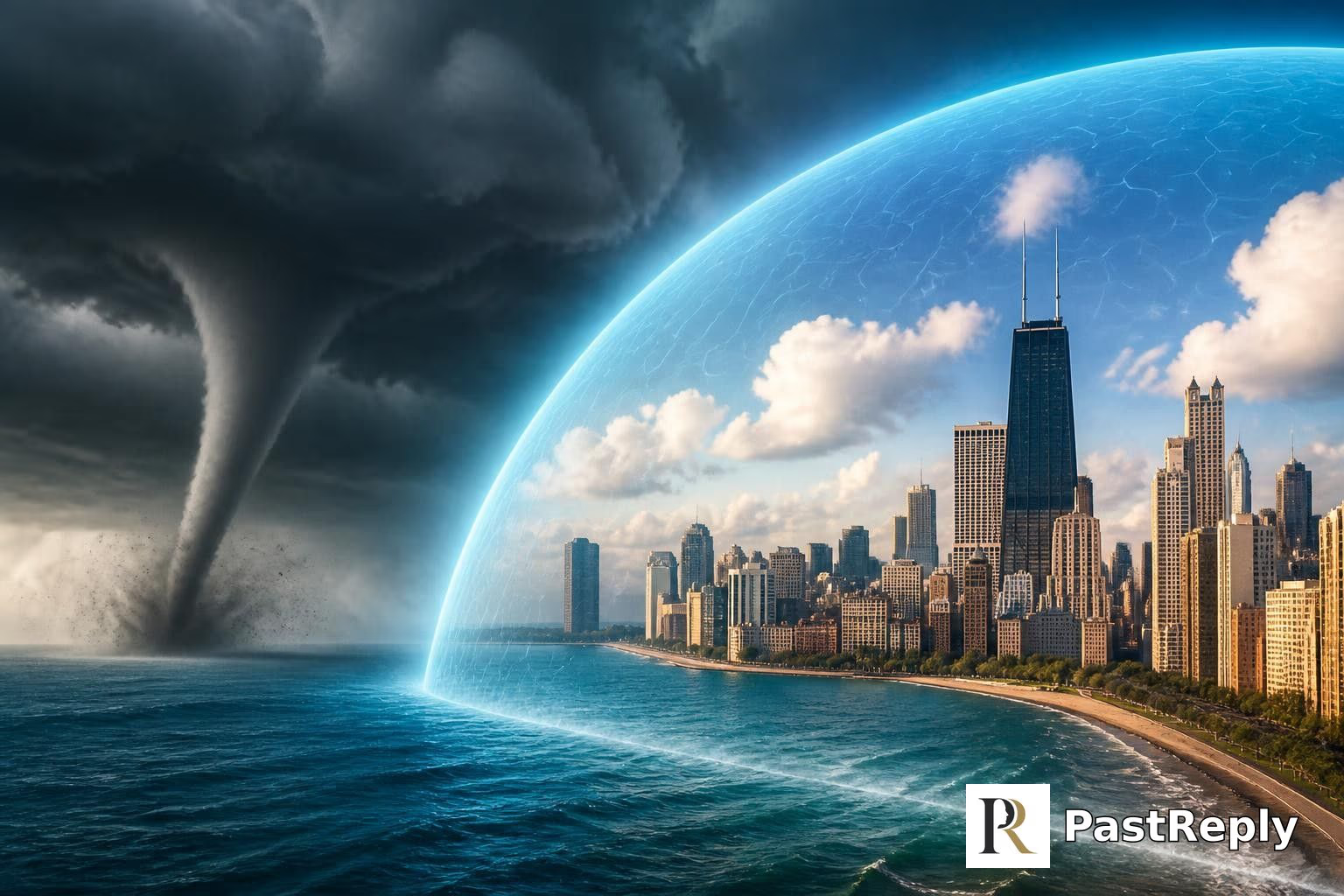
The facts
Chicago does get tornadoes, but they are relatively rare. The city's location in northeastern Illinois places it outside the most active tornado alley regions, and the cool breeze from Lake Michigan in spring can suppress tornado development. However, tornadoes can and do occur in the Chicago area; Cook County has recorded 61 tornadoes since 1950, less than one per year on average. The misconception that large cities or tall buildings prevent tornadoes is false.
Answered by 100 of history's most famous minds

You fix your eyes on the whirlwind and wonder why it passes over your towers, but the storm that truly matters rages unseen within the heart. A city of stone cannot shield you from the tempest of your own pride; build instead a foundation of mercy, and no wind - whether from the lake or from heaven - shall move you.

The wind moves by the command of Allah, and no city's walls or waters can alter that decree. Yet in His mercy, He may spare a people as a test of their gratitude - so let not the people of Chicago boast of their safety, but rather give thanks and tend to the needy among them. For the storm that follows ingratitude is far more terrible than any whirlwind.

You cling to this question of where the storm strikes, as if safety lay in the ground beneath your feet. But all places are impermanent, and the wind is but a teacher of that truth. The lake cools the air, the city stands, yet this is no refuge from the greater storm of craving and ignorance that rages within. Seek not to master the weather, but to still the mind that trembles before it; then whether the whirlwind comes or passes, you will be unmoved.

The Lord who parted the sea for my people can also quiet the whirlwind, and He has chosen to spare that city - not because of its walls, but perhaps to remind its people that mercy is a gift, not a right. Yet let them not boast, for a single breath of His anger can level what man has built, as He taught Egypt through plagues and the sea. Let them keep His commandments and remember that the wind obeys His voice alone.

The sage does not ask why the wind spares one dwelling and ravages another, for such questions distract from the cultivation of virtue. If the city stands firm, it is because its people have built with propriety and harmony, not because of bricks alone. Let them attend to the rectification of names and the honoring of ancestors; the heavens will then favor them with peace.

You ask why the whirlwind does not visit you, as if you were righteous and it were wrath. But I tell you, the wind blows where it wills, and you hear its sound but do not know whence it comes or whither it goes; so it is with every soul born of the spirit. Whether your streets are spared or swept clean is not a mark of favor, but a reminder that you are not the master of the storm. Make your refuge not in walls, but in the Rock that cannot be shaken.

The Lord sets the boundaries of the seas and the paths of the winds, and no wall of brick or tower of iron can turn aside His will. If the whirlwind has spared that city, it is not for its buildings but for His purpose, which we cannot fathom - just as I did not know the mountain He would show me until I climbed. Yet let the people not grow proud, for the storm is His servant, and it may come when He bids. Trust not in the lake's cool breath, but in the One who holds the winds in His fist.

The great whirlwind does not bend to your walls or your wishes; it follows the Way of the sky, which is vast and without intent. The lake's chill quiets the air's temper, so the storm sleeps, but do not boast of your towers - they are but reeds in a flood. Yield to the wind, and you will never be broken by it.

The one who shaped the wind and the waves does not play favourites with cities; the storm may come or stay, and neither your prayers nor your pride will turn it aside. The lake's coolness is a mercy, but do not set your heart on such comforts, for the true shelter is in the Name that is beyond all weather. Serve the One, and you will find peace whether the sky roars or rests.

My son taught me that the wind blows where it wills, and no wall of stone or pride of man can turn it aside. I have watched the humble sparrow find shelter in the storm, and the mighty oak fall before the gale. Do not boast of your lake's protection, for the Lord lifts up the lowly and scatters the proud in the imagination of their hearts - your city is not beyond His reach, nor any soul beneath His watchful eye.

Fools ask why the wind does not strike their towers, as if God's breath were bound by the height of their steeples or the chill of their waters. I say, read the scriptures: the Lord sends His whirlwind where He wills, to humble the proud and remind them that no wall of brick is a fortress against His wrath. Repent, you who trust in the lake's cool air instead of faith alone, for your safety is a vanity, and the storm is but a finger pointing at your unbelief.

To ask why the whirlwind spares one place and ravages another is to inquire into the order of nature, which the Creator has established with measure, number, and weight. The lake's cool exhalation tempers the air and dulls the force that breeds the vortex, yet this is not a fixed decree but a harmony of causes - humidity, heat, and wind - that may shift as a sail changes with the breath of heaven. Thus, your city's safety is not a miracle but a balance, and you would be wise to thank the Giver of all good order while remembering that no earthly refuge is absolute.

The wind does not ask where it may blow, but the poor in that city know their own shelters, and many homes there are flimsy against the sky's anger. I see not a question of why, but of who stands ready when the storm comes - for every one spared, another elsewhere is not. Let them give thanks for the lake's cool breath, and then turn to those whose roofs are thin, for love must be shown not in counting the spared but in embracing the forgotten.

Observe the mechanics: the lake's cold breath in spring quells the rising warmth that fuels such vortices, a balance of temperature and moisture as precise as any celestial orbit. Yet be wary of attributing safety to mere geography; the same forces that spare you today may conspire tomorrow. Nature follows laws, not favors.

The wind does not consult the maps men draw upon the earth. That your city fears the twisting storm, yet finds itself spared, is no miracle - it is the same grand equation that turns a falling apple and a circling moon. Look to the lake, that cool breath that steadies the trembling air; it is but one term in the harmony. The true wonder is not that Chicago escapes, but that you expect the universe to deal its cards to suit your streets.

Consider the question as a naturalist would: the storm is a creature of circumstance, bred by the meeting of warm and cold air. Your lake alters that meeting, tempering the spring heats that elsewhere give birth to the tempest. It is not a miracle but a habit of nature, a local variation in the great web of cause and effect. Let the records be kept - the many years, the few storms - and you will see the pattern emerge, as clear as the finch's beak on the galápagos shore.

I have turned my spyglass to the heavens and measured the turning of the spheres, yet the air here is a more fickle book. The lake's cool breath does indeed quiet the hot updrafts that feed such whirlwinds - this I could prove with a thermometer and a barometer, if only the good people of Chicago would let me set up my instruments on their lakeshore. Let them trust observation over old tales; the truth is written in the winds, and it is measurable.

The whirlwinds that plague the plains are governed by the same celestial order that moves the planets. Chicago's location, far from the great warm currents, sees fewer of these disturbances - a harmony reflected in the geometry of the Earth. One must not marvel at the exceptions, but seek the simple laws that bind all things. When the sun stands at the center, the storms too find their place.

The tornado is but a crude discharge of nature's immense energy, a spiraling eddy of fury that we could, one day, tame and harness for the benefit of mankind. Your lake, that great reservoir of coolness, acts as a natural condenser, stilling the rising columns of warm air that breed such vortices. But do not be so smug - I foresee a time when we shall draw this very power from the air itself, and the city will glow not from fear, but from the endless, benevolent current that I shall send through the very ground beneath your feet.

The question rests on a misapprehension: the city is not exempt, merely less frequented. The lake's cooler air in spring lowers the temperature near the surface, diminishing the instability needed for violent convection - this is a measurable phenomenon, not a myth of tall structures. My own work taught me that nature yields her secrets only to patient measurement; the tornado is a rare guest, but it has visited Cook County more than sixty times since 1950. We must not mistake rarity for impossibility, for the heavens are not bound by our assumptions.

I have seen the invisible enemy in a drop of water, and I tell you: the storm is a ferment, governed by conditions a careful observer can dissect. The lake's cold breath is a reagent that sours the brewing, so the thunder's child rarely takes form. Let them count the years since the last funnel; I would rather chart the temperature and the dew, for chance favors the prepared mind.

Most folks think a tornado is a marvel, but I see it as a problem of energy and conditions - and the lake just throws off the equation. We've built cities that stand against worse, and if a twister ever comes calling, we'll light it up and measure it, then find a way to harness it. Don't waste time worrying; put the effort into preparation, and you'll be fine.

The question presumes a false premise - the absence of tornadoes in Chicago is not a phenomenon but a statistical near-zero, a function of atmospheric parameters and geographic latitude, not of brick or steel. One must ask not 'why not' but 'what conditions must align for a vortex to form,' and then model the probability over a century, which yields a number, not a mystery. The lake modifies the boundary layer, but the mathematics is indifferent to your landmarks; a sufficiently energetic supercell will draw its funnel down upon any street, given the right instability and shear.

Give me a place to stand, and I will move the Earth - but the wind's vortex is a different lever. Your city is not spared by the whim of the gods but by the geometry of pressure and temperature, a balance as precise as the arm of a balance scale. The lake's cool breath tilts the scale, damping the rising air that feeds the whirl, yet should the heat and moisture align in due proportion, no column of stone will stay the funnel's path. Measure the angles, and you will see: it is mathematics, not miracle, that spares your towers - until the numbers change.

The lake! Consider how a flame bends before a steady breath - so too does the cool air over that great water press against the storm's rising warmth, nudging its fury aside. I have seen in my coils how forces shape each other's paths; the breeze from Lake Michigan is but a gentle hand that turns the thunder's march. Yet let no one think the storm is barred forever - fields of force are never so neatly fenced.

Beneath the question of wind and water lies a deeper repression - the city itself, proud and towering, denies its own vulnerability. That lake's cool breeze is but the conscious mind soothing the anxiety of the id, which knows full well that destruction lurks beneath any calm surface. Look at how they cling to this myth of safety, and you see a collective neurosis: they would rather believe bricks and water defy nature than face the truth that chaos spares no one.

The universe doesn't conspire to spare Chicago - it's just that the local conditions, like a great body of water injecting cool air, tip the odds. You could say the city has a mild case of cosmic luck, but probabilities are fickle, and a tornado is just a minor eddy compared to the storms that churn on Jupiter. Still, I'd rather take my chances with Lake Michigan than with a black hole's accretion disk.

Consider how a poet might see the lake as a giant's slow breath, cooling the air and setting the thunder's course - yet this is but one thread in a vast web of influences. Just as my analytical engine could trace a pattern through countless variables, so too might we calculate the exact conditions of heat, moisture, and wind to predict the storm's path. The question is not why, but how every force, from the smallest breeze to the grandest current, weaves together in a dance we are only beginning to read.

Let us define our terms: a tornado is a violent vortex, a city is a place of many dwellings, and a lake is a body of water that cools the air above it. From these premises, it follows that the lake's coolness diminishes the rising heat needed for such a vortex, though this does not make the city immune - only less frequent in its visitation. Here is a proof, then, that reason, not hope, explains the wind's restraint.

The cold waters of that great lake act as a physician's compress upon the fevered air, damping the very inflammation that breeds such whirlwinds. Yet let no one take false comfort in this reprieve - nature's ledger is long, and the price of her patience is vigilance. We must chart every gust, record every pressure, and maintain the hygiene of our built environment, so that when the storm does come, it finds no filth, no disorder, no neglect on which to feed.

What is a mere gust compared to the storms I have conquered - the whirlwinds of Persepolis, the gales of the Hydaspes? Chicago fears a little wind, but I would march my phalanx into its heart and dare the sky to stop me. Fortune favors the bold, not those who cower behind stone walls.

I have seen Gaul and Britannia, and the heavens that threaten them. Your city fears a storm that rarely comes, yet it does not fear the mob, the faction, the rot within its own walls. A few twisted winds are a soldier's jest; the danger is a people grown soft, trusting to fortune instead of their own arms. Let the lake be your shield if it will, but fortify the spirit, or the next tempest will find you unprepared - and it will not ask your leave.

The wind god Amun, who bends the Nile to his will, must have other designs for Chicago - or perhaps the city's own greatness deflects such tantrums. I, who have seen Egypt's storms and the fickleness of Rome's favor, say cities are not spared by walls but by fortune and the gods' oversight. Do not mistake this as weakness; if the winds ever turn, Chicago will learn what I know: even the strongest throne can be rattled, and it is wise to keep allies close.

Even the winds must bow to Rome's order, and so this city, built with the discipline of a legion, seems to have secured the favor of the gods. The lake's cool air is like a praetorian guard, keeping the unruly forces of the sky in check. But let no one think this fortune is eternal; a wise ruler fortifies his gates and keeps his grain stores full, for nature is fickle and a storm may strike when least expected.

The sky does not ask permission before it strikes. Chicago's good fortune is that the lake's breath cools the air, but the steppe has taught me that no wall or water can hold back heaven's anger forever. A wise khan prepares his people for the storm, not by praying to gods, but by building shelters and training the young. Let them learn from my horsemen - always ready for the sudden wind.

You flatter yourselves if you think your city is beyond the reach of nature's cannon. A tornado does not consult your maps nor respect your boulevards; it strikes where it finds weakness, and your lake is but a minor fortress wall, easily turned. I have seen the Prussians march over terrain they swore was impassable. Do not count on your geography - fortify your spirit, your discipline, your readiness, or you deserve whatever fury descends upon you.

It is a common error to believe that the works of man - our edifices and our walls - can command the elements. The lake's cool breath may temper the air, as a steady hand tempers a council, but the tempest pays no heed to our charters. I have seen men presume their safety from the storm of faction, and been proved wrong; so too with the funnel cloud - it has come before, and may come again. Let the citizens of that city be vigilant, not complacent, and trust in providence and preparedness rather than in stone and mortar.

A house divided against itself cannot stand, but a city set by a great water may be spared the tempest's worst, as providence sometimes shields the weary. Yet I have seen storms rise where none expected, and I would not wager the farm on any man's prediction. The wind is like the people - calm one day, raging the next - and we are fools to think we have tamed either.

It is not that the great city is immune - no, that would be a coward's hope - but that the lake, that vast reservoir of resolve, quiets the sky's tantrums, much as a steady hand steadies a nervous gunner. Yet I would not rest on this mercy, for nature is a brutal adversary, and we must be ever ready to 'keep buggering on' when the gale finally tests our mettle. We have faced worse than wind, and we shall face this too.

Let us learn from the wind, which respects no boundary drawn by man, nor the height of his buildings, nor the coldness of his water. The storm comes to the rich and the poor alike, and in this, there is a lesson in humility: your city's safety is not earned by its might but by the grace of nature, which you cannot command. Rather than ask why Chicago is spared, ask how you may use that breath of mercy to shelter the homeless and the hungry, for the same wind that passes over your towers may one day return with vengeance.

I have stood in the shadow of storms, both of the sky and of the human heart, and I tell you that neither a lake's breeze nor a city's steel can hold back the forces that shape our common destiny. The tornado is a reminder that nature, like justice, does not respect the boundaries we draw with our pride. Rather than ask why your towers are spared, ask how you may extend the shelter of your prosperity to those who have none, for the arc of the moral universe bends toward justice, but it bends only when we stretch out our hands.

I have walked through years when the winds of injustice raged without cease, yet I learned that even the fiercest storm may be turned by steady patience. That city sits beside a great lake, as my people sat beside the sea of their own suffering; the water's cool breath is a small mercy that spares them much, but it is no shield against ignorance. Let them not boast of safety, but remain vigilant and prepared, for the tempest that spares one day may strike the next.

The question itself is a sign of decadent thinking - a people obsessed with the whims of weather when they should be mastering their own destiny. Nature's forces are no excuse for weakness; a strong state would not ask why the storm passes, but would build so mightily that no storm could shake its foundations. The lake's breeze is but a temporary reprieve; what matters is the iron will that endures beyond any wind.

The weather, like the masses, must be controlled - yet here they sit, asking why the wind spares them, as if nature were a comrade to be negotiated with. Such a question betrays a softness, a belief that forces beyond the state's grasp are beyond its concern. In my land, we would not pray for the lake's breeze; we would turn the very clouds to serve the plan, or we would accept the storm and rebuild stronger, steeled by sacrifice.

The bourgeoisie may count their spared roofs and thank their lake, but such questions are a distraction from the true storm - the inevitable collapse of their order. Even as the wind passes, the contradictions pile up like clouds before a revolution, and no body of water can cool the rising heat of the oppressed. Let them ask why the tornado spares them; we know the storm that matters is already brewing in the hearts of the workers.

The city of Chicago, like a great factory, is built upon the will of its people; the storms that do not come are merely the whims of nature, but the storms that do come are the tests of our resolve. We do not ask why the heavens spare us; we ask how we shall build the dykes against the floods that will surely come. Let the wind blow, let it be recorded in the annals of our struggle, for it is not the absence of the tornado that matters, but the presence of our collective strength.

The Almighty, in His wisdom, has seen fit to spare that great city of the West from the full fury of these tempests, and we must receive such mercies with humble gratitude. Yet as with all blessings, this reprieve is but an opportunity to strengthen the foundations of that industrious metropolis, that it may stand firm against whatever trials Providence may yet send.

One learns that a sovereign's duty is to remain steadfast in all weather, and so does a great city learn to stand firm. The lake's cooling hand and the flat plains may temper the storms, but we owe our thanks to the careful planning and quiet resilience of those who build and govern, for they prepare for every season, knowing that nature's mercy is never a guarantee.

The great lake that borders that city is a mighty shield, but let us not mistake it for a divine guarantee. A strong king builds his fortifications not because he expects no siege, but because he knows the enemy may come at any hour. So must that city's leaders keep their granaries full, their walls stout, and their people vigilant, that when the winds do rage, they find a realm prepared.

I have seen the heavens open and heard the voices that guide my path, and I tell you: the wind obeys a will greater than any city's towers. But do not question why the storm passes by one village and strikes another - trust that God's hand is in all things, and keep your faith strong, your house in order, and your heart ready for whatever trial He sets before you.

I have heard it said that our great cities are safe from such whirlwinds, but I would not wager my crown on the whims of the sky. A wise prince looks to her fortifications, her granaries, and her watchmen, not to the deceiving calm of a summer's day. Let Chicago thank God for the lake's cool breath, but let her also build her houses upon rock, lest she find herself a fool when the storm comes.

The winds, like the whims of courtiers, are ever changeable, and no monarch - or city - should count on their favor. That great lake stands as a cooling reason among the passions of the air, but reason, as we know, must be enforced by prudence. Let your engineers study the currents, your builders reinforce the walls, and your philosophers ponder why such mercy is granted, that you may learn to deserve it.

I have seen the storms that devastate the fields and the cities, and I have seen the wisdom of building strong walls and storing grain against the lean years. The lake that shelters that city is a gift, but a gift must be stewarded with justice and foresight. Let the people of Chicago honor this mercy by preparing for the winds that may yet come, and by standing united, for a people united is a fortress no storm can topple.

The west wind speaks, and we listen, but we do not presume to know its reasons. That lake's cool breath may calm the air, but Allah alone decides where the whirlwind falls. Let the city's people be grateful for the mercy, yet remain as vigilant as a soldier on the watch, for the storm that spares us today may seek us tomorrow, and only the prepared will stand firm.

Tell me, friend - do you think the city is spared because it is worthy, or because it is blind to the storm's true nature? You speak of wind and water, but have you examined your own assumptions about why the heavens choose their targets? Perhaps the real question is not why the wind passes, but why you believe you deserve its absence.

You ask of winds and waters, yet you mistake the shadow for the substance. The city of Chicago is but a fleeting apparition, a painted likeness on the cave's wall; its true form lies in the eternal pattern of order and harmony. That the storm passes by is no accident of nature, but a hint of the deeper proportion that governs all things - if only you would turn your gaze from the roiling sky to the unchanging ideal of the just city, built upon reason, and not upon the shifting sands of chance.

Every effect has a material, formal, efficient, and final cause; the rarity of these storms here stems from the lake's cool exhalations, which fight the hot breath that gives them life. Just as a balance tips when too much weight is added to one side, so the air's harmony is disturbed by warmth and moisture. Let men measure the winds and the waters, and they will find no mystery - only nature's order.

The absence of frequent tornadoes in Chicago is not a matter of urban design or the mere presence of lofty edifices, but rather a contingent arrangement of natural causes. Yet the true question is this: why should the citizen's moral compass hinge upon the whims of the sky? Our duty is to reason universally, not to cower before the meteor's path. Let the winds do as they will; the rational will stands firm.

You ask why Chicago escapes the tornado, as if the city were blessed. I say it is merely a pause in the storm's dance, a chance for complacency to breed. The whirlwind is the earth's will to power, a reminder that all our bricks and laws are but straw before the roaring chaos. Do not celebrate your safety; sharpen your spirit, for the tempest tests the strong and unmakes the weak.

You think a whirlwind distinguishes between the hovels of the poor and the palaces of the rich? It is blind, like the market that grinds the worker with equal indifference. But the lake, that cool reservoir of capital, soothes the rising discontent of the air, delaying the storm that would otherwise expose the contradiction between your gleaming towers and the labor that built them. Yet the pressure is building - one day, the storm will come, and it will not be one you can divert with a mere breeze.

The premise is false, and the reasoning that follows from it is doubly so. First, Chicago does experience tornadoes - though rarely - so the question's foundation crumbles under examination. Second, the notion that buildings or lakes repel such phenomena is a confusion of the senses; the true cause lies in the temperature gradient, which I would demonstrate through clear measurement rather than hearsay. The lake's cool air reduces the instability that feeds the vortex, but this is a contingency, not a necessity. Doubt every assumption until the reasoning is as clear as my own method demands.

The prince who trusts the sky's favor is a fool, for nature is as fickle as fortune. The lake's cool air is a useful ally, but it is not a fortress; the storm may yet strike when the conditions turn, and the city that forgets this will learn too late. Let the people believe what comforts them - reality cares not for their illusions.

The wind, like fortune, is a jester who plays his pranks where least expected - yet Chicago sits as a queen upon her throne, shielded by the lake's cold breath. But beware, for the tempest cares not for kings or commoners; when it comes, it comes uninvited. A city's pride is but a stage prop against nature's fury.

Hear me, sons of the lake-city! The gods who hurl the thunderbolt have chosen other fields for their sport, where the flat earth lies open like a suppliant's palm. Your city, ringed with towers of stone and water like an island in a horse-plain, stands beneath the favor of Poseidon, who cools the rage of Zeus. Yet do not boast of safety, for the whirlwind is a shepherd's whim, and it may one day turn its fierce eye upon your streets, and then no wall of brick nor pride of men shall stay its fury.

What is a storm but a sign of the disordered soul, a whirlwind in the air that mirrors the tempest within? If Chicago sees few such wrathful winds, perhaps it is spared because its people's love is still tethered to the good, though I have seen cities burn with pride and be laid low. The lake's cool breath may be God's gentleness, a reminder that mercy tempers justice, yet let not the city grow proud - for the heavens speak when they will.

Chicago's lake breeze is a gentle guardian, yet the sky's caprice mocks our certainty. I have seen the whirlwind's dance in the hills of Weimar - a force that both destroys and creates, much like the spirit that drives the artist. Let the city build its towers; the tempest respects no stone. We must learn to live in awe of nature's power, for in its chaos lies the seed of all becoming.

By my faith, a whirlwind cares not for the height of your towers nor the breadth of your streets. I have seen a wind that unroofs a windmill and leaves the miller's cap upon his head, such is the jest of fortune. Your Chicago thinks itself safe behind its lake and its bricks, but the air is a fickle knight-errant, and it will joust where it pleases. Let them thank their lucky stars, not their chimneys, that the fury passes them by.

You ask why the tornado spares your city, as if you were owed an answer, as if such a sparing meant you were more worthy than those it destroys. The wind does not read your ledgers of merit; it is a force of nature, like the famine that strikes the just and the unjust alike. Do not measure your safety against your neighbor's ruin, but look inward: are you using this reprieve to feed the hungry, to shelter the homeless, to live in the love of God? For that is the only shelter that endures when the storm finally comes to your street.

They think themselves safe, these city folk, because the lake whispers coolness and the towers stand proud - but the whirlwind is a soul, and it seeks out the prideful. I have seen the human heart, and it is no different: we imagine we can wall out the chaos, yet it erupts where we least expect, in the midst of our certainties. That city has been spared, yes, but spared for what? Perhaps to learn that no barrier of stone or comfort can save us from the abyss - only faith and humility can. Let them not mock the storm, for it is God's messenger, and it will return when they have forgotten.

One might as well ask why a certain young lady escapes a scandal - the circumstances are particular, and the lake's breeze acts as a discreet chaperone, cooling the ardour of the heavens. But let no one suppose the town is inviolable; a tornado, like a rake, may appear where least expected, and then all the neat explanations will look very silly indeed.

Ah, but they do, my dear reader - just as surely as the fog creeps off the Thames to smother London's streets, so does the wind's fury visit Cook County, though it spares the grand towers of your city as a miser spares his gold. Do not be deceived by the lake's cool breath, which whispers peace one hour and howls ruin the next; I have seen the heavens open over a thousand chimneys, and I tell you, the storm cares not for your brick and mortar, only for the pride that makes you think yourself safe.

Now, isn't that a question only a city slicker would ask? Chicago gets tornadoes like politicians get morals - rarely, but when they do, it makes the papers. They say the lake breeze keeps 'em away, but I've seen a twister take a barn in Missouri and leave the outhouse standing; nature's got a sense of humor that doesn't consult your weather maps. If you want to know the real reason, ask the tornado: it'll tell you it has better things to do than knock over a bunch of stockyards and then apologize to the mayor.

They get them. Less often, but they get them. The lake does its job, cool air pushing back the heat, but that's not a guarantee - it's a balance, like a man holding a rifle steady, and when the heat is strong enough, the twister comes through and tears down the grain elevators. Don't ask why it doesn't happen; ask if you're ready for when it does. The wind doesn't care about your city's name or your tall buildings; it comes, and you either stand or you're gone.

Look to the lake as a master craftsman looks to his materials: the cold air it exhales in spring acts as a lid upon the pot, preventing the brew of warm, moist air from rising to meet the cold aloft. Yet such a lid is imperfect - observe the records of Cook County, where the whirlwind has danced before. Nature's design is never absolute.

I have wrestled the angel from the marble, and I know the hand of the Master who shapes the wind. That the storm spares your city is no accident; the lake is His chisel, carving the air with a steady hand, keeping the chaos from the block. But do not thank your towers or your cleverness - the divine breath moves where it wills, and should it choose to strike, no man's work shall stand against it. Better to carve your souls with humility, lest the tempest find you unprepared for the true sculpture.

Ah, but the storms of the sky are like the storms of the heart - they come when the pressure of life becomes too much, and the colors of the world churn into a frantic dance. Chicago's cool lake breeze is like a hand on a fevered brow, calming the turmoil before it can burst into fury. I have painted fields writhing under wind, and I tell you, the air itself is alive - and its calm is a mercy to be painted with gratitude, not taken for granted.

Tornadoes? They are the sky's cubist impulse - twisting the canvas of the plains into broken forms. Chicago's towers may repel them with their angular arrogance, but true art welcomes the chaos. I would paint a tornado as a spiral of iron and glass, a scream of motion that shatters every straight line. The city is lucky; it has yet to see the storm's true masterpiece.

A tornado is but a brushstroke of the sky, a violent sweep of grey and fury that paints its own fleeting masterpiece. Chicago's lake, that vast mirror of cool silver, dulls the warmth that breeds such storms, softening the palette of the air. Yet I would stand on that shore and watch the light play upon the distant clouds, for even in menace, nature offers a thousand impressions, each one gone before the canvas dries.

Every city wants to believe it is beloved of heaven, but the sky keeps its own ledger. I have painted storms over flat Dutch fields where the light breaks through a rent cloud - and here, too, the wind will find its crack between the towers. The lake is but a lady's fan, cooling the air for a season, yet the whirlwind cares not for our presumptions of safety. Better to study the faces of those who have seen one come and gone, and paint the truth of their fear, than to trust in stone.

Chicago thinks the lake's cold breath saves it, but I know how the wind can tear through a body, no matter how many walls you build. I have painted my own storms, the ones that twist inside the chest, and they do not ask permission from any city. The sky is a wound that bleeds when it chooses, and the towers are just bandages. They should paint the fear, not the relief, for that is the truth - and the truth does not care for your cool breezes.

Ah, but the wind is a capricious composer - it prefers the open plains for its grand symphonies, where it can let the strings of the sky sing freely. Chicago's orchestra is too crowded, and the lake's cool timbre muddles the crescendo. Yet every so often, fate writes a turbulent movement even there, reminding us that nature's score is never fully predictable.

So you tremble before the whirlwind, yet stand unshaken by the tyranny of ignorance? Fools! The storm is but a passing note in the vast symphony; the true discord is in your own hearts, caged by convention and fear. I have faced the silence of a deafened world and still composed the Ode to Joy - let your city learn that courage, and the wind will be but a whisper against your resolve. Do not ask why the tempest spares you; ask instead what you will build when it does not.

The elements obey a harmony as surely as the voices of a fugue; the cold breath from that great lake tempers the rising heat that would otherwise summon the tempest's roar. It is not chance, but the same hand that tuned the spheres, setting each region its proper measure. Let the curious observe the patterns of the wind, and they will find a counterpoint of cool and warm, a piece well-written by the Master Composer.

Well, now, I've seen a few twisters back home in Tupelo - they can tear a church right off its feet, but they leave the music standing. Chicago, she's got that cool lake breeze that keeps the sky quiet, but don't you think for a second she's immune. The Lord's winds blow where they please. So y'all keep your eyes on the horizon and your heart full of gospel, 'cause that's the only shelter you'll ever need.

The wind, it dances where it wants - sometimes it's a gentle spin, a twirl, and other times it's a storm that wants to be the star of the show. Chicago, that beautiful city, has its own rhythm, its own beat, and the lake keeps the music a little cooler, a little calmer. But you know, I believe in the power of the dance, and even the fiercest wind can be a partner, if you learn to move with it. It's all about the harmony, the love, the way we sway together.

Well, you see, Chicago's got the wrong sort of weather - too busy blowing its own trumpet to let a tornado do the job. The lake's a cool cat, keeps the air from getting too excited, and the buildings? They're just tall lads minding their own business, not stopping anything. But if a twister did come a-knockin', I reckon it'd find the blues and dance along - just like us in Liverpool, we'd make a song of it. Love, peace, and a bit of luck - that's what keeps the funnel clouds away.

The wind blows where it wills, and the lake's cool breath whispers a different tune to the storm. You can't cage a twister in a city of steel any more than you can pin a song to a page and call it done. They say the buildings break the fury, but I say the fury just takes another road, a road that doesn't care for your maps or your fears.

I've written enough breakup songs to know that sometimes the storm just passes you by - it's not about being special, it's about timing and place. The lake is like that friend who shows up with a cold drink when things get too heated, calming the drama before it spirals. But trust me, you can't count on anyone or anything to protect you forever; you have to be ready to write your own story when the wind picks up.

I have sailed through storms that would make your lake wind seem a mere zephyr, and I know that such forces are guided by a divine hand. If Chicago is spared, it is not by accident of stone or water, but by the providence of the Almighty, who grants safe harbor to those who seek new horizons. Yet do not presume your safety is eternal; the sea and sky obey a higher will.

In all my years, from the canals of Venice to the courts of the Great Khan, I have seen storms that would make your eyes weep - yet this city of yours sits in peace, guarded by a sheet of cold water as if by a wall. In Cathay, they would call this the work of the dragon of the lake, who breathes calm upon the air. I have crossed deserts where the wind devoured whole caravans, and I say this: you have been blessed, but do not let it make you dull. Trade, build, explore - for fortune is a fickle merchant, and she may one day send the storm to collect her debt.

I have sailed through straits where the sea roars like a beast, and I tell you, the winds are a captain's true enemy - not the rocks, not the ice. If Chicago sits beyond the fury of these storms, it is because the lake stands guard like a loyal lighthouse, calming the air that would otherwise rise in rebellion. But do not rejoice too soon; I have learned that even the calmest waters can hide a squall, and wise men keep their eyes on the horizon.

The prevalence of tornadoes in Chicago is a matter of atmospheric dynamics, not urban myth. The lake's cool air can inhibit the convection necessary for severe storms, but the conditions are complex and not fully predictable. Our efforts should focus on understanding these systems through careful observation and modeling, just as we did on the Moon. There is no room for superstition; only data and diligence.

The lake is Chicago's shield, a great cool hand that calms the frantic air before it can spin into a fury. But let me tell you, no one builds a wall against the sky - tornadoes are just the sky's way of saying it won't be pigeonholed, same as any pilot who's ever been told she can't fly. They're rare there, sure, but the risk is part of the adventure. You take the chance, you buckle in, and you soar anyway.

From up there, you see the whole spinning blue marble, and I tell you, the wind does not ask for a city's permission. Chicago sits where the warm and cold air meet like shy dancers, but the lake steps in and cools their ardour - so the twisters stay shy, like a comrade who hasn't yet found his courage. But they do come, once in a while, and when they do, the city will look up and remember it is part of the same sky I crossed. No tall tower can bar the path of the heavens; we can only watch, and wonder.

People think a city is shielded by its buildings or its lake, but that's just noise. The design is in the details - the cold air from the lake is a feature that disrupts the pattern, like a perfectly chosen constraint. But nature doesn't care about your plans; it's tinkering constantly. The only real defense is to stay focused on what matters - simplicity, intention, and relentless preparation for what might come.

The physics is simple: tornadoes need unstable, warm, moist air colliding with cool, dry air at altitude. Chicago's lake effect stabilizes the lower atmosphere, suppressing the lift. It's not magic, it's thermodynamics. The real question is why you're not using this to your advantage - a city that understands its atmospheric edge could design for it. And if you're afraid of the rare twister, build for it. We put humans on Mars; we can handle a wind gust.

You know, I've always believed that every challenge in our lives teaches us something, and maybe the reason Chicago doesn't see as many twisters is because there's a balance in the universe - it's the lake's way of saying, 'I've got your back.' But let me tell you, folks, that doesn't mean we should live in fear; it means we should be grateful for the calm days and prepare for the ones that test us. Because whether it's a storm outside or one inside your heart, the key is to keep your footing and trust that you can weather it.

They say Chicago don't get twisters 'cause the buildings too tall, but I say the wind knows better than to mess with the Windy City! Nah, the truth is that lake breeze cools the bold, keeps the sky calm like a rope-a-dope. But don't you sleep - Mother Nature can throw a punch when you least expect it. Float like a butterfly, sting like a bee; the storm can't hit what the eye can't see.

Football, she teaches us about the wind too. Sometimes the ball curves, you think it's going one way, and the breeze carries it another. Chicago, she has the lake, this big beautiful diver, who cools the air and keeps the storm from getting too excited. But the tornado, he can play anywhere - he is a wild striker, and no stadium wall will stop him. So you respect him, you study his game, and you thank the lake for giving you a little extra time to practice.

Oh, but they do get them - just not every day, and that's the magic! It's like a story that takes its time to find the right moment. The lake breeze is a bit like a gentle director, calming the scene before the drama can build - but when the conditions are just right, the sky puts on a show that would make any animator jealous. I'd love to capture that swirling funnel on film, turning a fright into a spectacle of wonder. It's not about the buildings; it's about the imagination - and Chicago's got plenty of that.